
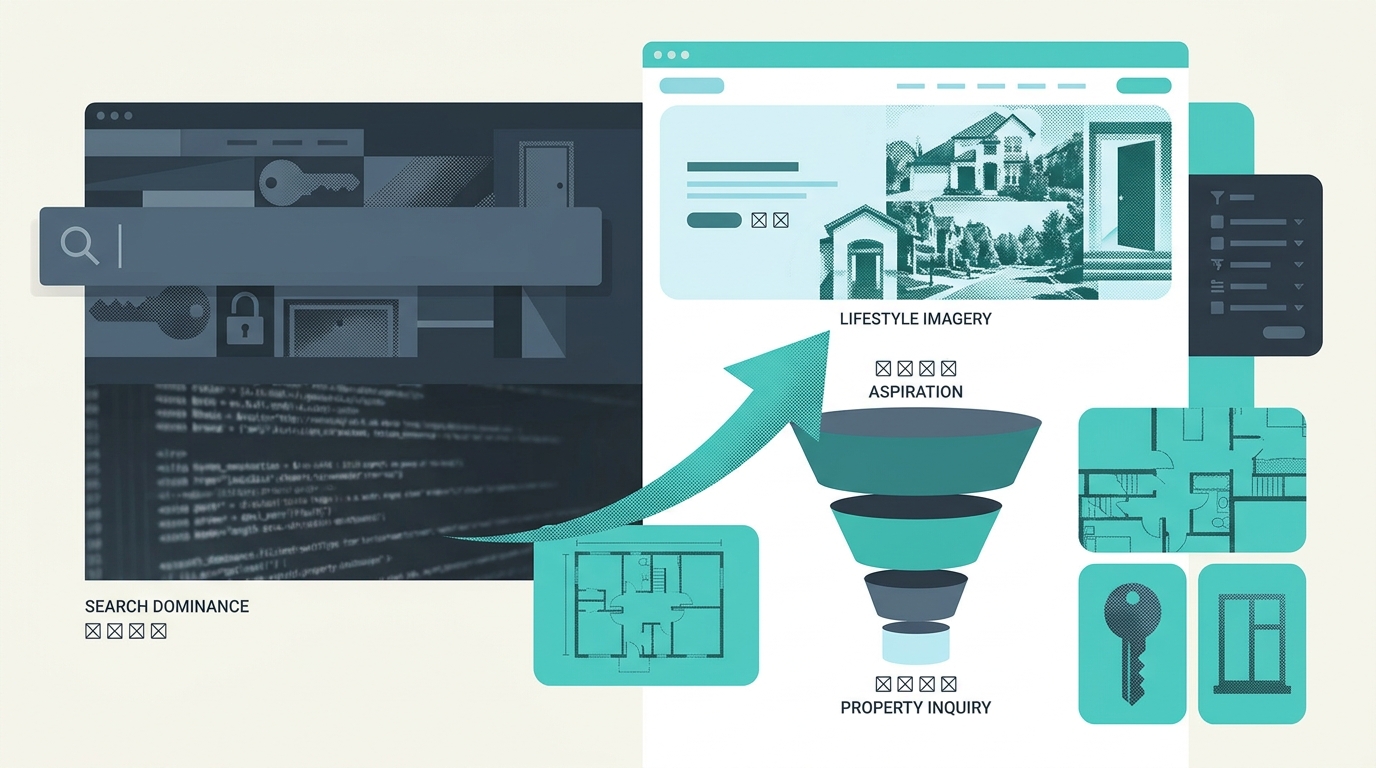
Brightstone Real Estate’s homepage doesn’t show a single property listing above the fold. Where other brokerages default to an IDX search bar, Brightstone runs a full-bleed lifestyle video with the tagline “Live Brighter,” weaving aspirational messaging about “luminous homes” and “elevating everyday living” through every page, according to Azuro Digital’s 2026 review of top-performing real estate sites. eXp Realty made a similar bet in their redesign, ditching the search-bar-forward hero section entirely in favor of bold, brand-first storytelling.
These aren’t accidental design choices. They reflect a real split in real estate website design strategy: should your homepage lead with property search functionality, with aspirational lifestyle branding, or with some blend of both? Each approach carries distinct tradeoffs in conversion rate, visitor engagement, and the quality of leads hitting your CRM.
Here’s what each one looks like in practice, and where each one falls short.
The Search-Bar-Forward Homepage
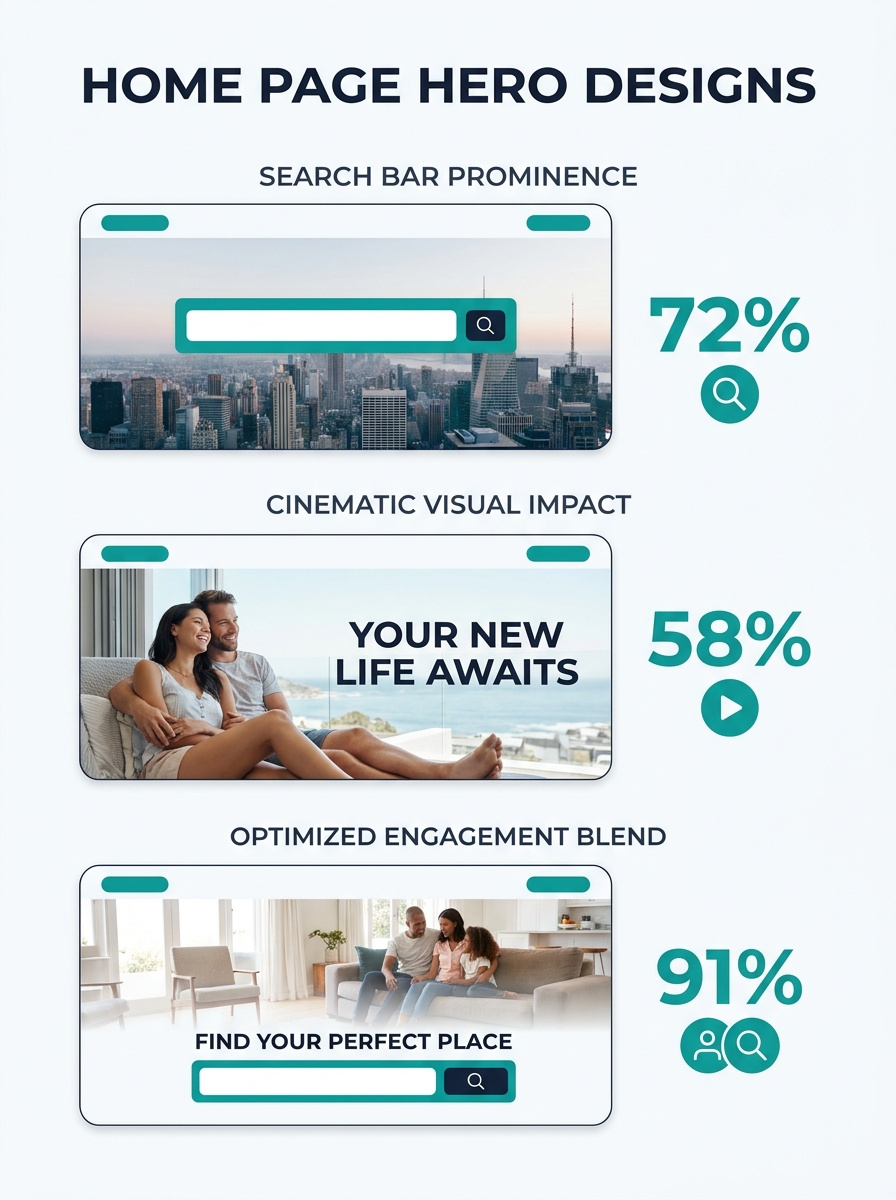
This is the default. Open any template marketplace, pick a real estate theme, and the hero section will almost certainly feature a prominent property search bar layered over a photograph of a downtown skyline or a suburban cul-de-sac. The logic is obvious: people visiting a real estate site want to search for homes, so give them that tool immediately.
The approach has real strengths. Visitors with high purchase intent—someone who already knows they want a 3-bed in Westlake under $650K—get exactly what they need in two seconds. There’s zero friction between arrival and action. Sites built this way also tend to perform well in property search UX alternatives testing because the path from “land on page” to “browse listings” is one click.
But the conversion math tells a more complicated story. Real estate websites average conversion rates in the low single digits, and conversion optimization research from Ylopo emphasizes that addressing emotional triggers alongside logical ones is essential for improving those numbers. A search bar satisfies the logical brain (“show me homes in my price range”) while ignoring the emotional one (“can I picture my life here?”).
The other problem is commoditization. When your homepage looks identical to Zillow, Redfin, and the agent three streets over, you’ve given the visitor no reason to register on your site instead of theirs. And if they can get the same IDX results on a portal with more inventory, they probably will. As we covered in our look at why generic property filters hurt lead conversion, the search-forward approach often produces high bounce rates from visitors who run a quick search, scan the first page of results, and leave without ever identifying you as their agent.
When Search-Forward Works
If you operate in a market where your IDX feed has a genuine data advantage—exclusive pocket listings, pre-market inventory, or hyperlocal filters competitors can’t match—leading with search makes sense. The search bar becomes your differentiator rather than a commodity feature. But for agents running the same MLS feed as everyone else, there’s diminishing return in making it your centerpiece.
The Aspiration-First Homepage
The aspiration-first approach replaces the search bar hero with lifestyle imagery, brand narrative, and emotional messaging. Think cinematic photography, video backgrounds, neighborhood storytelling, and copy that sells a way of living rather than a database of square footage and lot sizes.
Brightstone’s “Live Brighter” campaign is one example. The Agency, a luxury firm, uses dramatic hero imagery with bold black-and-gold branding and cinematic property presentations that target high-end clientele in markets worldwide. These sites position the brokerage as a lifestyle brand first and a search tool second.
This strategy works because real estate is among the most emotionally driven purchase categories that exist. The emotional weight a buyer places on how a property looks and feels—in photography, in presentation, in the overall narrative—shapes purchasing decisions as much as the price-per-square-foot calculation does. Aspirational real estate marketing taps directly into that psychology.
When your homepage looks identical to Zillow, Redfin, and the agent three streets over, you’ve given the visitor no reason to register on your site instead of theirs.
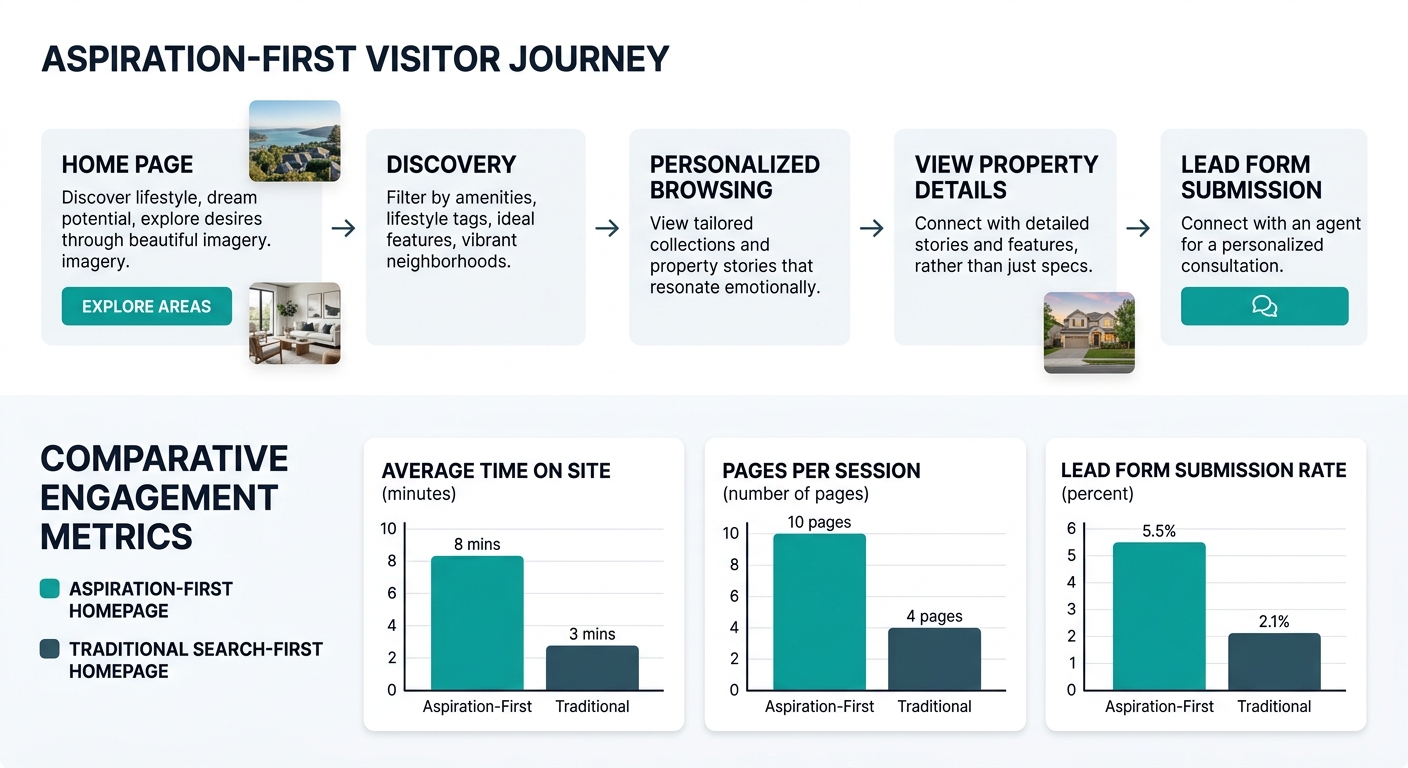
The conversion advantage shows up in two places. First, visitors who engage with lifestyle content tend to stay on site longer, exploring neighborhood pages and agent bios before they ever touch a search filter. That extended session time builds familiarity and trust, which means when they do submit a contact form, they’re warmer leads. Second, aspiration-first design creates brand differentiation. Visitors remember you. They bookmark your site. They come back.
The hidden architecture of your website matters here too. An aspirational homepage only converts if the pages beneath it guide the visitor toward a clear next step. Beautiful branding paired with confusing navigation is a recipe for admiration without action.
When Aspiration-First Falls Short
This approach risks alienating high-intent visitors who arrived ready to search. If someone clicked a Google ad for “homes for sale in Scottsdale” and lands on a page with a brand video and no visible search tool, they’ll hit the back button. The aspiration-first model also demands strong visual assets—professional photography, polished copy, consistent brand identity—which means higher upfront investment and ongoing maintenance. Agents who don’t have the budget for custom imagery often end up with aspirational designs filled with stock photos, and visitors can tell the difference instantly.
The Hybrid Model
The hybrid approach keeps lifestyle branding in the hero section while placing a search bar either within or directly below it, so both the emotional hook and the functional tool are accessible above the fold.
Keller Williams NYC offers one version of this: their platform leads with a data-driven intelligence pitch—35 years of real estate data used to match buyers with homes—while still providing immediate search access. The brand story and the search function coexist without competing.
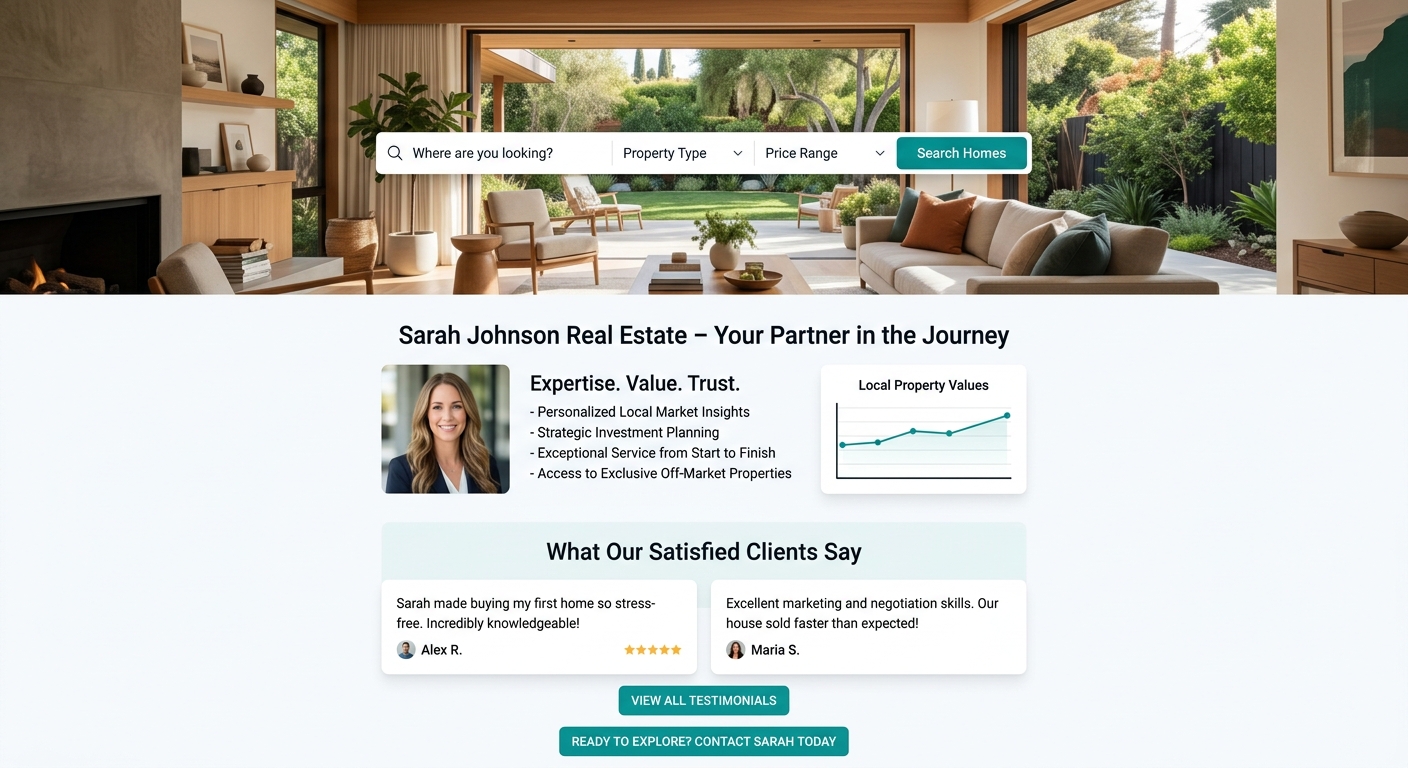
For independent agents, the hybrid model often means a homepage with a strong personal brand section (your photo, a headline about your market expertise, maybe a short testimonial) with a search bar positioned just below or embedded within the hero. You can browse the Pillar template gallery to see how this layout works in practice. The key is that the search tool doesn’t dominate. It shares space with elements that differentiate you from portal sites.
Homepage conversion optimization in the hybrid model depends heavily on visual hierarchy. If the search bar is the largest, most prominent element, you’ve effectively built a search-forward site with decorative branding around it. If the lifestyle imagery overwhelms and the search bar is tucked into a corner, high-intent visitors won’t find it. The balance has to be deliberate.
Where CTA placement on your site fits into this equation is worth thinking through carefully. A hybrid homepage gives you more surface area for strategic calls-to-action: a “Schedule a Consultation” button near your brand messaging, a “View Listings” button near the search bar, and a social proof section with reviews and testimonials that builds trust between the two.
When the Hybrid Model Gets Messy
The risk is trying to do everything and doing nothing well. A homepage that contains a brand video, a search bar, a featured listings carousel, an agent bio, a testimonial slider, a neighborhood guide, and a blog feed isn’t a hybrid. It’s a junk drawer. Every element you add above the fold competes for attention. Hybrid works when you pick two priorities (brand identity + search, or brand identity + social proof) and commit to them, pushing everything else below the fold or onto interior pages.
Who Should Pick Which
The right answer depends on three factors: your traffic source, your market position, and your content budget.
If most of your traffic comes from paid ads with property-specific intent (Google Ads for “homes for sale in Scottsdale,” for example), the search-forward or hybrid approach wins. These visitors arrived with a task in mind, and your homepage should let them complete it fast. Sending paid traffic to a cinematic brand page burns ad spend.
If most of your traffic comes from organic search, social media, or referrals, the aspiration-first or hybrid approach will outperform. These visitors are earlier in their decision process. They’re evaluating you as a person and a brand, and lifestyle content gives them reasons to stay and explore.
If you operate in luxury markets, aspiration-first is the strongest play. High-net-worth buyers expect a curated experience. A search bar that looks like every other MLS portal signals “commodity” to someone shopping $3M+ properties. The Agency, Sotheby’s International Realty, and most top-producing luxury teams have already made this shift.
If you’re a solo agent or small team with limited photography and copy resources, a clean hybrid approach is the safest bet. You get brand differentiation without needing a full creative production budget. Pair a strong headshot, a clear value proposition headline, and a well-placed search bar with a few genuine client testimonials, and you’ll outperform the default template that treats your homepage like a miniature Zillow.
Tip: Test this yourself: pull up your current homepage on your phone and ask a friend who doesn’t work in real estate to describe what they see in five seconds. If they say “a search bar,” you’re competing with portals. If they say “a real estate agent who specializes in [your area],” your brand is coming through.
The broader trend in real estate website design strategy is moving away from the search-bar-as-centerpiece model. Portals own that experience, and they always will, because they have more data, more listings, and more engineering resources than any individual agent site. Your homepage should answer a different question entirely: why should a buyer or seller work with you, specifically, in this market? The agents and teams answering that question with aspirational, emotionally resonant design are the ones watching their conversion numbers climb, one homepage visit at a time.