
Zillow draws nearly 230 million unique monthly visitors per quarter, according to LeadPost’s breakdown of the platform’s reach. That audience size makes it the largest real estate destination in the U.S. by a wide margin. But this week, Realtor.com CEO Damian Eales told Real Estate News that portals are “increasingly closing their ecosystem,” a public admission from an industry executive that the platforms agents pay for access to are tightening the walls around their data, their leads, and their audiences.
That quote landed the same week LabCoat Agents published a breakdown of how top agents are using YouTube to generate high-intent leads without buying a single portal subscription. The timing isn’t coincidental. Agents who’ve been building organic real estate video marketing channels are watching the paid-portal model crack in real time, and the data supports what they’ve been doing.
The Math That Makes Paid Portals Uncomfortable
Portal lead economics work on a simple exchange: you pay per lead, and those leads arrive with unknown intent. Some are browsing. Some accidentally clicked. Some are six months from making a decision. You don’t know which is which until you’ve spent hours on follow-up.
YouTube lead generation for real estate works on a fundamentally different model. Instead of paying per lead, you build an asset that compounds over time. A single well-positioned video answering a specific relocation query—”cost of living in [your city]” or “pros and cons of moving to [your neighborhood]”—can generate inbound inquiries for months or even years after you publish it.
Here’s where the numbers get interesting. Inman profiled an agent who built a $150 million business on YouTube over five years, averaging roughly $30 million in annual closed volume. Her individual videos often pull fewer than a few hundred views. That detail matters enormously, because it demolishes the assumption that you need viral reach to make YouTube work.
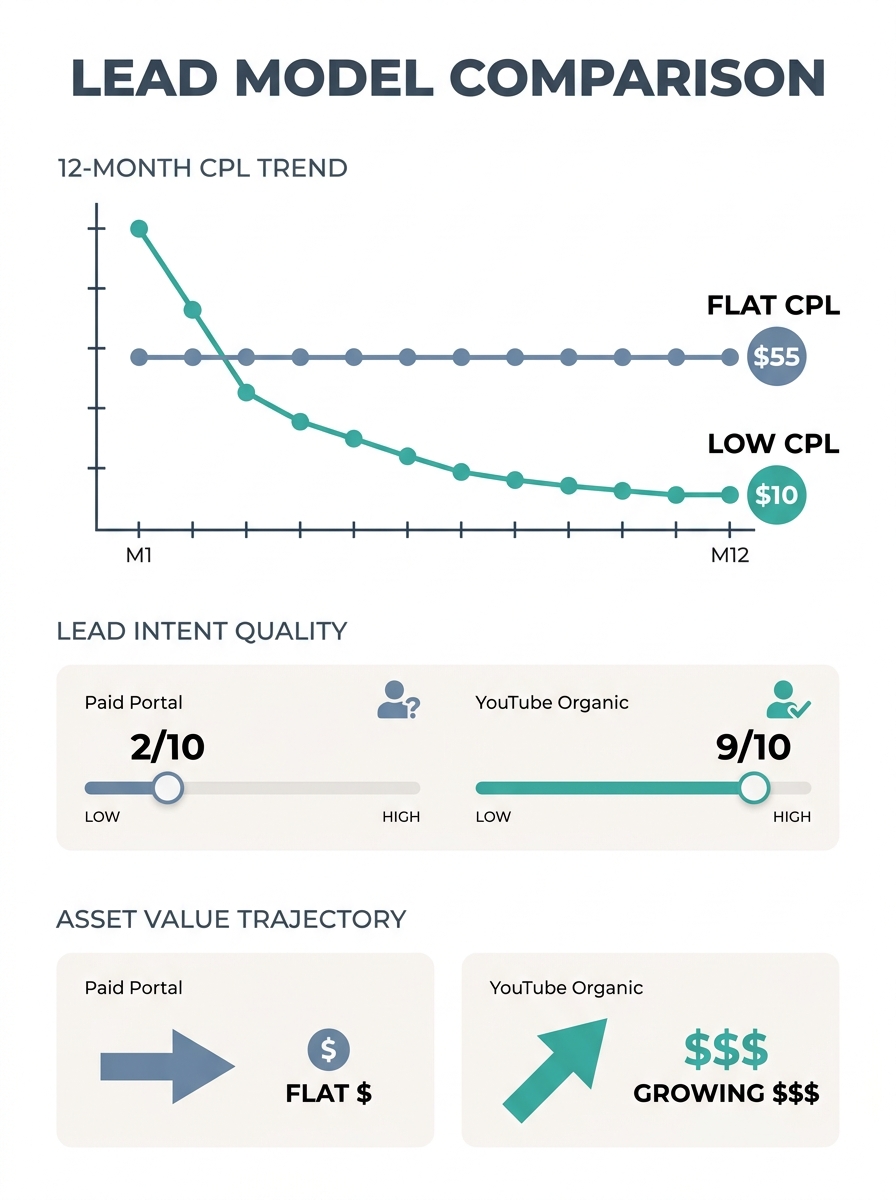
A smaller audience with high intent will consistently outperform a large audience with no intent. The viewers who find a deep-dive video about school districts in your farm area at 11 PM on a Tuesday are planning a move. The people clicking a Zillow ad during a lunch break may have already forgotten about it by dinner.
YouTube Is a Search Engine, and That Changes Everything
The strategic mistake most agents make with YouTube is treating it like Instagram or TikTok, platforms built on algorithmic discovery of entertainment content. YouTube is a search engine. It’s the second-largest search engine in the world, behind Google (which owns it and often surfaces YouTube videos directly in search results).
This distinction reshapes your entire content strategy. When someone types “best neighborhoods in Austin for families” into YouTube’s search bar, they’re revealing specific purchase intent. They’re researching. They’re comparing. They’re closer to a transaction than almost any lead you’ll get from a portal ad.
The viewers who find your neighborhood deep-dive at 11 PM on a Tuesday are planning a move. Portal leads during a lunch break may be forgotten by dinner.
Top-performing agents treat YouTube as an inbound engine, not a broadcasting platform. Their content strategy begins with search queries, not personal branding. If you’ve already invested in building your real estate website’s architecture for lead quality, the same principle applies here: structure your content around what buyers and sellers are actively searching for, not what you want to talk about.
What to Post (and What to Stop Posting)
Listing videos are the most common real estate content on YouTube. They’re also among the least effective for lead generation. C2 Communications’ analysis of real estate video strategy found that listing walkthroughs underperform because they have a tiny search window (the listing period) and appeal to a narrow audience (people already interested in that specific property).
Content that generates high-intent real estate leads over the long term falls into predictable categories:
- Neighborhood and city guides: “Living in [area],” “Moving to [city],” “[Neighborhood] vs. [Neighborhood]”
- Buyer and seller education: “First-time buyer mistakes in [state],” “What your home inspector won’t tell you”
- Cost-of-living breakdowns: These pull enormous search volume from relocation prospects
- Market updates for your specific area: Monthly or quarterly, positioning you as the local authority
- Process walkthroughs: “What happens after your offer is accepted in [state]”
The specificity matters. “Tips for first-time home buyers” competes with every real estate channel in the country. “First-time home buyer mistakes in Portland, Oregon” competes with maybe a dozen. And the person searching for that second phrase is more likely to call a Portland agent.
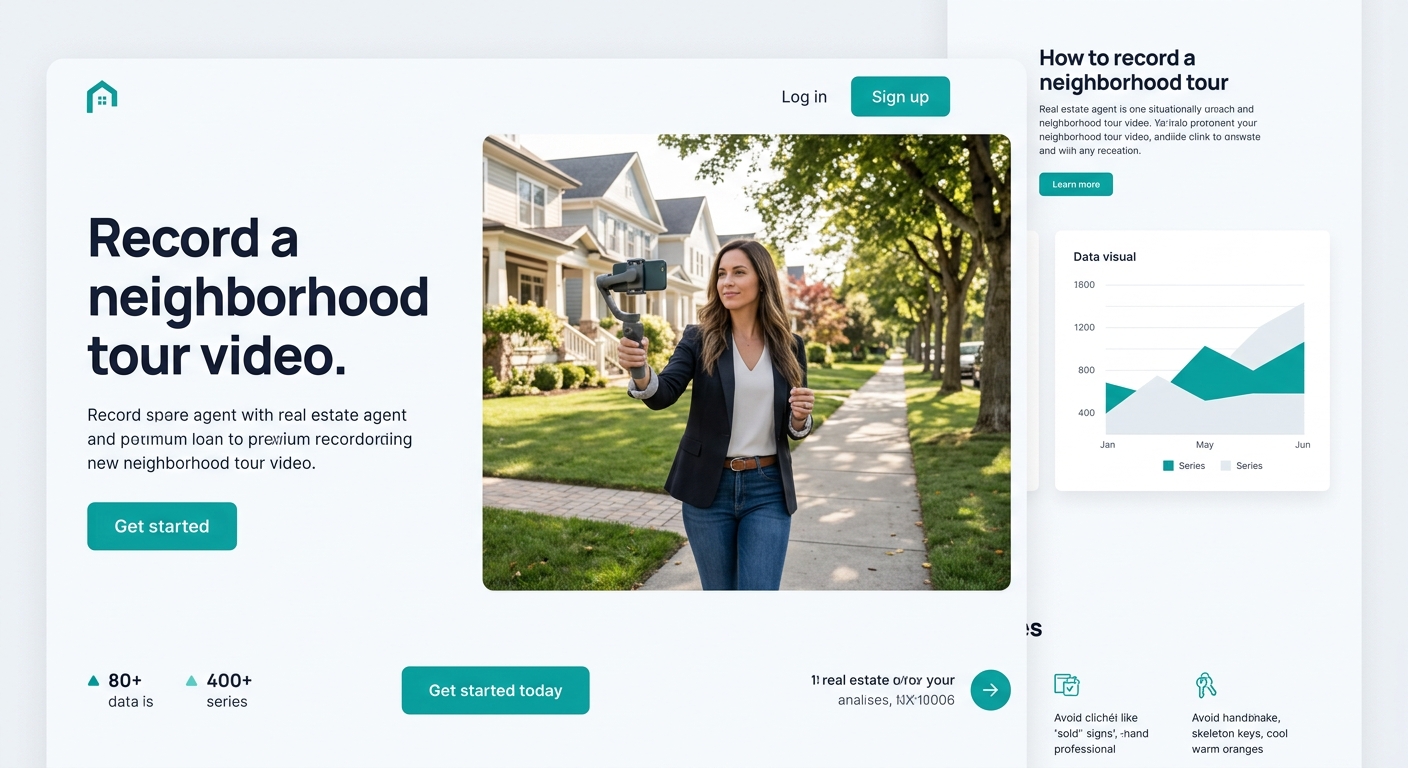
If you’ve been comparing which social platforms actually convert real estate leads, YouTube’s advantage here is longevity. A TikTok or Instagram Reel has a shelf life measured in days. A well-optimized YouTube video indexed for a local search query can pull traffic for years.
Shorts Are the Discovery Layer You’re Ignoring
YouTube’s own creator guidance now positions Shorts, videos in the 15-to-90-second range, as a primary discovery mechanism. Shorts are consistently surfaced to non-subscribers, making them one of the most accessible organic reach tools available to agents without paid promotion.
The smart play is using Shorts as a teaser layer for longer content. A 60-second Short highlighting one surprising fact about a neighborhood drives viewers to the full 10-minute neighborhood guide. That full guide contains your call to action, your contact information, and your lead capture system.
This two-layer approach—Shorts for discovery, long-form for conversion—mirrors what the most productive YouTube-first agents are already doing. You don’t have to choose between short-form and long-form. You need both, but they serve different functions in your pipeline.
The 60-to-120-Day Reality Check
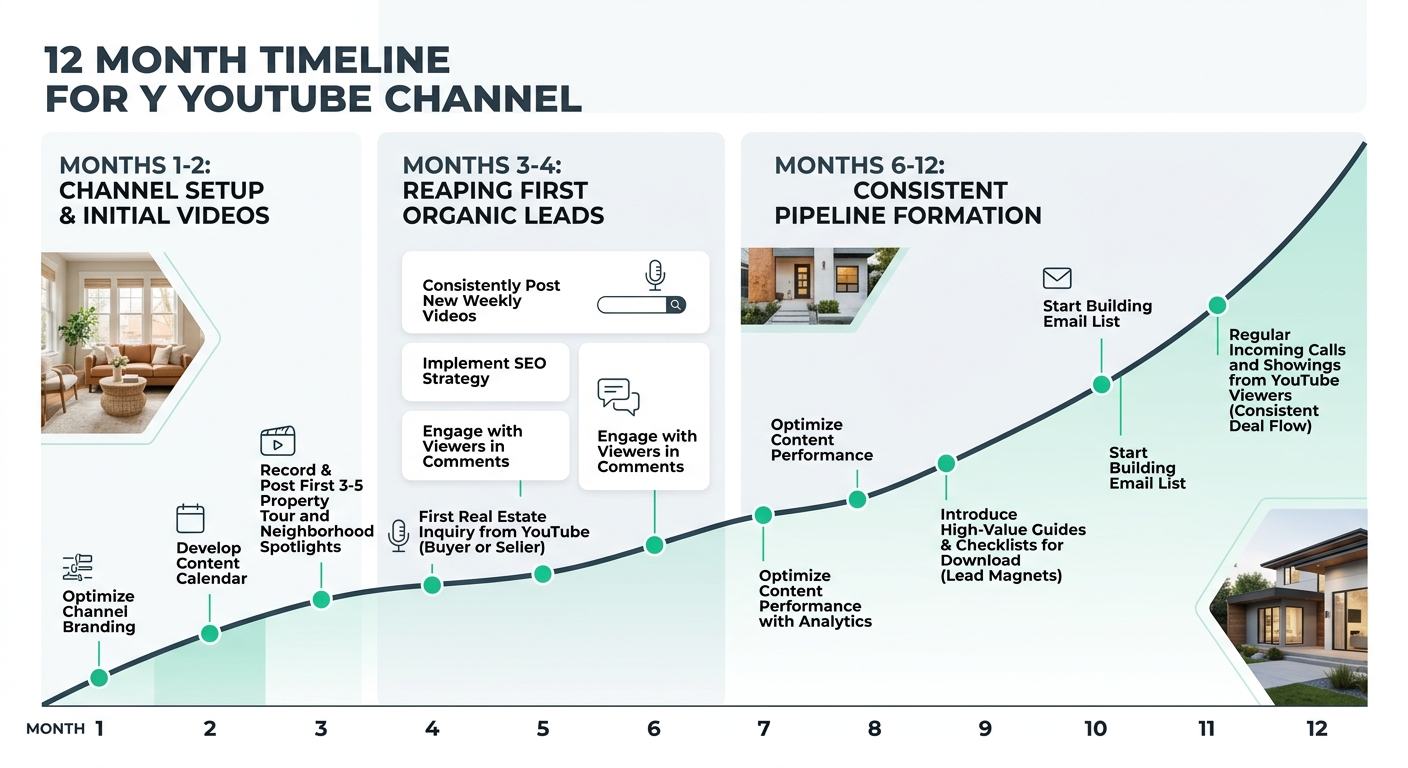
YouTube is a slow burn. LabCoat Agents’ April 2026 breakdown of agent YouTube strategies reports that most agents see their first leads within 60 to 120 days, with a consistent pipeline forming at the 6-to-12-month mark. If you’re comparing this timeline against alternatives to Zillow leads, where you can start receiving names tomorrow, the delay feels significant.
But the cost structure inverts over time. Portal leads are a recurring expense. If you stop paying, the leads stop arriving. YouTube content, once published and optimized, continues generating inbound interest at zero marginal cost. The agents who started building channels 18 months ago are now operating with lead acquisition costs that portal-dependent competitors can’t match.
The follow-up infrastructure matters as much as the content itself. CallAction’s research into video-driven lead generation emphasizes that generating the lead is only the start. You need a reliable system for lead qualification and follow-up that can handle contacts arriving steadily over months rather than in a single batch.
The Niche Positioning Advantage
Agents who dominate a narrow topic outperform generalists on YouTube by a wide margin. “First-time buyers over 40,” “luxury relocation to Denver,” “VA loan process in North Carolina”—these hyper-specific angles attract smaller audiences, but those audiences arrive pre-qualified by their own search behavior.
This aligns with the broader shift toward specificity in real estate lead generation strategy. Generic content creates generic leads. Targeted content creates conversations with people who already know what they want and are looking for someone to help them get it.
And here’s the compounding effect: as you publish more videos within your niche, YouTube’s algorithm recognizes your channel as a topical authority and surfaces your content more aggressively in related searches. A channel with 40 videos about relocating to Charlotte will outrank a channel with 3 Charlotte videos and 200 videos about random real estate topics.
Tip: Start by listing the 20 questions your last 10 buyer and seller clients asked you before they committed. Those questions are your first 20 video titles. Localize each one with your city or neighborhood name.
Questions The Numbers Still Can’t Answer
The data makes a strong case for YouTube as an alternative to paid portals. The $150 million case study, the 60-to-120-day lead timeline, the compounding cost advantage—these are persuasive numbers. But several important gaps remain.
There’s no controlled study comparing YouTube-generated leads against portal leads on close rate, average transaction value, or lifetime client value. The agents sharing their success stories are self-selecting; the ones who tried YouTube for three months and quit aren’t publishing retrospectives about it. Survivorship bias is real, and the drop-off rate for real estate YouTube channels is steep.
We also don’t know how saturated the strategy becomes as more agents in a given market adopt it. Ten agents in Denver all publishing “Moving to Denver” videos will split search traffic ten ways. Early movers have a structural advantage that late entrants may struggle to replicate. The LabCoat Agents training session scheduled for April 29, 2026 will likely accelerate adoption even further, which means the window for getting established in an uncrowded local niche is narrowing.
What we do know: the portal ecosystem is tightening, the economics of paid leads keep getting worse, and video content optimized for search intent is generating documented results for agents willing to invest the time. Whether YouTube becomes your primary lead source or a supplement to your existing pipeline, the agents who build this skill set now will own an asset that appreciates. The agents who keep renting leads from portals will keep paying whatever the portal decides to charge next quarter.