
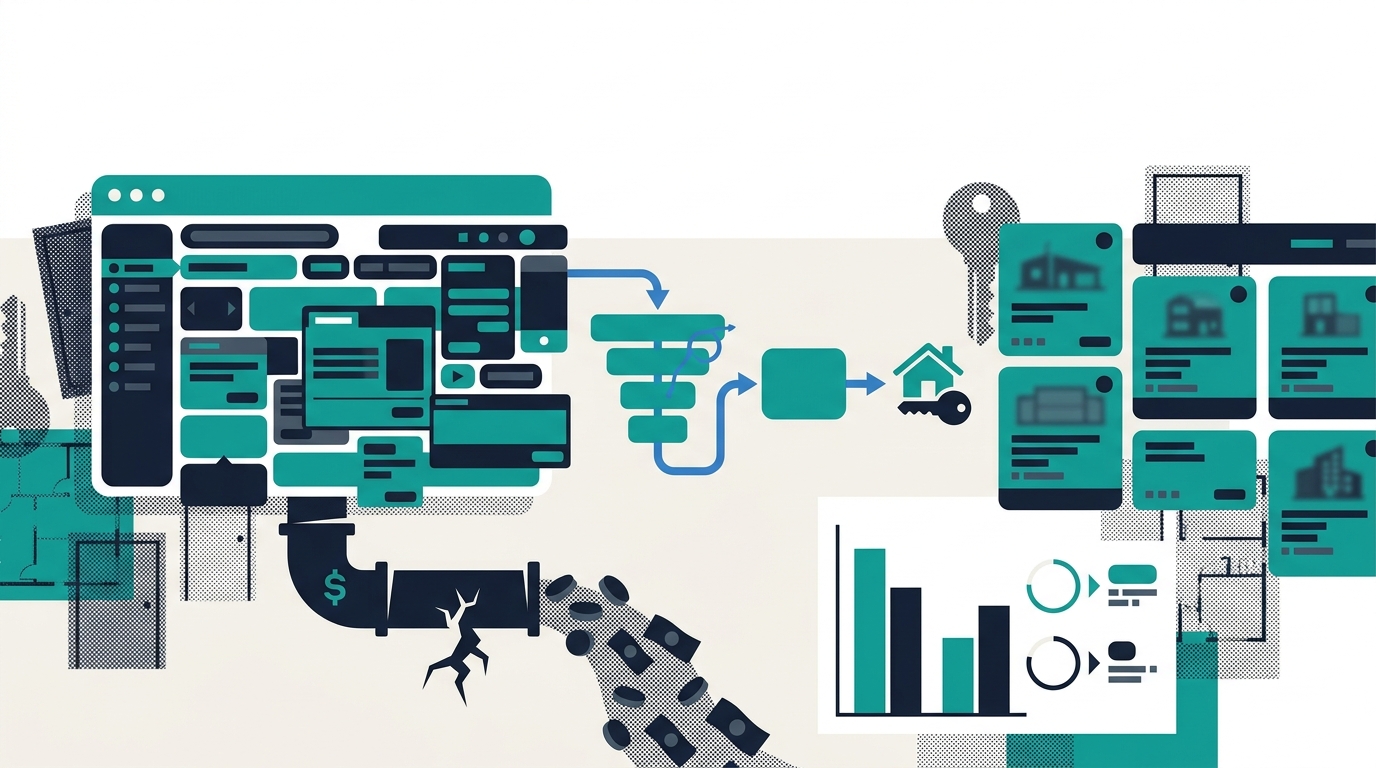
Agents with well-optimized websites can achieve a cost per lead under $2, according to practitioner data shared in Reddit’s r/realtors community, while agents paying $200-$500 per month for bloated platforms loaded with 40+ plugins routinely fail Google’s Core Web Vitals thresholds and watch 53% of their visitors leave before a single page loads.
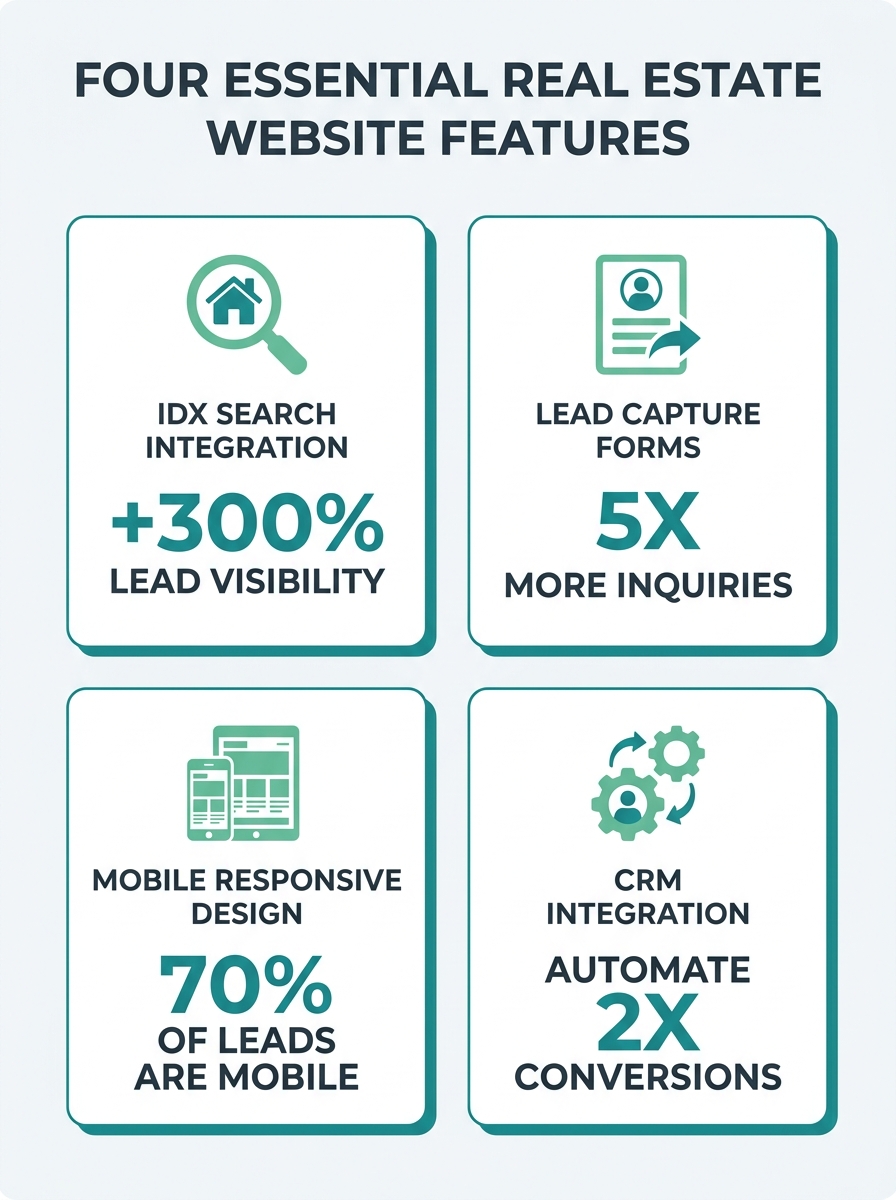
TL;DR: Only four website features consistently generate real estate leads: IDX property search, mobile-responsive design, CRM-connected lead capture forms, and home valuation tools. Hero sliders, forced registration walls, and decorative animations add load time and monthly cost without measurable conversion lift. Divide your total annual website spend by leads generated to find your real cost per lead, then cut every feature you can’t tie to that number.
The Four Features That Actually Generate Leads
Revenue-driving website features for real estate agents fall into a short, well-documented list. According to iHomefinder’s analysis of agent website usage patterns, agents prioritize IDX search, automated lead capture, CRM integration, and mobile responsiveness above everything else. Anything beyond those four categories needs to justify its existence with conversion data, and most add-ons can’t.
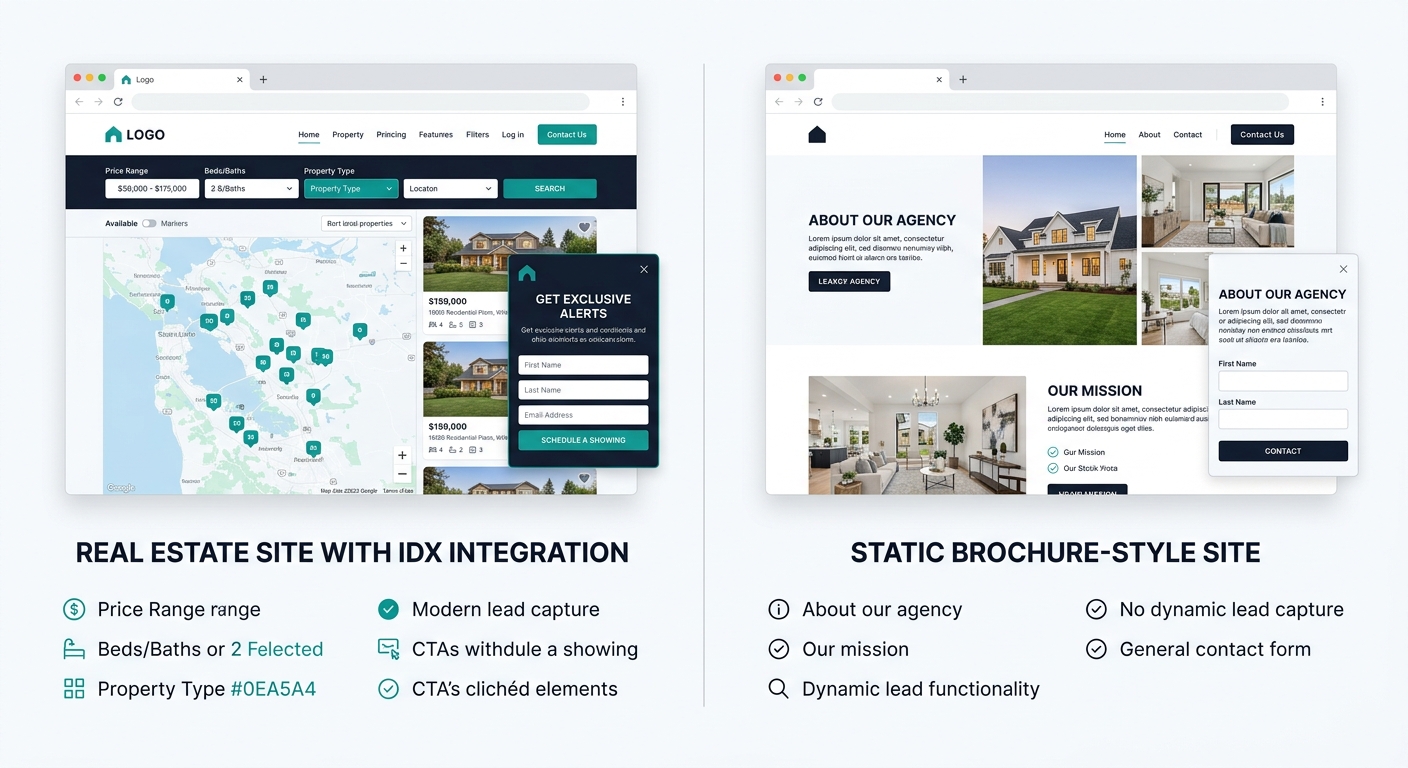
IDX property search is the anchor. A website without IDX is a digital business card. When IDX connects directly to MLS data, it keeps listings current and gives visitors a reason to return daily. The TREM Group’s guide on IDX integration explains that it “keeps your listings updated, boosts searchability, and helps you generate more qualified leads.” Agents who treat IDX as optional are sending their highest-intent visitors to Zillow instead.
Lead capture forms rank second, but placement determines everything. Home valuation tools, contact forms, and newsletter sign-ups each serve different stages of the buyer and seller funnel. If you’ve been wondering why your CTA buttons aren’t converting, the answer usually has less to do with button color and more to do with whether the form appears at the moment of peak engagement.
Mobile responsiveness is the third essential. With 61% of homebuyers refusing to return to a site that doesn’t work on their phone, this feature alone determines whether half your traffic ever sees your lead capture. Agents who’ve adopted mobile-first navigation architecture report that phone-screen visitors engage with property filters at higher rates than desktop users.
CRM integration closes the loop. iHomefinder’s research on CRM-IDX integration found that “integration powers lead generation by combining IDX and CRM functionalities to attract, capture, nurture, and convert leads.” Without this connection, your website collects names and emails that sit in an inbox untouched. The IDX-to-CRM data sync problem is one of the most common reasons agents feel their website “doesn’t work.”
Where the Money Goes and Gets Wasted
Real estate website pricing spans a wide range. According to Luxury Presence’s 2026 cost breakdown, growing agents should expect to spend $1,000 to $5,000 on a semi-custom build with IDX and lead generation forms. Established agents and teams investing in brand identity spend $5,000 to $25,000 or more on fully custom builds. The problem isn’t the price range itself. The problem is that agents at every tier pay for features they’ll never use.
Common budget drains include full-page hero sliders, animated property galleries, forced account creation walls, and decorative homepage elements that add visual weight without contributing to conversions. A slider cycling through five stock lifestyle images adds 3-8MB of page weight and pushes load times past the 3-second threshold where 53% of visitors abandon the site entirely.
Here’s a practical way to assess your real estate website builder ROI: divide your total annual website cost (subscription, IDX fees, hosting, add-ons) by the number of leads your site generates. If you’re paying $3,600 per year and generating 30 leads, your website builder cost per lead is $120. Compare that to the practitioner on Reddit’s r/realtors thread who reported that a client “averages a CPL of under $2, based on the investment he has made in his website and the number of leads it generates per month.” As that commenter added, “it certainly is no easy feat to rank well on Google, but if you have either the money or time, it can have a huge ROI.”
The gap between $120 and $2 tells you exactly how much unused features cost.
Divide your total annual website cost by the number of leads generated. If the result is above $50, your feature stack almost certainly contains dead weight.
Why IDX Integration Value Outweighs Its Cost
Why does IDX consistently rank as the highest-value feature? Because it transforms a static marketing site into a property search destination that visitors bookmark. The MLSImport guide on IDX integration confirms that IDX boosts SEO, lead generation, and user experience simultaneously, making it one of the few features that serves three business goals at once.
A purpose-built real estate website platform typically bundles IDX, hosting, CMS, and maintenance into a single package. Luxury Presence notes this approach “reduces the technical burden and often delivers faster time to launch.” For most agents, the bundled approach is more practical than bolting IDX onto a WordPress site with a standalone plugin. You can browse Pillar’s template gallery to see how bundled IDX and lead capture look in practice, already integrated into the page structure.
Location-based keyword optimization multiplies IDX integration value further. Pages built around searches like “luxury homes in [city]” or “best real estate agent in [area]” drive organic traffic to your IDX-powered listings. Combined with Google My Business integration and structured data markup, this approach makes your IDX pages rankable content rather than isolated search widgets.
The Performance Tax of Feature Bloat
Every unnecessary feature carries a performance cost measured in milliseconds, megabytes, and lost visitors. Heavy page builders like Elementor and Divi generate code bloat that degrades Interaction to Next Paint (INP), which must stay under 200ms to maintain search rankings. Agents running 40+ plugins for sliders, popup forms, social feeds, and animation libraries often see INP scores 3-4x above that threshold.
The fix is straightforward: audit plugins quarterly, remove unused code, enable lazy loading for below-the-fold content, implement a CDN, minify CSS and JavaScript files, and compress images from 5MB DSLR originals down to web-optimized sizes under 200KB. If your site’s Core Web Vitals scores are failing, the cause is almost always features you added six months ago and forgot about.
Warning: Sites loading over 3 seconds lose 53% of visitors before any content appears. A single hero slider with uncompressed images can push your load time past this threshold by itself.
High-ROI vs. Low-ROI Features Compared
| Feature | Monthly Cost | Lead Generation Impact | Page Speed Impact | Verdict |
|---|---|---|---|---|
| IDX property search | $50-$100 | High (primary traffic driver) | Moderate (depends on implementation) | Essential |
| Lead capture forms | Included in most platforms | High (direct conversion tool) | Minimal | Essential |
| Mobile-responsive design | Included in modern builders | High (61% won’t return without it) | Positive (smaller assets) | Essential |
| CRM integration | $0-$50 add-on | High (prevents lead leakage) | None | Essential |
| Home valuation tool | $30-$100 | Medium-high (seller lead magnet) | Low | Worth testing |
| Neighborhood content pages | Content creation time only | Medium (long-term SEO value) | Low | Worth building |
| Hero image sliders | Included but costly in load time | Low (no documented conversion lift) | Severe (3-8MB added) | Cut it |
| Forced registration walls | Included in some IDX setups | Negative (increases bounce rate) | None | Cut it |
| Animated property galleries | Plugin cost + performance cost | Low | Severe | Cut it |
| Social media feed widgets | Plugin cost | Low (visitors rarely engage) | Moderate | Cut it |
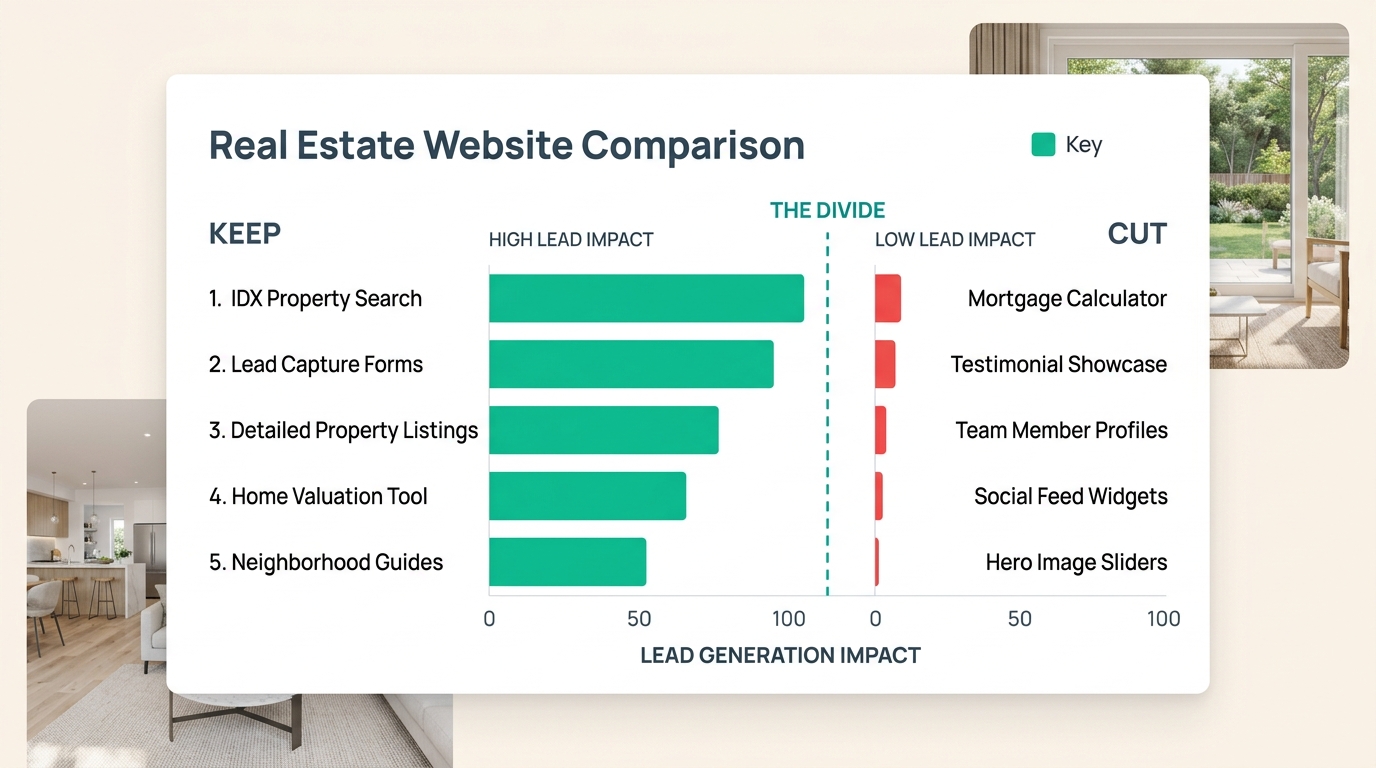
The top four rows represent the essential website features for agents, delivering 80%+ of a site’s lead generation capacity with minimal performance overhead. The bottom four add cost, degrade speed, and produce no measurable return. If you’re considering which tier fits your budget, Pillar’s pricing page breaks down what’s included at each level so you can compare against this table directly.
How to Audit Your Feature Stack in 30 Minutes
Open your website’s admin panel and list every active plugin, widget, and integration on a spreadsheet. Next to each one, write the number of leads it contributed in the past 90 days. If you can’t tie a single lead to a feature, it’s a removal candidate.
Then calculate your total cost. Add your monthly platform fee, IDX subscription, hosting charges, premium plugin licenses, and any developer maintenance. Multiply by four to get your quarterly spend, then divide by quarterly leads. That number is your real website builder cost per lead, and it’s the only metric that tells you whether your current setup earns its keep.
For agents whose websites capture leads but fail to convert them into appointments, the issue often extends beyond the site itself into lead nurturing and CRM workflows that break down after the initial form submission. A $2 lead that never gets a follow-up call is worth exactly $0.
What the Data Doesn’t Tell Us
The case for a lean, four-feature approach to real estate websites is strong. But several gaps remain in the available data.
No publicly available study isolates the conversion rate difference between a $2,000 semi-custom build and a $15,000 custom site when both include the same core features. The price difference buys branding and design quality, but whether premium design translates to measurably more leads at the same traffic volume is an open question that vendor marketing materials conveniently skip.
We also lack longitudinal data on how website builder cost per lead changes over time. An agent’s CPL in year one, while organic rankings are still building, will look dramatically different from year three, when compounding search visibility pays off. The Reddit example of sub-$2 CPL likely reflects years of sustained SEO investment, not a first-month outcome. Agents who cancel after 6 months of modest results may be quitting right before the math starts working.
And the rise of AI-powered search, from Google’s AI Overviews to ChatGPT and Perplexity, introduces a variable that no historical dataset captures. If AI agents increasingly mediate property search, the value of IDX on your own domain could shift in unpredictable ways. According to web.dev’s guidance on building for AI agents, these systems parse accessibility data and structured DOM hierarchies, not visual design. The sites best positioned for this future are the ones with clean code and minimal bloat, which circles back to the same conclusion the performance data already supports: fewer features, implemented well, outperform a cluttered site every time.