
RealtaSnap published video tour implementation guidance on August 18 instructing New York City real estate agents to plan room-to-room flow sequences, schedule filming during natural light hours, and create vertical social media cuts alongside 4K property walk-throughs, arguing static photography alone fails to convey spatial atmosphere in competitive markets, according to the company’s marketing blog.
TL;DR: Real estate media provider RealtaSnap published an eight-step video tour production framework for NYC agents, emphasizing spatial flow planning, lighting optimization, and social media distribution to boost buyer engagement beyond static photography.
The guidance addresses a documented engagement gap where buyers scroll past properties shown only in still images, unable to experience room transitions or ambient qualities that influence showing decisions. The framework positions video tours as pre-qualification tools that convert casual browsers into committed prospects before in-person visits.
Production Specifications and Delivery Timeline
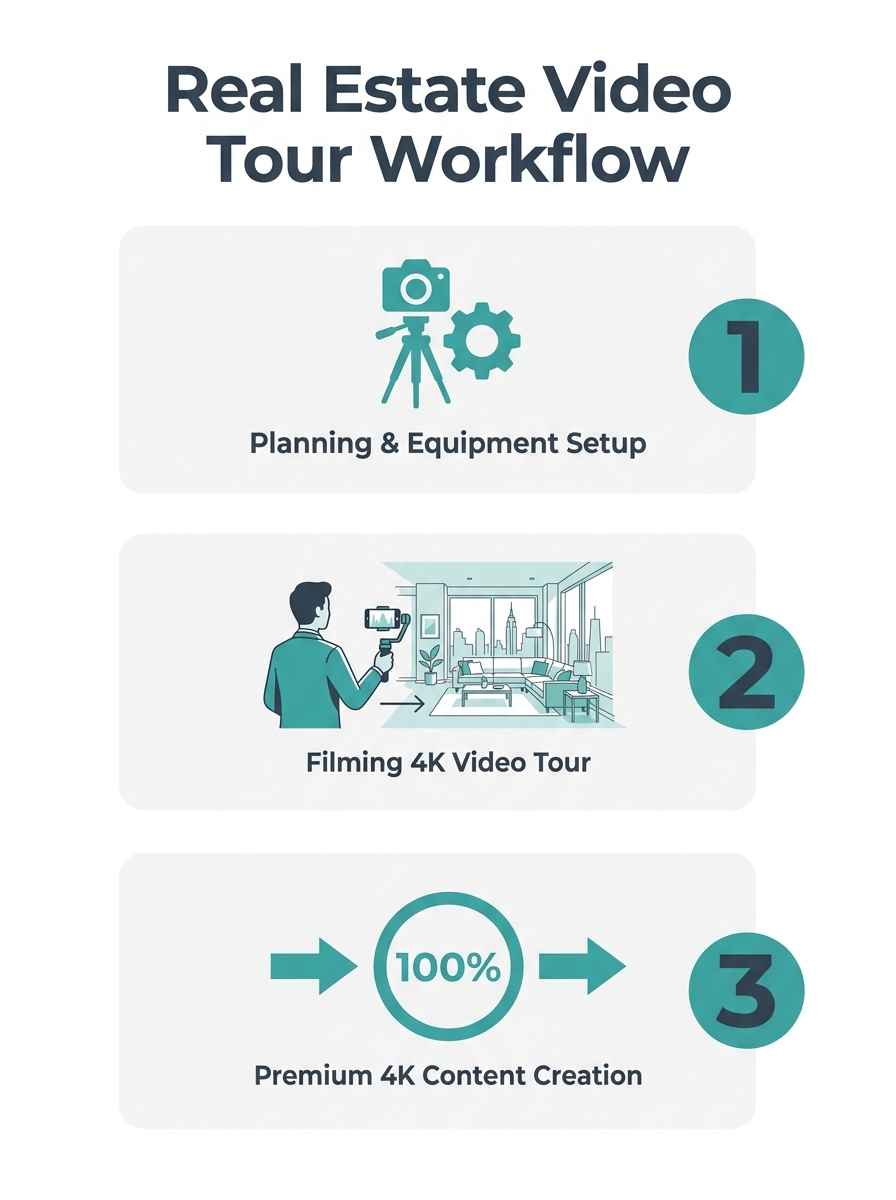
RealtaSnap’s framework instructs agents to capture properties using 4K cinematography with smooth motion sequences and crisp audio, delivered within 24 hours of filming. The company specifies wide establishing shots, close-up detail captures, and seamless transitions between spaces to maintain viewer attention across one-to-two-minute tour lengths.
The guidance emphasizes natural light scheduling, recommending golden-hour filming windows when possible or ensuring bright, inviting interior illumination for evening shoots. For multi-unit buildings, the framework directs agents to include lobby, amenity, and rooftop footage to communicate building value beyond individual unit features.
Production specifications include custom agent branding overlays and contact information integration, positioning videos as lead-generation assets rather than purely visual content. The company offers optional add-ons including 3D tours, virtual staging, and drone exterior footage for comprehensive property packages.
Social Media Distribution Strategy
The framework prioritizes platform-specific video cuts optimized for Instagram Reels, TikTok, and Facebook sharing, recognizing that modern buyers discover properties through social feeds before visiting listing sites. RealtaSnap instructs agents to request vertical or square aspect ratios for mobile-first platforms alongside traditional horizontal formats for website embedding.
“Modern buyers are scrolling on Instagram and TikTok,” the guidance states, positioning shareable video content as essential for algorithmic reach. The company reports that engaging social video content generates showing requests from out-of-town buyers, investors, and time-constrained local purchasers who skip properties without immersive previews.
The framework argues that video tours support lead qualification by filtering serious prospects—buyers who book showings after watching full property tours demonstrate higher purchase intent than those responding to photo-only listings. This pre-screening effect reduces agent time spent on unqualified walk-throughs while accelerating the sales cycle for motivated purchasers.
Integration With Photography and Floor Plans
RealtaSnap’s guidance positions video tours as complementary to high-resolution still photography services, not replacements. The framework instructs agents to use static images for initial listing attraction while deploying video content to build emotional connection and spatial understanding once buyer interest surfaces.
The company combines video production with photography packages, floor plan rendering, and virtual staging to create cohesive marketing suites. This bundled approach addresses the documented buyer journey from initial scroll-through (photo-driven) to serious consideration (video-dependent) to showing commitment.
Best-practice recommendations include planning tour routes that showcase property highlights while maintaining logical spatial progression, using cinematic techniques to add visual variety without sacrificing clarity, and keeping edited videos between one and two minutes to maintain engagement without overwhelming viewers.
Context and Outlook
The video tour framework publication follows documented shifts in how real estate buyers evaluate properties, with viral social media posts driving showing requests faster than traditional MLS distribution in some markets. Real estate media providers have responded by offering rapid-turnaround video production that matches the speed expectations of social-first buyers.
For agents competing in high-inventory markets like New York City, video differentiation addresses a specific vulnerability: listings that appear similar in static photography can stand out dramatically when buyers experience spatial flow, natural light quality, and ambient details through motion content. The 24-hour delivery timeline positions video as a standard listing requirement rather than a premium add-on reserved for luxury properties.
The emphasis on social media distribution aligns with broader platform shifts where AI recommendation tools increasingly surface properties based on engagement metrics rather than pure search relevance, rewarding listings that generate shares, saves, and extended viewing time. Agents investing in video content position properties for both human buyer discovery and algorithmic amplification across emerging search interfaces.