
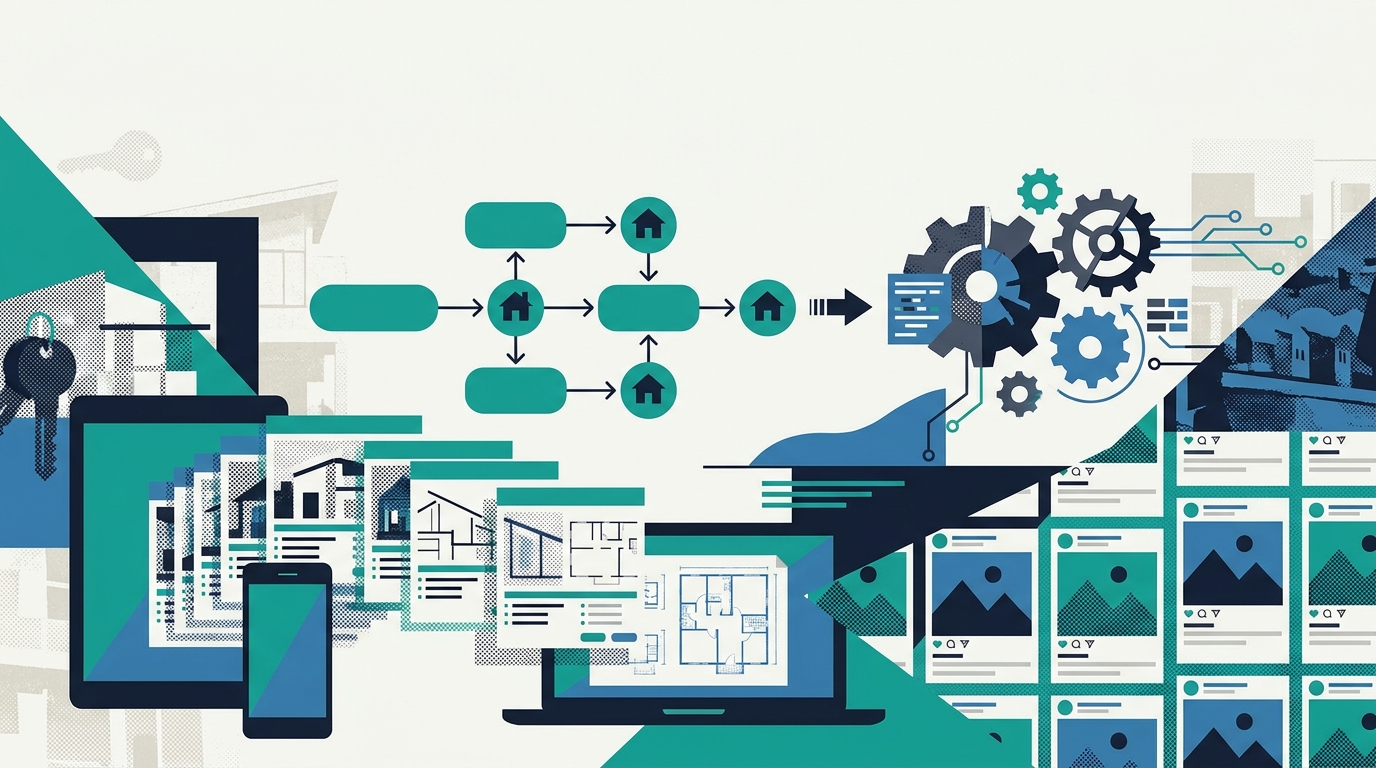
Real estate networks can scale content distribution across hundreds of agent social accounts without losing individual branding by using AI to automate centrally-created posts while preserving local agent details and headshots, according to an industry framework published September 2 by Elite Agent.
TL;DR: AI automation enables networks to distribute branded content across hundreds or thousands of agent social accounts while maintaining local authenticity, turning social audiences into database extensions beyond existing CRM contacts.
The approach addresses a persistent scaling problem: corporate marketing teams already create on-brand content through portals like Canva, but individual agents must manually find, edit, download and post that material to their own social channels. The automation layer removes most of that workflow, according to Richard Lindley, whose analysis of Australian real estate network trends identified audience growth beyond existing databases as an underutilized AI opportunity.
How Network-Level Distribution Would Function
A network with visibility across its entire social footprint—which offices have connected accounts, how many agent profiles are linked, and which platforms are active—could plan and schedule content centrally, Lindley explained in the Elite Agent piece. When the network needs to explain new anti-money laundering requirements, address property fraud prevention or discuss market-wide trends, it creates that content once and schedules distribution across hundreds or potentially thousands of appropriate office and agent social accounts.
The finished posts carry individual agent branding, headshots and local office details rather than appearing as identical corporate messages, according to the framework. Distribution can be scoped nationally, by state or region, or limited to a single office. Agents would opt into professionally created content streams rather than having head office control all social output.
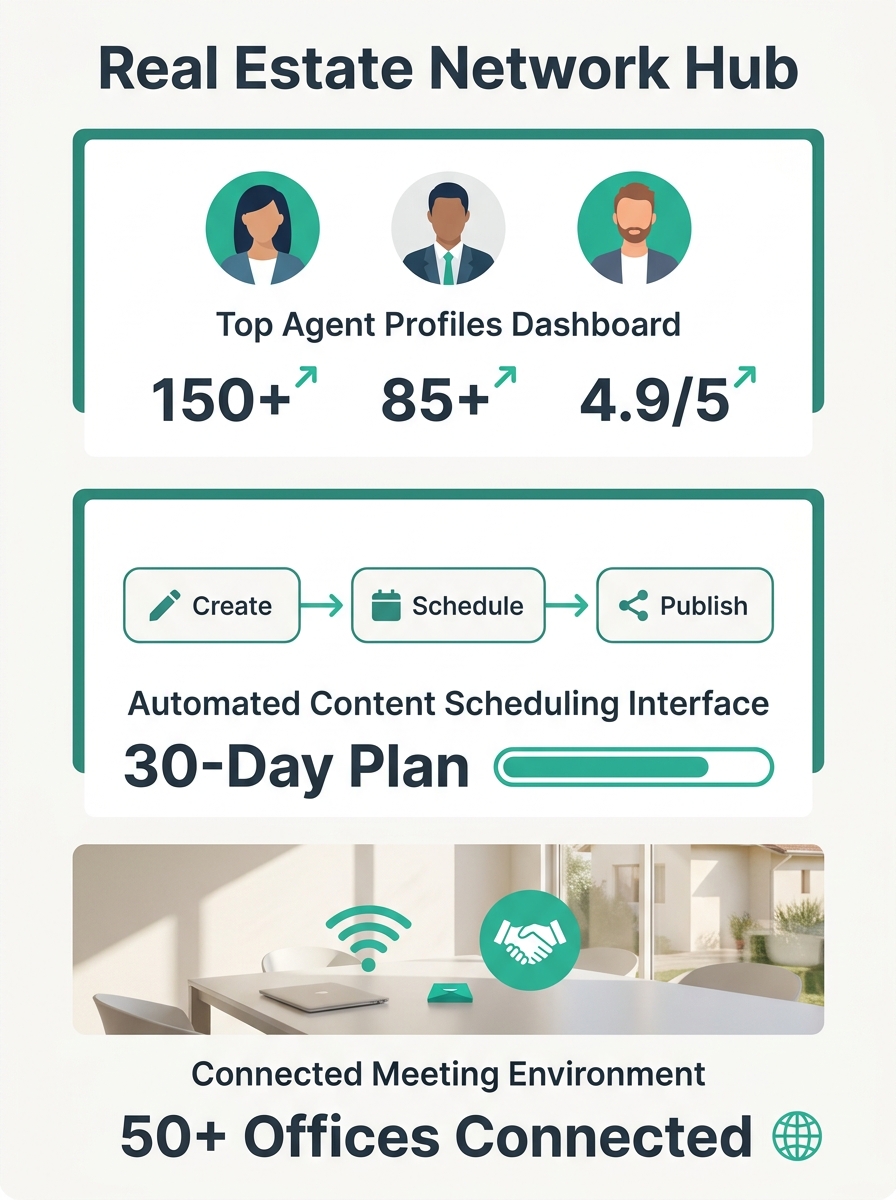
Office-level teams managing 20 to 30 agents could apply the same model locally, creating hyperlocal content and distributing it across agent accounts to maintain consistent social presence without requiring each agent to generate original material. Agents retain the ability to create their own posts while the office ensures baseline activity and messaging alignment, similar to strategies described in the Newton agent Instagram framework that expanded a buyer pool 80 percent through consistent content.
Social Audiences as Database Extensions
The framework positions social media followers as an extension of existing CRM databases. Networks already use AI to identify signals within contact lists—recognizing when someone might be ready for a sales conversation—but social platforms provide access to audiences that extend well beyond known contacts, according to Lindley’s analysis.
Followers engage with content and provide behavioral signals even before entering a database through formal inquiries, appraisals, open house attendance or lead magnet downloads. Growing and engaging those social audiences becomes valuable in its own right because some portion will eventually convert into database contacts. “You’re not only communicating with the people you already know; you’re continually building a larger pool of people who know you,” Lindley wrote.
This approach mirrors the automation workflows outlined in lead-generation automation frameworks that handle nine distinct client-service tasks, but extends the automation upstream to audience-building stages before formal lead capture.
Authenticity Requirements at Scale
The framework includes a caution against using automation to generate low-quality content at volume. Lindley warned that AI’s ability to create convincing images and video creates problems in real estate, where properties can be digitally altered to look better than reality or agents can generate artificial personal branding assets.
Scaling content distribution through automation requires maintaining the authenticity agents are trying to build, according to the analysis. The network-to-agent distribution model works because it preserves the human elements—local knowledge, individual agent personalities and community expertise—while removing manual distribution friction. Content originates from people but reaches audiences through automated channels.
Networks following the framework would need governance around what qualifies for automated distribution versus content that requires individual agent creation. Personal branding frameworks that prioritize trust-building over follower counts provide a complementary lens: automated distribution should boost agent authority and local expertise rather than replace the judgment calls agents make about what their specific audiences need.
What Happens Next
Real estate networks adopting this model will need to build or integrate platforms that connect corporate content creation systems to agent social accounts at scale, with permission controls and branding customization layers. The infrastructure already exists in marketing automation tools; the gap is real-estate-specific implementation that handles office hierarchies, geographic scoping and agent opt-in requirements.
Agents and brokers evaluating the approach should focus on whether centrally-created content genuinely adds value to their social presence or simply fills feeds with generic material their audiences will ignore. The automation works when network marketing teams produce content agents would want to share but lack time to create themselves—market analysis, regulatory updates, educational posts about the buying process.
The framework’s core claim—that social audiences represent untapped database growth—suggests networks measuring only CRM contacts are undervaluing their total audience footprint. Offices and networks that treat social followers as a distinct audience segment with its own nurture track may gain advantage over competitors still viewing social media as purely a top-of-funnel awareness play.