

A social media marketing framework published July 31 by Venture Media argues real estate agents generate more leads by building personal brand recognition than by chasing viral follower counts, according to campaigns the agency ran for Blueprint for Closers and PreReal. The framework rejects high-volume posting advice and centers content strategy on trust-building with local audiences who choose agents before they choose properties.
TL;DR: Venture Media released a lead-generation framework July 31 showing agents who focus on personal branding and quality content outperform those posting ten-plus times weekly to build follower numbers.
The framework addresses a structural problem in real estate social media marketing: agents treating platforms as listing billboards rather than brand-building channels. Venture Media’s approach positions social content as the front end of a lead-capture system, where buyers and sellers decide whether to trust an agent months before contacting one. The agency tested the model with real estate clients in multiple markets, adapting the personal-brand structure to fit local conditions and agent specializations.
Framework Rejects Volume-Based Posting
Venture Media’s framework explicitly contradicts industry advice recommending ten or more posts per week. The agency’s analysis found that posting cadence burns agents out and floods feeds with weak content that platform algorithms demote. The framework instead recommends agents commit to a sustainable pace and protect content quality over output volume, since both algorithms and audiences reward posts that hold attention longer than rapid-fire generic content.
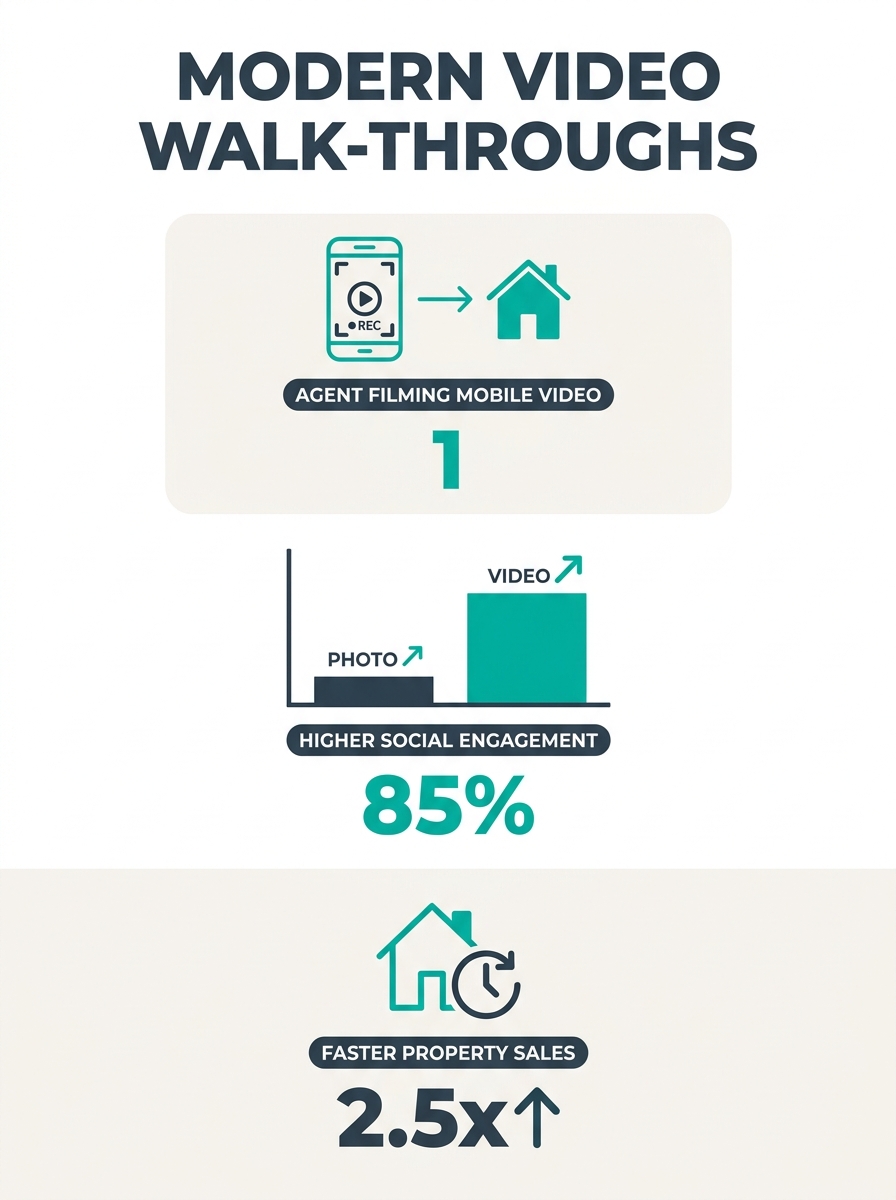
The framework defines quality as content that demonstrates expertise while giving audiences a reason to reach out. That includes neighborhood and lifestyle showcases positioning agents as local experts, educational content answering buyer and seller questions during early research phases, and video walk-throughs that let prospects experience properties and get to know the agent simultaneously. Listings remain part of the content mix but not the dominant component, according to the framework.
Platform Strategy Focuses on Local Reach
The framework recommends most agents concentrate on Instagram and Facebook as core platforms, citing their local audience reach and suitability for visual, community-driven content. Facebook’s local ad targeting capabilities make it particularly strong for agents serving defined geographic markets, the framework notes. YouTube works well for longer property tours and educational videos that surface in search results over time. TikTok suits agents comfortable with short, authentic video formats.
Venture Media advises agents to select one or two platforms where their target market spends time rather than spreading effort across all channels. The framework treats platform selection as a resource-allocation decision tied to sustainable content production, not a coverage play.
Lead Capture Built Into Content Design
The framework positions attention as valuable only when it converts to leads. Venture Media’s approach builds lead-capture mechanisms directly into social content rather than treating engagement as the end goal. Tactics include offering market reports or first-time-buyer checklists in exchange for email addresses, using platform lead forms to collect contact information without sending users off-site, and responding to inquiries with near-instant replies that real estate buyers expect.
The framework connects social lead capture to broader nurture sequences, treating followers who never submit contact information as metrics rather than prospects. Agents who systematically capture and follow up on social leads see those contacts enter the same funnel that processes website and referral leads, according to the framework. This approach aligns with research showing most real estate sales occur after agents have quit nurturing leads.
Compliance Requirements Named
The framework addresses Fair Housing and FTC compliance as license-protection requirements. Venture Media directs agents to use inclusive language in all content and avoid targeting or excluding audiences based on protected classes in ad campaigns. The framework also requires disclosure of sponsored partnerships and paid collaborations per FTC guidance. Venture Media frames compliance as general guidance rather than legal advice and directs agents to follow brokerage-specific requirements.
What This Means for Estate Agents
Agents spending hours on social media without generating measurable leads should audit whether their content serves follower growth or lead capture. The Venture Media framework provides a testing lens: does each post demonstrate expertise, give the audience a reason to reach out, or build the personal brand that makes buyers choose you before they choose a listing. Posts that accomplish none of those three functions dilute the feed.
The framework’s rejection of high-volume posting gives agents permission to reduce cadence while improving quality, a trade-off that serves both platform algorithms and personal sustainability. Agents who commit to three strong posts weekly with built-in lead-capture mechanisms will likely outperform those posting daily with generic listing announcements, based on the conversion patterns Venture Media documented with Blueprint for Closers and PreReal clients.
The compliance emphasis matters in 2026 as regulatory scrutiny of real estate marketing intensifies. Agents who build Fair Housing principles and FTC disclosure into their content workflow from the start avoid the remediation work that pulls attention from lead generation later.