

A properly optimized real estate listing blog can reach Google’s first page in under 24 hours, according to a strategic guide published May 31 on SEO Real Estate Wagon, allowing agents to capture local search traffic before major portals like Zillow, Realtor.com, Homes.com, and Redfin intercept those leads. The system targets farm areas and neighborhood-specific searches where national portals lack the granular optimization individual agents can deploy.
TL;DR: Real estate agents can outrank national portals in local search results within 24 hours by publishing optimized listing blogs that target specific neighborhoods and property data, according to a May 31 guide on SEO Real Estate Wagon.
The guide positions blogging as a direct-response alternative to paid lead generation through third-party platforms. Instead of waiting for portal algorithms to surface listings or paying per-lead fees, agents who publish structured blog content for each new listing can control the traffic flow and capture inquiries on their own websites, the guide states.
The Speed Advantage in Local Search
Listing blogs optimized for local keywords can appear on Google’s first page overnight when agents focus on farm areas and neighborhood terms that major portals don’t target with the same precision, according to the guide. National platforms optimize for broad city-level and property-type searches, creating an opening for agents who drill into subdivision names, school districts, and micro-neighborhoods.
The strategy relies on structured templates and keyword research tools rather than technical coding, the guide notes. Agents follow a 27-step process that becomes faster with repetition, publishing fresh indexed content each time a new property hits the market.
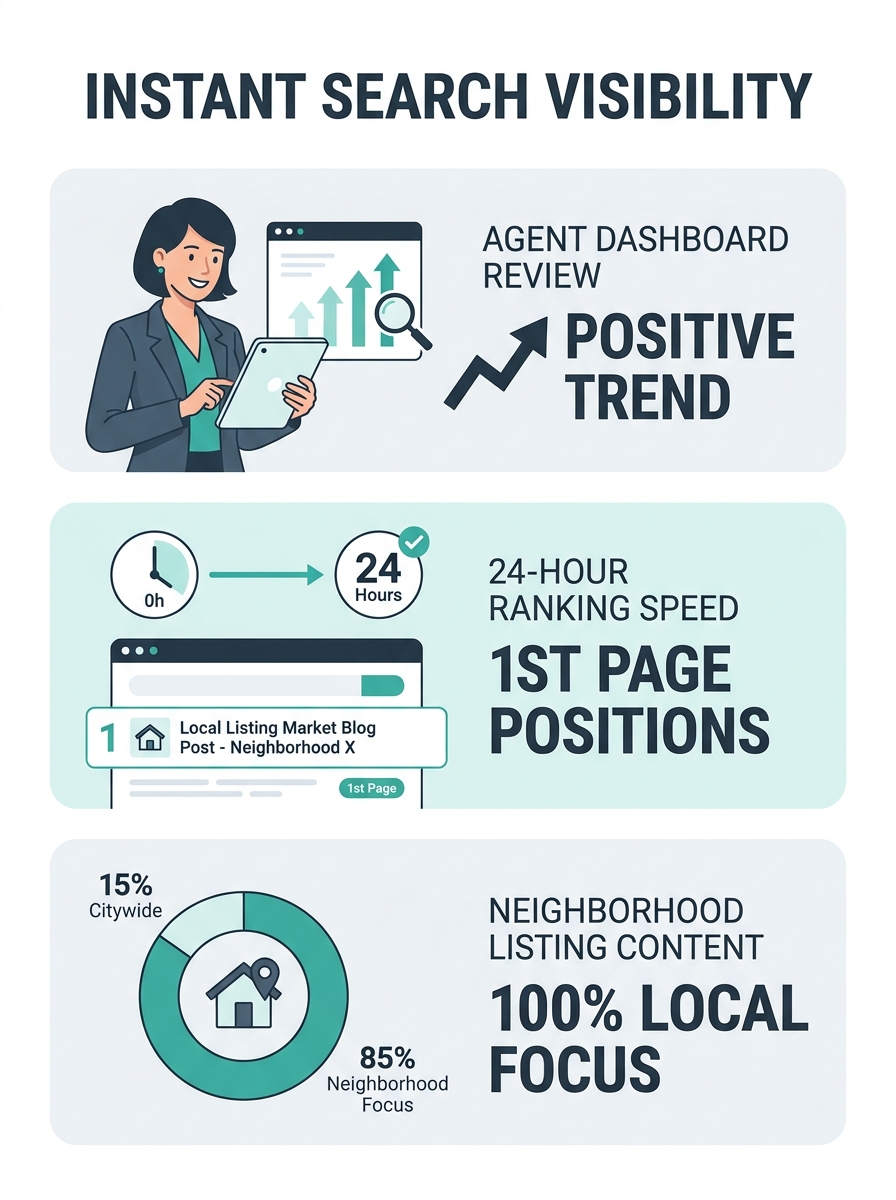
Speed matters because buyer searches peak immediately after new listings appear on the MLS, the guide argues. An agent whose blog post ranks for “3-bedroom home in Maple Grove subdivision” within hours captures that initial search wave before the listing propagates across portal syndication networks and gets buried under paid placements.
This approach aligns with broader shifts in how organic search results compete for visibility against paid ads and AI-generated overviews. Agents who build hyperlocal content strategies gain an edge in the remaining organic space, particularly for long-tail neighborhood queries where Google still surfaces traditional blue links.
Competing Against National Portals
The guide identifies five competitive advantages blogging offers over portal reliance. First, agents dominate farm-area search results by targeting geographic specificity major platforms don’t match. Second, freshness signals from newly published content can trigger rapid indexing. Third, traffic stays on the agent’s own platform rather than feeding portal lead-capture funnels. Fourth, direct lead capture eliminates per-lead costs and referral fees. Fifth, the strategy requires no ongoing subscription payments to syndication networks.
SEO Real Estate Wagon argues that agents don’t need “tech wizardry” or coding skills to execute the system, instead relying on structured templates and real estate-specific keyword tools. The guide promotes a step-by-step framework over “long, theoretical books,” focusing on actions that translate to measurable visibility gains.
The guide references Rank IQ, a keyword research tool used by content bloggers, as one resource agents can deploy in the optimization process. The emphasis throughout is on practical implementation rather than SEO theory—publish the blog post, hit specific on-page factors, and measure first-page rankings within 24 hours.
The Technical Barrier Question
The claim that agents require no technical expertise to outrank sophisticated portal engineering teams hinges on the distinction between broad-scale optimization and hyper-local targeting. Zillow and Realtor.com optimize millions of listing pages for generic searches; an agent optimizing 50 blog posts per year for farm-area keywords faces a different technical challenge—one the guide suggests is more about consistency than complexity.
Whether a 27-step process qualifies as “no coding required” depends on what steps involve. The guide doesn’t detail whether agents manually edit meta tags, schema markup, or structured data, or whether templates automate those elements. The time investment per listing also remains unspecified—24 hours to first page doesn’t clarify how many hours the agent invests creating the blog post.
For agents deciding whether to start building listing websites or continue relying on syndication, the tradeoff is effort versus control. Portal syndication requires minimal work but delivers leads through a platform the agent doesn’t own. Blogging demands per-listing effort but builds a domain asset and drives targeted traffic without ongoing lead-acquisition costs.
What This Means for Estate Agents
Agents who already publish market updates or neighborhood guides can adapt the listing-blog framework into existing workflows—each new listing becomes a content opportunity with built-in keyword targeting. The 24-hour ranking claim, while aggressive, reflects how quickly Google can index fresh content on established domains with topical authority in local real estate.
The strategy works best for agents with farm areas they’ve actively built content around. An agent who’s published 30 blog posts about Riverside Park listings over two years has domain authority in that micro-market; a new listing blog about a Riverside Park property has a stronger chance of rapid ranking than the same post on a domain with no prior neighborhood focus.
The competitive threat from national portals isn’t disappearing, but the search landscape rewards specificity at the margins. Agents who claim those margins through consistent hyperlocal blogging can capture lead flow portals overlook—particularly for neighborhood-specific searches where buyer intent runs high and portal pages stay generic.