

Google “homes for sale in Riverside Park” and count the results that belong to individual agents versus portals. In most mid-size markets, the first page is dominated by Zillow, Realtor.com, and Redfin, with maybe one brokerage site sneaking through. The agents who do break through almost always share one structural trait: they’ve built dedicated neighborhood content that lives as a permanent section of their website, not as a stray blog post published once and forgotten. This is the core of a local real estate content strategy that actually produces organic leads, and it’s also where most agents make their most expensive architectural mistake before writing a single word.
The concept sounds simple. Build pages for each neighborhood you serve, target geographic keywords, watch the traffic roll in. But the execution hides several traps that can split your domain authority, confuse Google about which of your pages should rank, and leave you with a content library that competes against itself. Getting this right requires decisions about site architecture, keyword mapping, and content differentiation that most agents never think through before they start publishing.
Where Neighborhood Content Should Live on Your Site
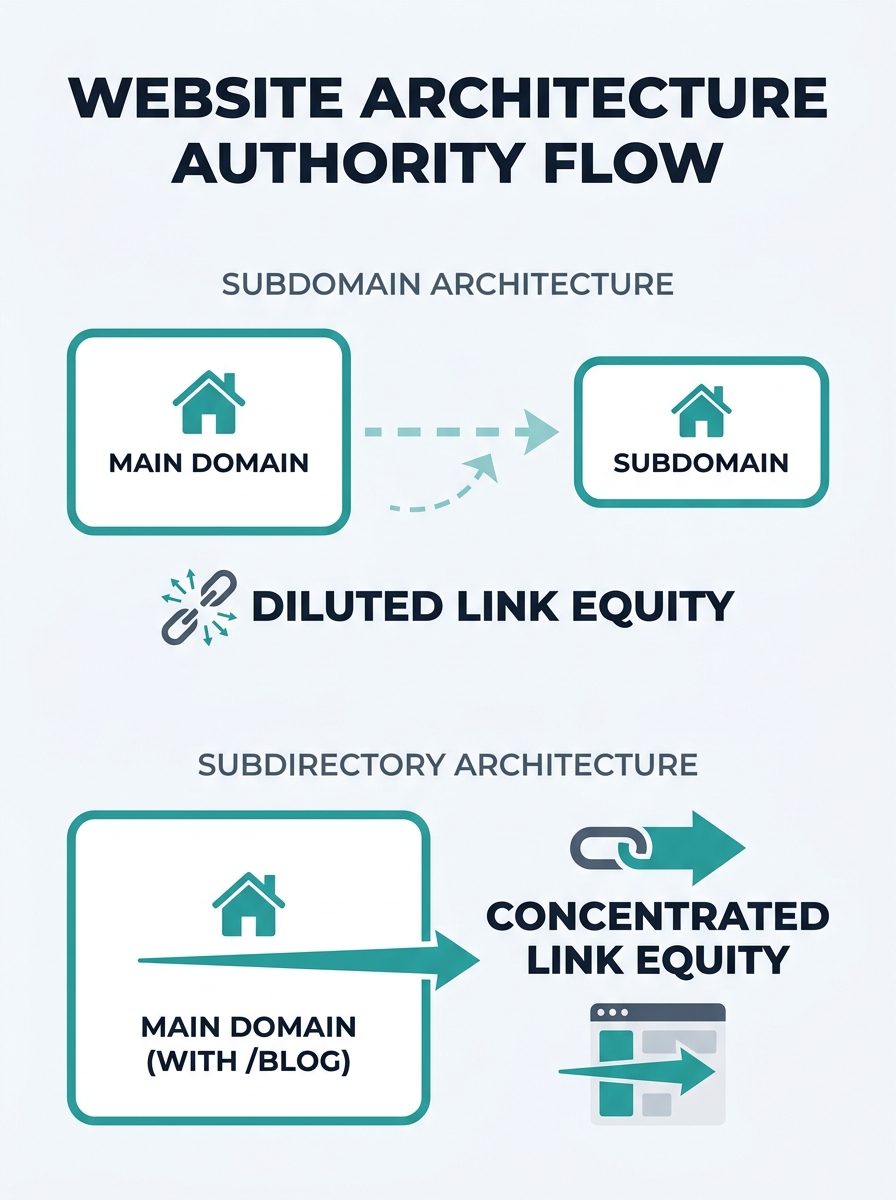
The first decision you’ll face is structural, and it matters more than most agents realize. Should your neighborhood pages live on a subdomain (like riverside-park.youragency.com), a subdirectory (like youragency.com/neighborhoods/riverside-park), or on an entirely separate micro-site with its own domain? The subdomain vs subdirectory real estate debate has persisted for years in SEO circles, and while Google has said it can crawl and index both, the practical implications for a real estate site are significant.
A subdomain compartmentalizes content as a functionally separate site, which means link equity earned by your main domain doesn’t automatically flow to your neighborhood pages. If a client links to your homepage after a great closing experience, that authority helps your listing pages and your about page, but a subdomain for neighborhoods may not benefit equally. For most agents and small brokerages, this is a terrible trade-off. You’re already fighting portals with massive domain authority. Splitting yours across subdomains is like dividing a small army to fight on two fronts.
Subdirectories keep everything under one roof. Your neighborhood pages at youragency.com/neighborhoods/riverside-park inherit and contribute to the same domain authority as every other page on your site. When those neighborhood pages start earning backlinks from local community blogs or neighborhood associations, the SEO value lifts your entire domain. For the vast majority of real estate professionals, this is the correct answer. The only scenario where a separate micro-site makes sense is when a brokerage operates genuinely distinct brands in different markets, and even then, the maintenance burden doubles.
Once you’ve chosen subdirectories, the URL structure itself matters. Keep it predictable and shallow: youragency.com/neighborhoods/riverside-park is better than youragency.com/areas/residential/riverside-park/overview. Search engines and humans both prefer clean paths, and a consistent pattern makes it easy to scale when you add your fifteenth or thirtieth neighborhood page. If you’ve already wrestled with how listing pages compete for search visibility, the same principle applies here: a flat, logical hierarchy prevents your own pages from fighting each other.
Pages That Rank Require More Than a Zip Code and MLS Feed
The most common version of a neighborhood page in real estate is also the most useless: a paragraph of generic copy about the area (“Riverside Park is a beautiful neighborhood with tree-lined streets and excellent schools”), followed by an embedded IDX search filtered to that zip code. Google has seen thousands of these pages. They provide no unique value, rank for nothing, and exist only to check a box on someone’s SEO checklist.
Neighborhood pages SEO works when each page answers the specific questions a buyer or seller in that area actually has. What’s the price per square foot trend over the past two years in this neighborhood? Which streets flood during heavy rain? Are there HOA restrictions that affect renovations? What does the commute to downtown actually look like at 7:45 AM versus what Google Maps says at noon? This is the kind of genuinely useful neighborhood content that earns rankings because it earns trust. A local real estate brand that publishes this level of detail, organized well and reinforced with local signals, can compete for terms that produce both traffic and qualified leads.
If your neighborhood page could describe any suburb in any state with a find-and-replace of the city name, it won’t rank and it won’t convert.
Geographic keyword targeting for these pages should focus on long-tail, intent-rich phrases rather than broad terms. “Three-bedroom homes in Riverside Park with a pool” carries far more buying intent than “Riverside Park real estate,” and it’s dramatically easier to rank for. Each neighborhood page should target a distinct cluster of these long-tail phrases, built around the specific housing stock, lifestyle attributes, and buyer concerns unique to that area. The agents who approach aspiration-first website design understand this instinct already: people don’t search for neighborhoods in the abstract. They search for the life they want to live there.
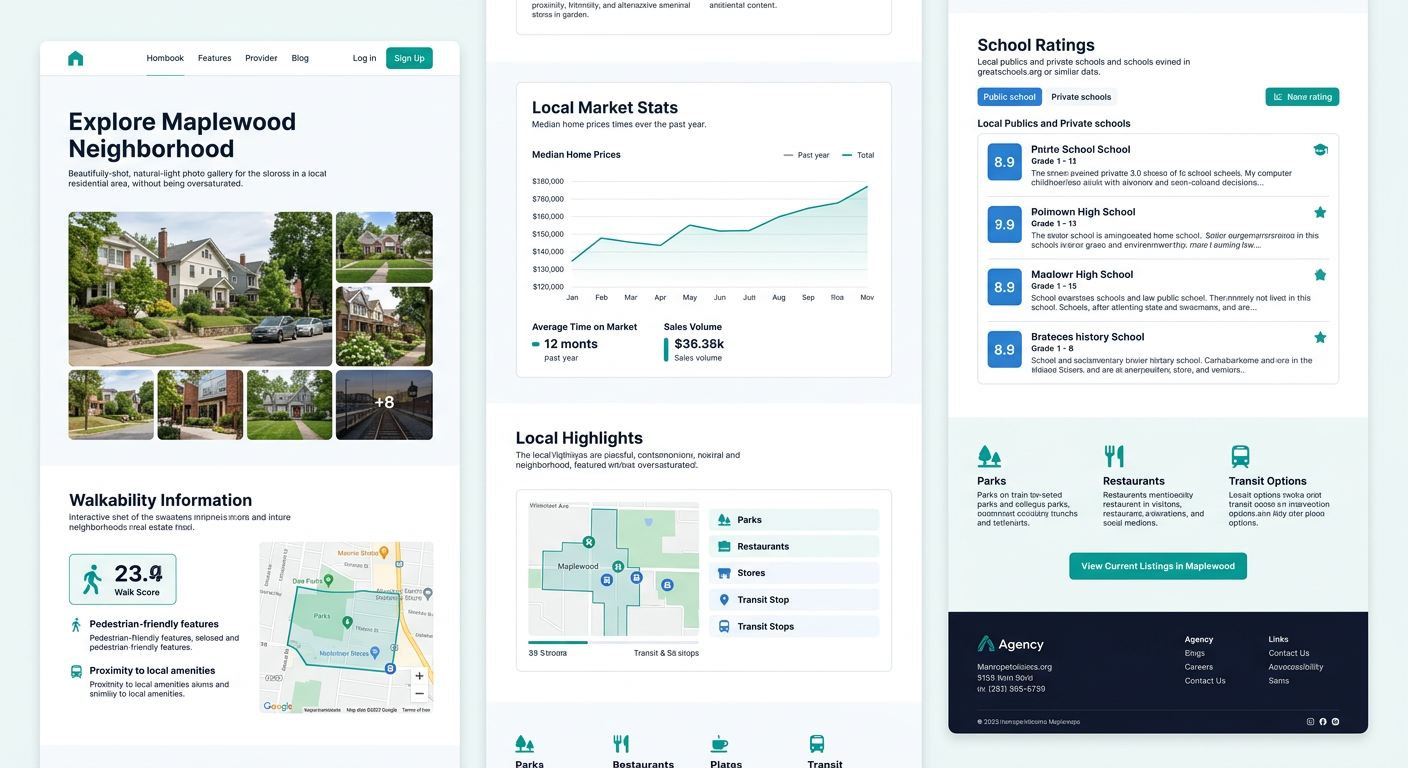
And don’t neglect the content formats that signal local expertise to both Google and visitors. Embed a video walkthrough of the neighborhood you shot on your phone. Include a screenshot of a recent market snapshot with your commentary. Quote a local business owner about what’s changing on the commercial corridor. These elements are hard to fake at scale, which is exactly why they work for hyperlocal lead generation. Portals can’t send someone to walk through every neighborhood in every market. You can.
Cannibalization Happens When You Forget Intent
Here’s where the strategy goes wrong for agents who build neighborhood content enthusiastically but haphazardly. You publish a neighborhood page for Riverside Park. A month later, you write a blog post titled “Why Riverside Park Is the Best Neighborhood for Young Families.” Three months after that, your team creates a market update post called “Riverside Park Housing Market: Spring Trends.” Now Google has three pages on your site competing for overlapping keywords, and it has to decide which one to show. Often, it picks the wrong one, or worse, it suppresses all three because it can’t determine which is most relevant.
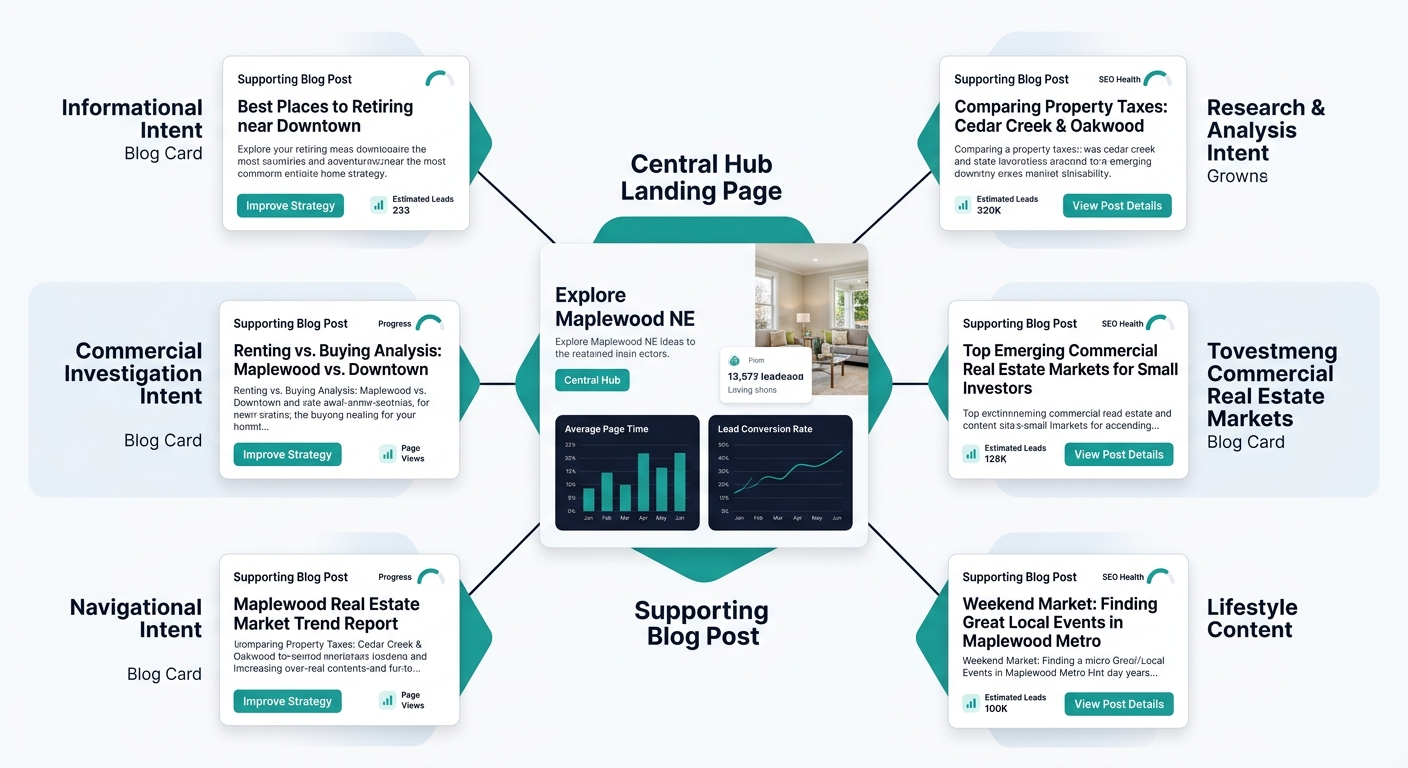
Strategic planning is the most effective way to stop cannibalization before it starts. Every piece of neighborhood content on your site needs a clear, distinct search intent assignment. Your main neighborhood page targets the informational and transactional queries: “Riverside Park homes for sale,” “Riverside Park real estate agent,” “living in Riverside Park.” Blog posts about that neighborhood should target completely different intent clusters: specific seasonal trends, event coverage, hyper-specific comparisons (“Riverside Park vs. Oak Hill for retirees”). The main page is the hub. Blog posts are spokes that link back to it, reinforcing its authority rather than competing with it.
This hub-and-spoke model is something we’ve explored in detail with micro-content hubs that rank and convert, and the principle translates directly. Each spoke piece should contain an internal link back to the main neighborhood page, using descriptive anchor text that includes the neighborhood name. This tells Google which page is the canonical authority for that geographic area on your site, and it funnels link equity from your blog content back to the page you most want to rank.
You should also audit quarterly. Pull up Google Search Console, filter by the neighborhood name, and look at which pages are appearing for which queries. If your blog post is ranking for a query your main neighborhood page should own, that’s a signal to either consolidate the content, add a canonical tag, or rewrite the blog post to target a more specific angle. Deindexing the competing page is tempting but usually counterproductive. The better fix is to differentiate the content so each page serves a clearly different need. As portals continue to lose agent-discovery traffic to new search patterns, the agents with clean, well-organized neighborhood content stand to capture an increasing share of those displaced searches.
Where This Strategy Still Breaks Down
The honest limitation of the neighborhood micro-site approach is maintenance. A page for each of twenty neighborhoods means twenty pages that need updated market data, current photos, and fresh commentary. Most agents build them once, promote them for a week, and let them stagnate. Stale content with outdated pricing data or references to “the new restaurant opening on Main Street” that opened two years ago actively undermines trust. If you can’t commit to updating a neighborhood page at least quarterly, you’re better off covering fewer neighborhoods well than all of them poorly.
There’s also a tension between depth and scale that no template resolves cleanly. The neighborhoods you know intimately produce rich, authoritative content. The ones at the edges of your service area, where you close maybe two deals a year, produce thin pages that read like they were assembled from census data and a Wikipedia summary. Google can tell the difference, and so can the homeowner who lands on your page hoping to find a genuine local expert. The temptation to cover every zip code in your MLS is strong, especially when competitors seem to be doing it. But a neighborhood page that doesn’t reflect real, earned knowledge about an area can do more reputational harm than the incremental traffic justifies.
The agents who make this strategy work over time tend to share a specific discipline: they treat neighborhood content as a living product, not a marketing campaign with a launch date. They add a paragraph when a new development breaks ground. They update the school ratings when new data comes out. They reshoot photos when seasons change. This ongoing investment is what separates a neighborhood page that generates three leads a month from one that generates three visits and a bounce. The architecture decisions matter, the keyword mapping matters, but the willingness to maintain what you build is the variable that determines whether any of it compounds into real results.