

Real estate investment software provider REsimpli published platform recommendations June 8 advising investors to prioritize CRM integration and automated lead response over design flexibility when selecting website builders, according to analysis posted to the company’s blog. Author Sharad Mehta compared four platforms—REsimpli, Carrot, WordPress with real estate investor plugins, and GoHighLevel—on speed-to-lead automation, native CRM connectivity, and motivated seller SEO optimization rather than template aesthetics.
TL;DR: REsimpli’s June 8 platform guide ranks real estate investor website builders by whether form submissions trigger instant automated follow-up rather than requiring manual intervention, naming speed-to-lead response within five minutes as the critical differentiator between websites that close deals and those that generate abandoned leads.
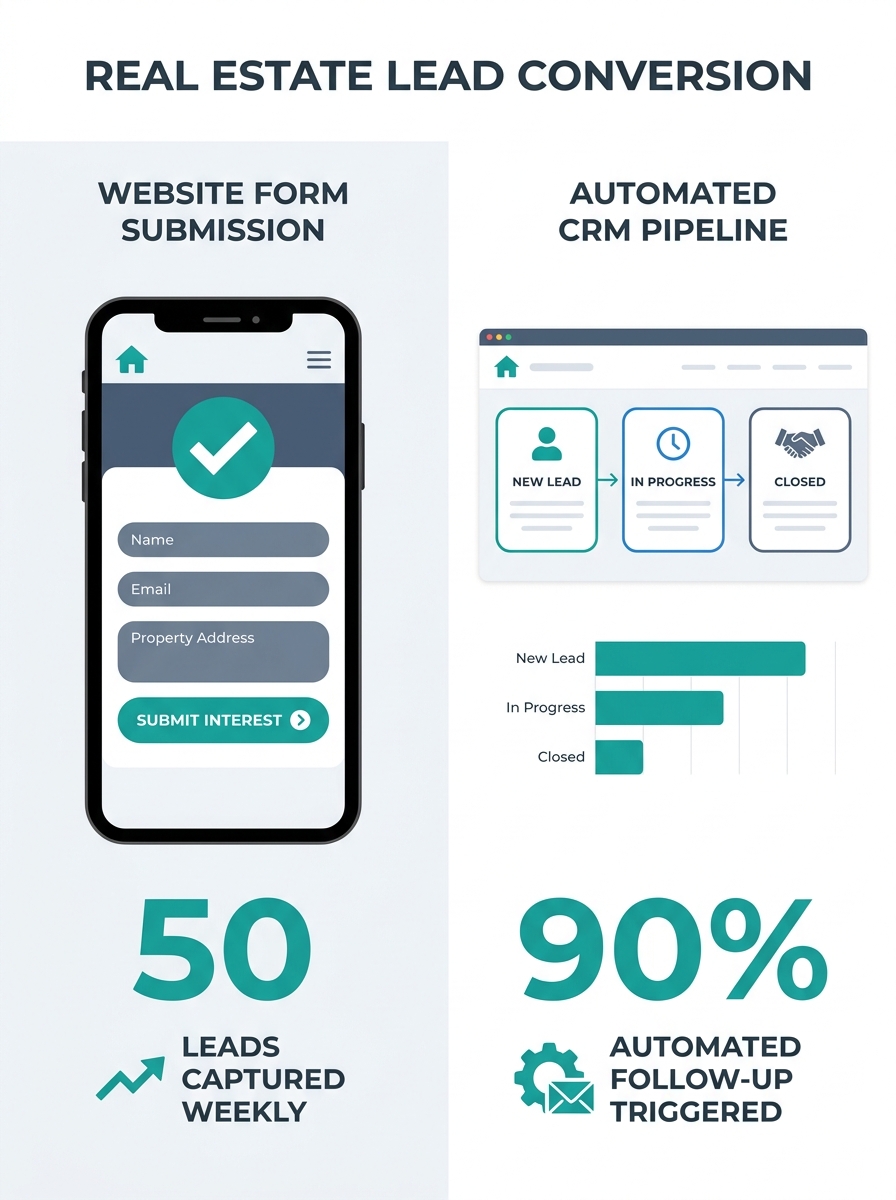
The comparison marks a shift in how investor-focused platforms frame website performance. Rather than measuring website value by traffic volume or page design, the guide evaluates whether a seller who submits a form at 8 p.m. receives an immediate response before losing motivation or contacting a competing buyer. REsimpli’s own platform, priced at $149 per month, includes what the company describes as Gen 2 AI that calls submitted leads within 15 seconds to qualify motivation, property condition, and timeline, then books appointments directly to the investor’s calendar. Carrot, starting at $97 per month, offers SEO-optimized templates designed to rank for “sell my house fast” search terms but requires webhook configuration to connect forms to external CRMs.
Platform Feature Comparison Prioritizes Automation Over Customization
WordPress with investor-specific plugins ranked as the most customizable option but requires technical setup to connect form submissions to customer relationship management systems, according to the analysis. The platform offers design flexibility through custom development but no native automation for immediate lead response. Pricing ranges from $10 to $50 per month for hosting plus development costs, making it the lowest base price but potentially highest total cost when factoring in configuration time.
GoHighLevel, at $97 per month, integrates natively with its own CRM but offers only general website templates rather than investor-specific designs for motivated seller acquisition. The platform requires additional setup to optimize for distressed property owner search behavior. “The difference between a website that closes deals and one that just generates form fills is what happens in the 5 minutes after submission,” Mehta wrote in the comparison.
The guide emphasizes mobile optimization as a baseline requirement, noting most sellers submit inquiries from phones. All four platforms reviewed support mobile-responsive design, but REsimpli and Carrot pre-configure templates for single-action conversion paths—a characteristic the analysis identifies as critical for capturing distressed property owners who typically research multiple buyers simultaneously.
Speed-to-Lead Automation Emerges as Core Evaluation Metric
REsimpli’s platform includes both seller acquisition websites and buyer list websites within a single CRM, allowing wholesalers to manage both sides of transactions without switching systems. When a seller submits a form, automated sequences deploy SMS, email, ringless voicemail, and direct mail if the initial AI call goes unanswered. Carrot offers similar dual-site capability but routes leads through third-party integrations rather than handling follow-up internally.
The comparison assessed each platform on six criteria: local SEO optimization for motivated seller keywords, investor-specific messaging templates, lead capture form design, instant CRM integration, automated speed-to-lead response, and mobile performance. REsimpli positioned its Gen 2 AI as delivering the shortest response interval—calling leads “within seconds” according to the published guide—while competitors require either manual follow-up or configuration of separate automation tools.
WordPress implementations scored highest on design flexibility but lowest on out-of-the-box automation, requiring investors to assemble separate tools for SEO optimization, CRM connectivity, and follow-up sequences. The analysis noted WordPress sites can match the functionality of purpose-built investor platforms if properly configured but demand technical expertise most real estate wholesalers lack. For agents and brokers exploring similar decisions about their own web presence, website builder features that actually drive leads versus drain budgets follow comparable evaluation frameworks—CRM integration and conversion architecture matter more than template libraries.
Context and Outlook
The platform comparison reflects broader tension in real estate technology between general-purpose website builders optimized for design control and vertical-specific systems built around transaction workflows. Real estate investors operate in a lead-response environment where minutes determine deal capture—a distressed seller fielding multiple cash offers typically commits to whichever buyer responds first with credible qualification questions and a scheduled appointment.
Platforms offering native speed-to-lead automation hold structural advantages in this market segment. Carrot’s dominance in investor SEO and REsimpli’s integrated AI-to-CRM pipeline represent two approaches to the same problem: converting motivated seller website traffic into qualified appointments before competing buyers intervene. WordPress retains appeal for investors with technical resources who want full control over design and third-party tool selection, but the configuration burden pushes most toward turnkey solutions.
For agents and brokers evaluating their own platforms, the principle translates directly—websites that integrate with CRM systems and trigger immediate follow-up convert at higher rates than those routing leads through email inboxes or requiring manual data entry. The investor website market’s emphasis on millisecond response times previews the direction listing-side technology is moving as buyer competition intensifies and lead costs rise across all real estate segments.