

Analysis of more than one million real estate follow-up calls conducted over the past three months found that targeting leads based on recent intent signals—property clicks, valuation requests, email opens—delivers higher appointment conversion than broad database calling, according to a report published June 18 by HousingWire. The finding challenges the prevailing agent practice of loading large contact lists into ISA workflows or AI dialers and calling for volume.
TL;DR: Real estate teams analyzing 1M+ calls over three months found intent-based follow-up (targeting property clicks, valuation requests, email opens) converts to appointments at higher rates than volume-based database calling.
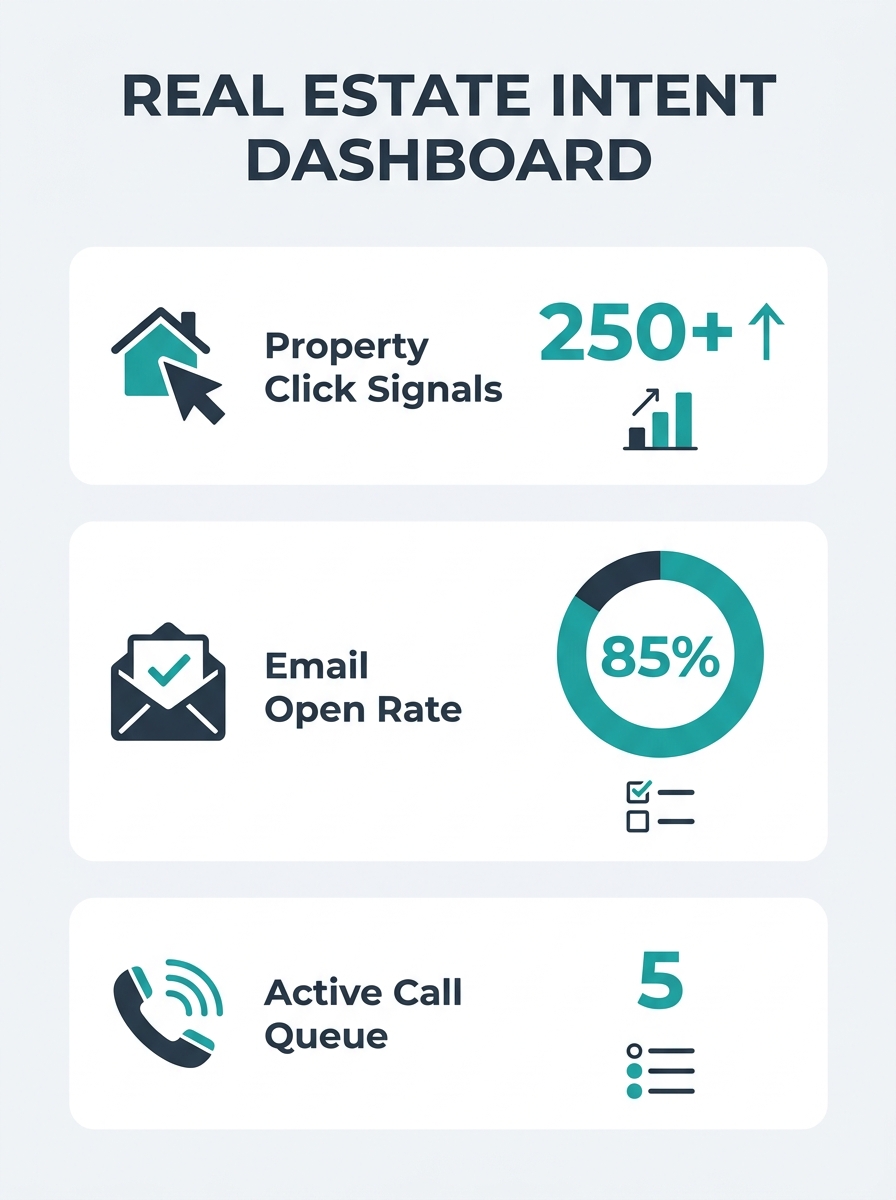
The distinction centers on timing and relevance. A buyer who clicked a listing yesterday requires different outreach than a contact dormant in the CRM for three years, the analysis found. Intent signals include property clicks, home valuation requests, landing page visits, ad responses, email clicks, saved searches, and engagement with market content. Each action provides context that makes follow-up feel service-oriented rather than random, according to the report.
Call Volume Does Not Automatically Create Opportunity
The research concluded that more outreach does not automatically create more opportunity. With AI-powered calling tools now enabling teams to dial larger lists at lower cost, many brokerages have increased call activity without adjusting targeting strategy. The data showed this approach underperforms compared to calling the right person after a documented signal of interest.
Indiscriminate calling can work against the agent, the analysis found. When the consumer has not taken recent action, the call may feel disconnected. The recipient may not remember the agent, listing, form, or original reason they entered the database. Even when calls are compliant and professionally delivered, they can register as noise rather than service.
The report advised that AI-powered follow-up makes targeting discipline more important, not less. When technology can create activity at scale, the strategy behind that activity determines results. Poor targeting simply helps a team do the wrong thing faster, according to the findings.
Context Outweighs Script Quality in Conversion
The strongest call performance correlated with agents or systems having context before dialing, not with script perfection. A follow-up call proved more effective when the caller understood why the lead was being contacted—which specific property they viewed, the price range they searched, whether they clicked a market update, and whether they entered as a buyer, seller, investor, or past client.
Without that context, even polished opening lines sound generic, the analysis found. “I saw you were looking at homes in Scottsdale” differs materially from “I’m just following up on your real estate inquiry” in both answer rate and conversation quality, according to the data.
This shift matters for teams investing in AI-powered tools and automation. The future of follow-up is better data before the call starts, not just better scripts during the call. The more context an assistant has, the more likely the call feels relevant to the consumer, the report concluded.
Multi-Touch Sequences Improve Answer Rates
Many leads do not answer on the first attempt, the call data showed. Engagement often required more than one touch—a common pattern was multiple calls paired with a text message from the same number before the lead responded.
This finding challenges the widespread agent practice of labeling leads as bad or unresponsive after a single unanswered call and voicemail. The issue may not be lead quality but insufficient follow-up sequence depth, according to the analysis. Consumers may be working, driving, with family, or unwilling to answer an unfamiliar number on first contact. A second call, especially when paired with a relevant text from the same number, can make outreach feel more recognizable and less random.
Persistence must be tied to context, the report noted. Calling repeatedly without a relevant reason registers as pressure. Calling with a clear connection to a recent action registers as service. That difference directly affects conversion.
Local Phone Presence Affects Trust and Answer Rates
Phone number strategy plays a larger role than many teams realize, the analysis found. When a lead in Arizona receives a call from a New York number, the trust gap starts before the conversation begins. The consumer is already deciding whether the call feels familiar, local, and worth answering, or whether it resembles unwanted telemarketing.
Local presence is not about manipulation—it is about reducing friction in the moment the consumer sees the call coming in, according to the report. This applies to both human ISAs and AI-powered calling systems. Teams using AI follow-up should ensure the outbound caller ID matches the lead’s geography when possible.
The research did not specify exact answer-rate differentials between local and non-local numbers but characterized the impact as measurable across the one-million-call dataset.
Why This Matters Now
Real estate teams face a decision point as AI calling tools drop the cost and increase the speed of outbound follow-up. The default response—dial more contacts faster—creates activity metrics without necessarily creating appointments. The one-million-call analysis provides a counter-framework: follow-up performance depends more on who you call and when than on how many you call.
For agents and brokers, this translates to workflow redesign. Instead of loading entire databases into call queues, teams should build automation around intent triggers—property clicks, form submissions, email engagement, saved searches. The same technology that enables high-volume calling can be redeployed to monitor signals and route leads to human or AI follow-up based on demonstrated interest. Systems that connect website visitor tracking, email platform engagement data, and CRM activity into a single intent score will outperform systems that treat every contact equally.
The shift also matters for lead acquisition strategy. If intent signals drive conversion, then campaigns designed to generate low-intent volume (mass portal leads, cold Facebook signups) will require more touches and deliver lower ROI than campaigns designed to capture high-intent actions (property-specific landing pages, valuation tools, neighborhood market reports). Agents optimizing for lead quality rather than lead count gain compounding advantage as follow-up systems improve at detecting and acting on intent.