

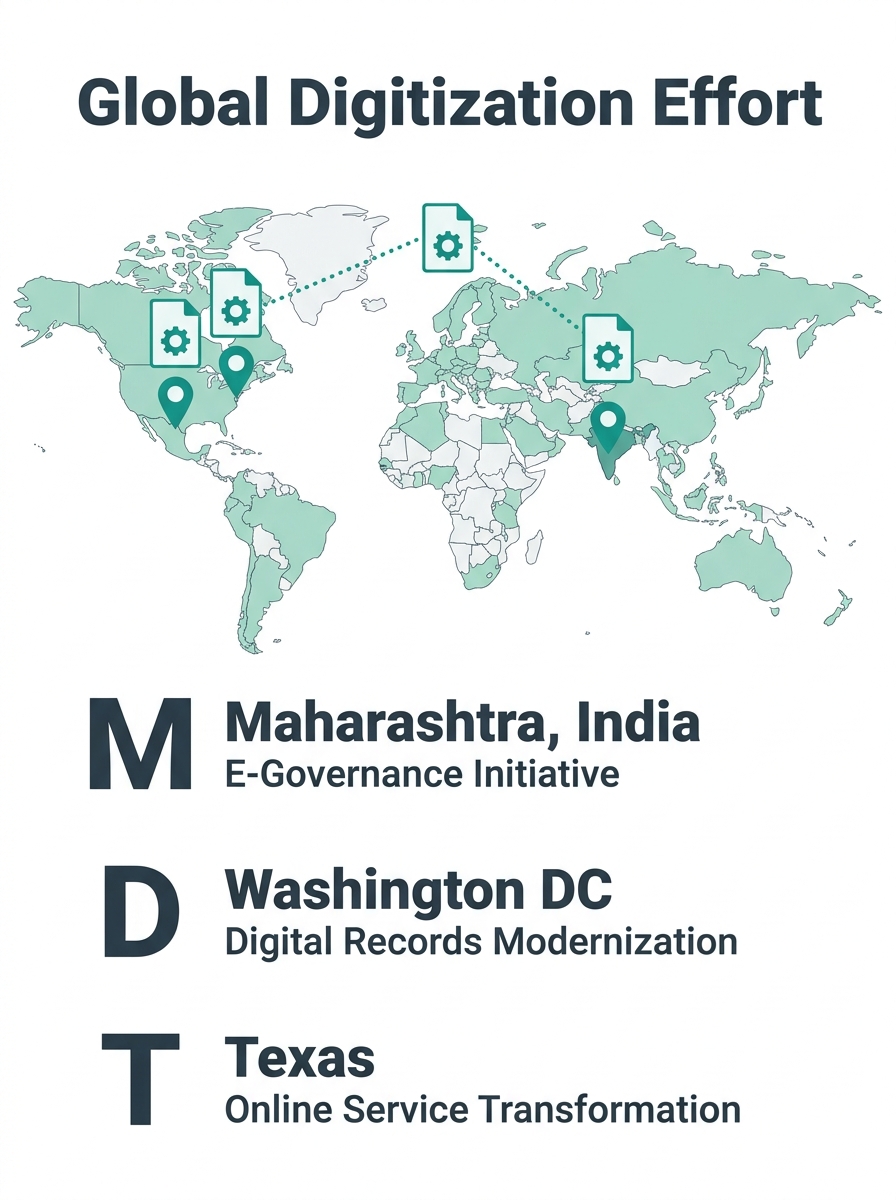
Maharashtra’s Department of Land Records launched ePSIT on June 22, 2026, letting property owners apply online for mutations, inheritance entries, and ownership transfers. That same month, NARA confirmed progress toward digitizing 500 million pages of federal records by September 2026. Both moves accelerate a shift that changes how agents verify ownership and qualify leads.
TL;DR: Governments are pushing property records online faster than most agents realize. Federal archives, state contract forms, and international land record systems are all going digital. Agents who connect verification tools to these data sources will qualify leads faster, reduce fraud risk, and meet rising client expectations for transparent property documentation.
Two Announcements Agents Shouldn’t Ignore
Maharashtra’s ePSIT system went live today. It handles property card mutations, ownership changes, and inheritance entries through a web portal. Citizens no longer need to visit government offices for these filings. For agents working with Indian diaspora buyers in the U.S., this means verifying family property transfers no longer takes weeks of waiting for physical copies.
Meanwhile, NARA’s target of 500 million digitized pages by September 2026 pulls federal land patents, survey data, and historical title documents out of storage rooms and onto screens. These records feed directly into title searches that agents rely on every day.
And the changes aren’t limited to archives. Texas adopted new TREC contract forms in May 2026, mandatory starting July 1, 2026. The updates include a new Seller’s Disclosure About Groundwater and Surface Water Rights and reworked compensation language in Paragraph 12. If your transaction documents aren’t updated by July 1, you face compliance exposure.
The pattern is clear: digital property records are replacing paper at the federal, state, and international level, all at once.
Why Digital Records Reshape Real Estate Lead Qualification
When ownership data is publicly accessible online, you can confirm whether a seller actually owns the property before investing hours in showings and comps. That changes real estate lead qualification from a gut-feel exercise into a data-backed process.
Attorney William Maffucci has documented the fraud risk that paper records create: “since the forger’s name will appear on the land records, the forger can sometimes deceive a third party into ‘buying’ the property,” as reported by Governing. Victims typically must file lawsuits to clear title. Title insurance costs about $1,000 per property to guard against this.
Digital records reduce that exposure. Tools like FOREWARN already verify identity, criminal history, and property ownership from an incoming phone number alone. CertifID lets users photograph themselves holding a government-issued ID while software matches the photo to the document. As government databases go online, these tools gain access to fresher, richer data.
The conversion impact is real. Digital Maverick reports clients who implement structured qualification processes see conversion rates climb 30–40% and GCI growth of 25–50%. If you’ve been exploring how intent signals beat volume-based dialing, ownership verification through digital records adds one more qualifying signal to your stack.
The Property Verification Stack: A Framework for 2026
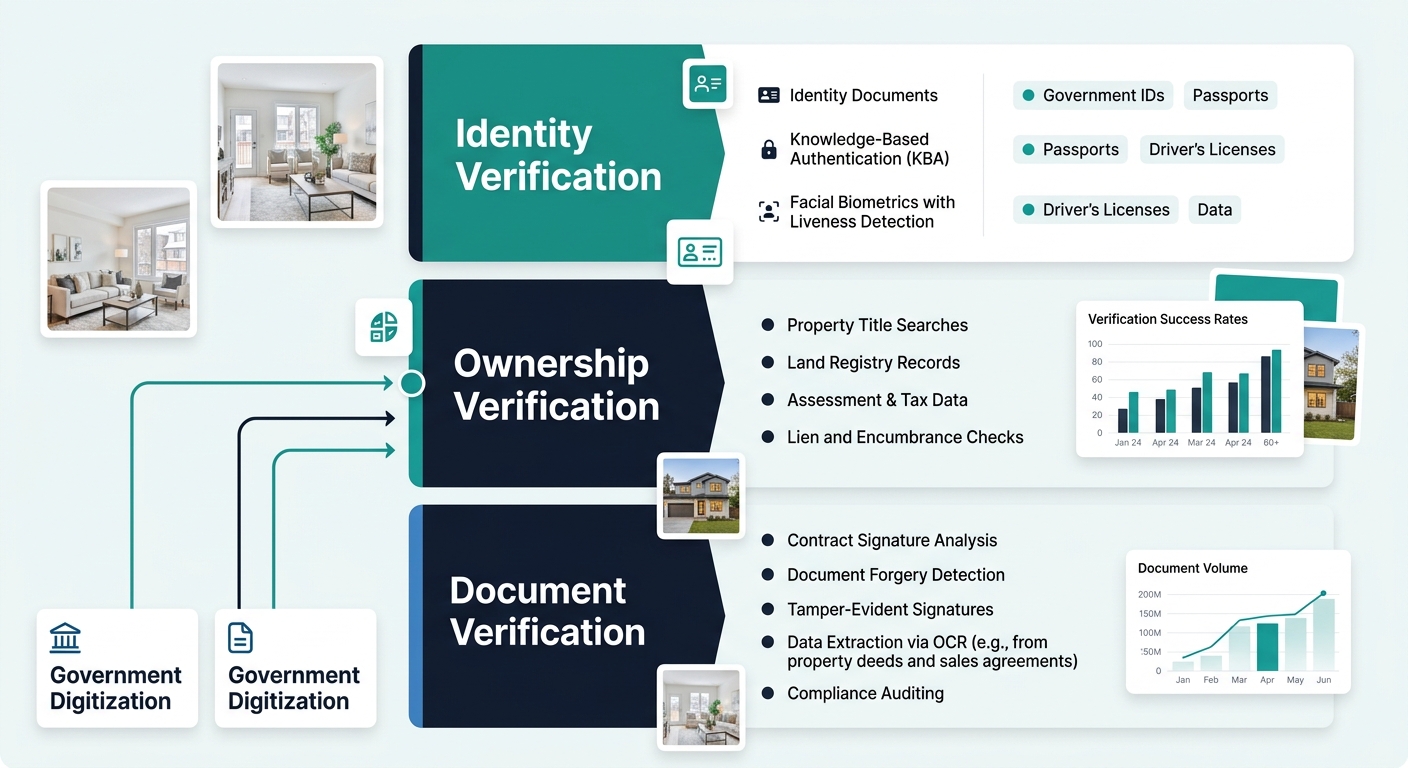
Think of client trust property verification as a three-layer stack. Each layer builds on the one below it:
Layer 1: Identity verification. Confirm the person you’re dealing with is who they claim to be. FOREWARN, CertifID, and similar tools handle this with phone numbers and photo IDs.
Layer 2: Ownership verification. Confirm the person actually owns or has authority over the property. Digital property records from county, state, and federal databases feed this layer. As NARA’s 500 million pages and systems like ePSIT come online, this layer gets stronger.
Layer 3: Document verification. Confirm that disclosures, contracts, and title reports are current and compliant. Compliance software with visual workflow builders can route documents through required approval stages automatically, covering lease agreements, fair housing documentation, and regulatory filings.
Agents who build all three layers into their CRM and website create a verification process that protects clients, reduces fraud risk, and shortens the path to closing. Most agents today only have Layer 1 in place, if that.
Property Documentation Automation Gets a New Data Source
Property documentation automation already saves agents hours each week. RPA bots can extract contract information, maintenance history, and tax data without manual entry, reducing errors and compliance risk. Compliance tools like Jones send automated messages notifying vendors of compliance issues or reminding them to renew insurance coverage.
Government digitization supercharges these tools. Every deed record, property card, or ownership mutation that moves online becomes a source your automation can pull from. When Texas mandates new disclosure forms on July 1, 2026, agents using auto-populating compliance workflows will update instantly. Agents relying on manual processes will scramble to find the right PDF.
For brokerages, this connects to a broader pattern. HousingWire reports 97% AI adoption among brokerages, but productivity gains stay concentrated among a small group of power users. The same gap applies here. The digital records exist. The automation tools exist. The agents who connect them will pull ahead, and the rest will wonder why their competitors close faster.
Tip: If you’re evaluating your tech stack, check whether your website builder supports document integrations and verification widgets. We’ve written about [calculating the true lead cost of your platform](/blog/website-builder-lead-cost-audit), and integration capability belongs in that calculation now.
Regulatory Compliance Real Estate Websites Can’t Ignore
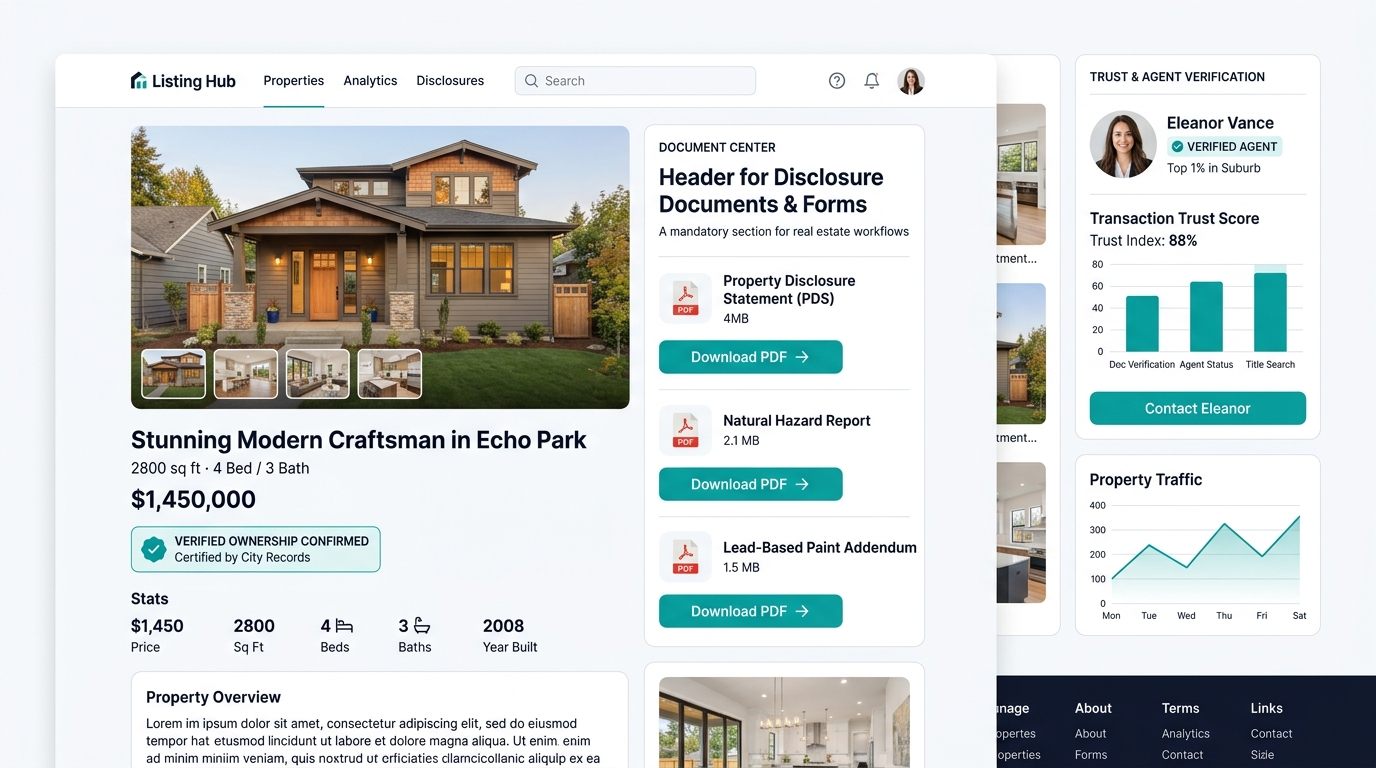
Your website reflects your professionalism. As clients grow used to digital records, they’ll expect your online presence to match that standard of transparency.
Three updates matter most before Q3 2026. First, add verification trust signals. Sites that display verified ownership data or link to public record databases give buyers confidence. We’ve explored where reviews and trust signals actually convert leads, and verified property data follows the same pattern. Second, build a document access portal. Clients want to download disclosures, title reports, and inspection records directly. If your site architecture already matches buyer intent, a document portal is a natural addition. Third, keep your forms current. The new Texas TREC forms go mandatory July 1. Agents in other states should check their own regulatory calendars, because similar updates are rolling out across jurisdictions.
Regulatory compliance for real estate websites now extends beyond fair housing language and disclosure requirements. It includes making sure the documents you serve to clients are current, verified, and accessible on demand.
Questions The Numbers Still Can’t Answer
NARA’s 500 million page target covers federal records only. County-level deed offices, where most residential transactions get recorded, run on their own schedules. Some counties in Georgia and Mississippi still use handwritten ledgers. The distance between federal progress and local implementation will take years to close.
Maharashtra’s ePSIT launched today, but adoption data won’t exist for months. We don’t know how many citizens will use it, how accurate the digital records will prove, or whether the system handles peak registration loads.
And the biggest open question for agents: will digital verification reduce title insurance costs? Title insurance runs $1,000 per property. If digital records lower fraud risk enough to bring premiums down, those savings flow through the entire transaction. No insurer has published pricing models based on digital record access yet.
The direction is unmistakable. Property records are going digital at the federal, state, and international level within the same calendar year. Agents who wire verification into their lead qualification and websites now will be ready when the data catches up. The exact ROI, though, is a number still waiting to be calculated.
Every deed record that moves online becomes a data source your automation tools can pull from, and your clients will expect you to use it.