

Real estate agents in New York City are using artificial intelligence tools to create virtual staging and photo enhancements for vacant listings, with practitioners implementing transparency protocols that include seller approval before publication, according to agent interviews published by Haven Lifestyles on June 25. Caroline Bass, Associate Broker at Corcoran, and Inga Wszolek of BOND New York reported using AI-generated visualization for multiple listings over the past year, while buyers have begun using the same tools to test furniture layouts before closing.
TL;DR: NYC real estate agents are implementing AI staging for vacant listings with seller approval workflows, while buyers use the same tools to visualize furniture placement before purchase.
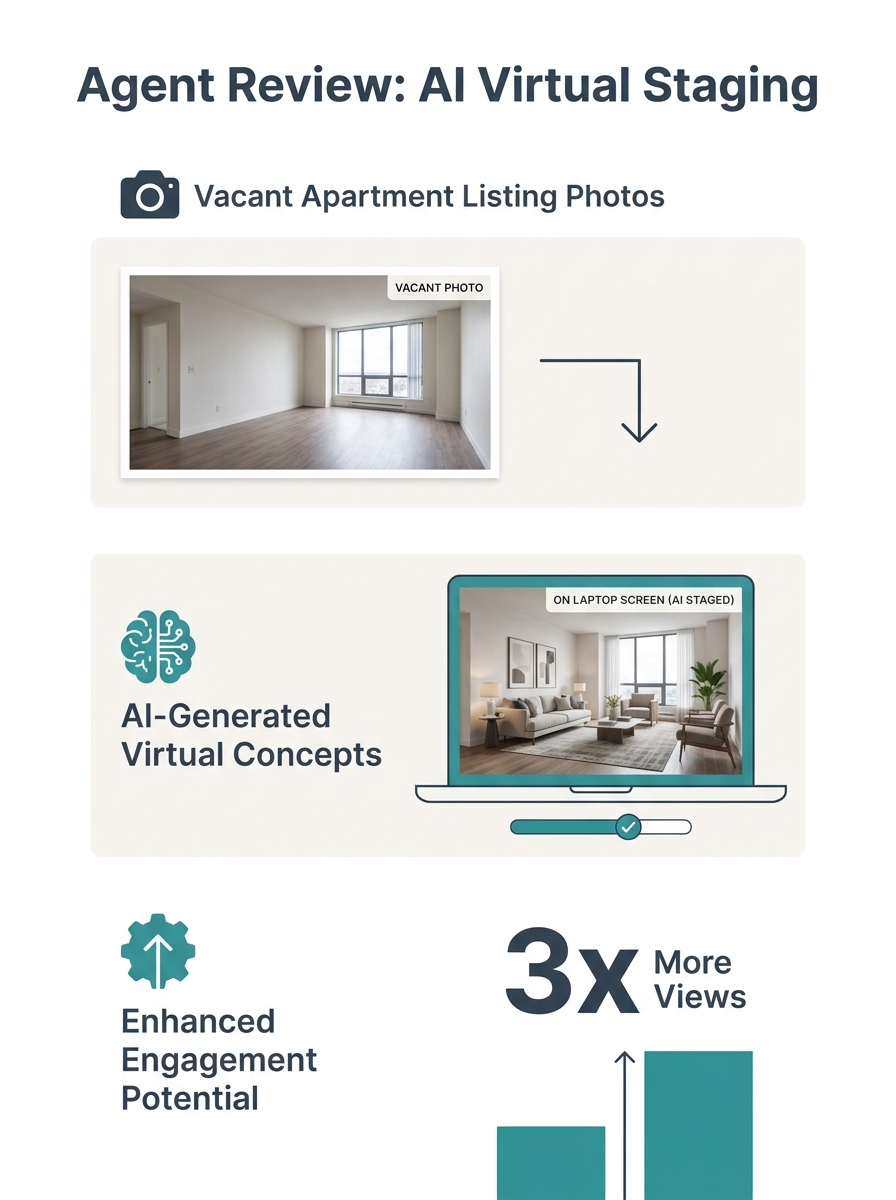
The workflow involves agents uploading listing photography to AI platforms, generating staged versions of vacant rooms, then securing client approval before using enhanced images in marketing materials. Bass described recreating a sunset view within a professional listing photo after a seller’s original sunset photograph lacked sufficient resolution for marketing use. “When used responsibly and transparently, it can help showcase a property in its best light while still accurately representing the home,” Bass said in the report.
Wszolek reported using AI-generated visualization for every vacant listing she marketed over the past year unless properties arrived pre-furnished. The approach helped with a vacant Greenpoint condominium where she represented the buyer—existing listing photos showed empty rooms with no staging, making spatial comprehension difficult for her clients. She created AI staging concepts from the listing photography and shared them with buyers, who gained clarity on room function and proceeded with the transaction.
Buyer-Profile Staging Replaces Generic Design Packages
Agents are using AI to match staging aesthetics to likely buyer demographics rather than selecting pre-built design templates. Erin Wheelock, Associate Broker at Keller Williams NYC, described the process as creating a buyer profile, then prompting AI tools to generate design directions aligned with that audience. “This allows for the agent to get more specific in hopes of attracting the right person,” Wheelock said.
The technique applies to apartments where layout ambiguity affects buyer perception. Vacant studio apartments may appear spatially limited until buyers see how sleeping, living, and work zones could be arranged within the footprint. AI-generated furniture placement clarifies room function before buyers request showings.
Benjamin Strat of the Strat team at Keller Williams NYC reported cost advantages for simple layouts but noted his team continues using professional staging and digital rendering services for complex properties. “From a price standpoint AI can’t be beat,” Strat said, while identifying image glitches as a risk when AI tools modify unintended elements within apartment photos.
Pre-Purchase Visualization Becomes Part of Buyer Due Diligence
Buyers are uploading listing photos to AI platforms to test design changes before closing. Bass worked with a buyer considering an alcove studio on Central Park South who used AI to create furniture plans, curtain dividers, color palettes, and design styles during the contract period. The buyer arrived at closing with a completed AI-generated mood board and design plan.
Wheelock observed buyers testing specific furniture pieces within rooms by uploading photos and requesting AI placement. “You can really try before you buy as they say,” Wheelock said. Agents interviewed for the report mentioned ChatGPT and Collov AI as platforms used for visualization work, though broader tool adoption likely extends beyond those named services.
The AI-powered property description generator trend reported earlier this year showed similar patterns of agents using generative AI for listing text, while brokerage AI adoption reaching 97% in a separate study indicated widespread institutional interest despite concentrated productivity gains among smaller user groups.
Strat cautioned that AI-generated renovation concepts may not account for spacing, building restrictions, structural realities, or co-op board requirements. He identified individual furniture visualization as the most reliable use case, with design professionals maintaining value for major change consultation.
What This Means for Estate Agents
Virtual staging through AI platforms creates a workflow alternative to physical staging costs, particularly for agents managing multiple vacant listings simultaneously. The practice requires review protocols—agents should verify that AI tools have not altered structural elements, changed room dimensions, or introduced visual inaccuracies that could constitute misrepresentation under listing standards.
The seller approval step Bass described addresses transparency concerns by ensuring property owners see enhanced images before publication. Agents implementing AI staging should document client approval and maintain original unedited photos for disclosure purposes if buyers request verification during due diligence.
Buyer-side AI use changes the showing dynamic. When prospects arrive at appointments with pre-generated furniture layouts and design concepts, agents can address spatial questions with greater specificity and potentially accelerate decision timelines. The shift suggests agents should familiarize themselves with common AI visualization tools to interpret client-generated mockups and identify when AI has produced unrealistic results that need correction before buyers commit to purchases based on flawed spatial assumptions.