

A Newton real estate agent expanded her buyer pool by 80 percent over three years by building an Instagram following of nearly 30,000 through hyperlocal content and influencer tactics, according to a profile published August 21 by The Boston Globe. Katherine Kranenburg, affiliated with The Real Brokerage, attributes multiple seven-figure transactions to direct messages triggered by her social media posts. She hired a Philippines-based editor to produce minute-long videos with fast cuts and uses ChatGPT and Claude to source real estate news and fact-check content.
TL;DR: Newton agent Katherine Kranenburg grew her buyer pool 80% by posting hyperlocal Boston content to 30,000 Instagram followers, converting social media views into seven-figure deals through influencer-style content production.
Social Media Replaced Traditional Lead Sources for Quality Prospects
Social media ranked as the top tool for generating quality leads in 2024, according to the National Association of Realtors, displacing traditional methods including online listings, cold-calling, and door-knocking. Kranenburg started posting regularly to Instagram in 2023 after spending the first 12 years of her Boston-area real estate career relying on networking and cold outreach. She later expanded to YouTube and TikTok.
“You cannot do real estate without marketing yourself,” Kranenburg told the Globe. “Your goal is to talk to your audience.”
The strategy extends beyond property tours. Kranenburg posts content about Mike’s Pastry, Sail Boston events, and Back Bay elephant sculptures to capture algorithm favor before introducing real estate listings. “No one wakes up thinking they’re buying a house from Katherine Kranenburg,” she said. “They want to know what is happening in Boston.”
Agents Adopt Full Production Workflows to Compete in Saturated Market
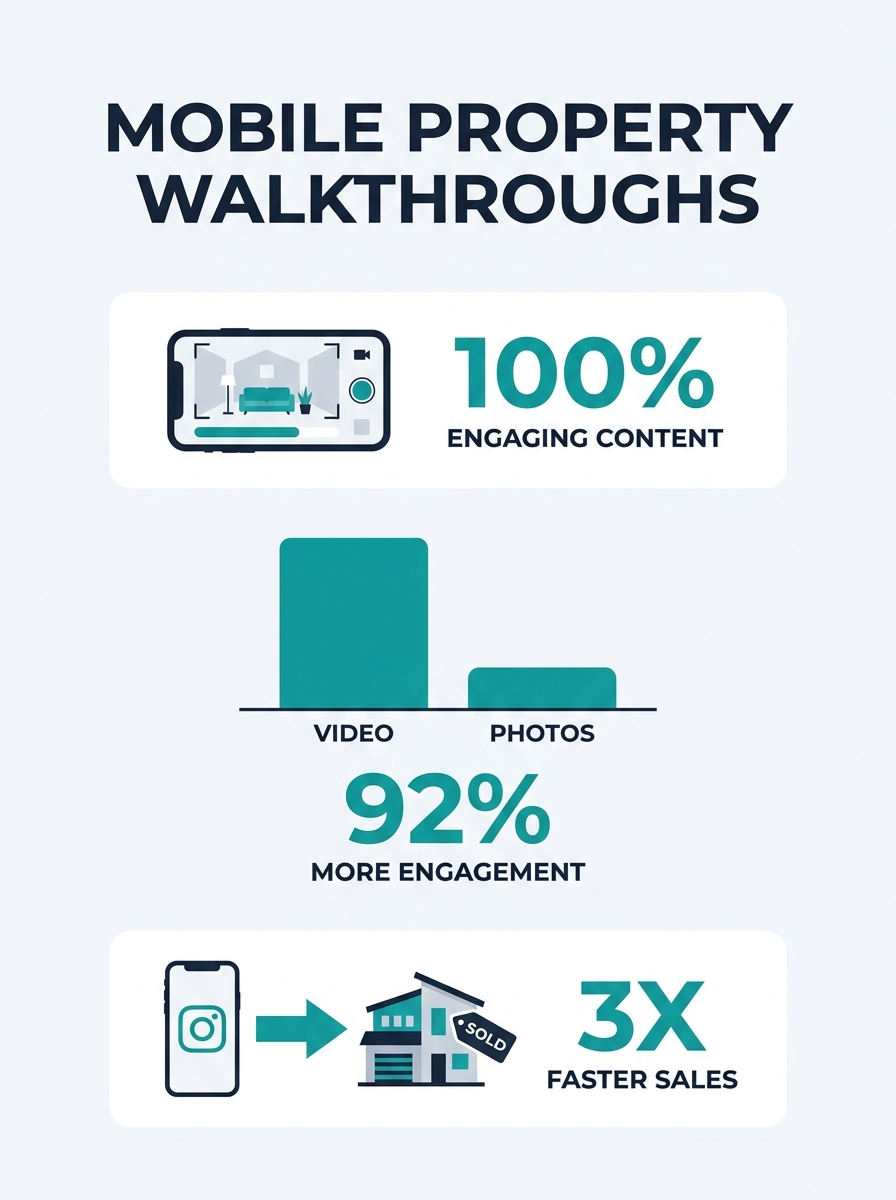
Kranenburg’s content operation now follows a standardized production system. Her Philippines-based editor handles video editing across three platforms, keeping Instagram clips under one minute with rapid cuts. The agent uses AI tools to vacuum the internet for local real estate news, verify facts, and refine content ideas. When she posted inaccurate information about a Cambridge development’s completion status, she corrected the mistake after followers flagged it.
“If realtors are not incorporating AI into their content, then they’re missing the mark,” Kranenburg said. “It buys back my time.”
Marc Savatsky of Choose Boston Brokerage, who began posting listings to Instagram a decade ago and now cohosts a real estate podcast, said the competitive landscape now requires personality differentiation. “It boils down to: Do you want a realtor that is selling a home first, or themselves first?” Savatsky told the Globe. He sold five units in a multifamily under-construction property through consistent Instagram posts showing renderings and build-out progress.
The approach mirrors personal branding frameworks showing trust gaps between licensed and followed agents, where audiences increasingly weight social proof alongside credentials.
Buyer Discovery Shifts From Search Filters to Algorithmic Feeds
Ali Joyce, a nine-year real estate adviser, receives frequent direct messages about her seven-second luxury listing videos covering Westwood, Needham, and Dedham. Carey Morewedge, professor and marketing department chair at Boston University’s Questrom School of Business, noted that realtors using social platforms expose buyers to properties they would otherwise filter out on platforms like Zillow.
The discovery shift aligns with recent agent strategies prioritizing personal brand over follower counts, where consistent posting to smaller engaged audiences outperforms sporadic content to large passive followings.
Kranenburg’s recent filming sessions illustrate the dual-track content model. At Moments Cafe in Newton, she photographed Mayor Marc Laredo with cafe owners Tai Huynh and Phuong Nguyen for a neighborhood spotlight post. She then drove ten minutes to a $2.1 million newly constructed Newtonville townhouse to film a property walkthrough. Both clips served the same funnel: attract viewers with local happenings, convert them with listing showcases.
The agent’s buyer inquiries now flow primarily through direct messages from prospects who discovered her through posts or referrals from followers. Multiple recent transactions valued in seven figures originated from social media engagement, she reported to the Globe.
Reading Between the Lines
Kranenburg’s 80 percent buyer pool expansion quantifies what many agents intuit but struggle to execute: systematic content production tied to local algorithms generates measurable deal flow. The key operational shift isn’t posting property tours—it’s running a media operation with editing infrastructure, AI tooling for research and fact-checking, and non-real-estate content designed for algorithmic distribution. Agents treating Instagram as a listing billboard miss the actual mechanism: daily posting schedules, platform-specific formatting (under-one-minute vertical videos), and hyperlocal news hooks that train feeds to surface real estate content when prospects begin active search.
The Philippines-based editor and AI workflow investments signal where successful social media strategies land: treating content as a business function requiring dedicated labor and technology spend, not as weekend posting when a listing photographs well. Kranenburg’s model scales the influencer playbook—hook with lifestyle content, monetize with service offerings—into a replicable real estate lead generation system. Agents who dismiss social media as “extra marketing” will find themselves competing against operations that measure posting cadence, engagement rates, and DM conversion the way traditional teams track open house attendance.
The National Association of Realtors data confirming social media as the top quality lead source validates what competitive agents already built: content infrastructure that runs parallel to MLS listings and open house calendars, optimized for discovery channels where buyers spend attention before they search property databases.