

Industry leaders in real estate remain invisible to consumers, allowing influencers and commentators to define the housing narrative, according to Tampa Bay broker Corina Lessa speaking April 30 at HousingWire’s Women of Influence Forum in Austin.
Lessa, broker-owner of Tampa Bay Key Real Estate, told conference attendees that many qualified industry leaders stay silent while non-practitioners shape consumer perception of the real estate market. “The story is being told by someone, and that someone is not just describing the story, they are actually defining it, defining our entire industry,” she said, according to HousingWire. The visibility gap leaves consumers making major financial decisions based on whoever speaks loudest rather than who knows most.
The argument extends existing discussions about how agents build credibility through social media presence, but frames visibility as a trust-building responsibility rather than a marketing tactic.
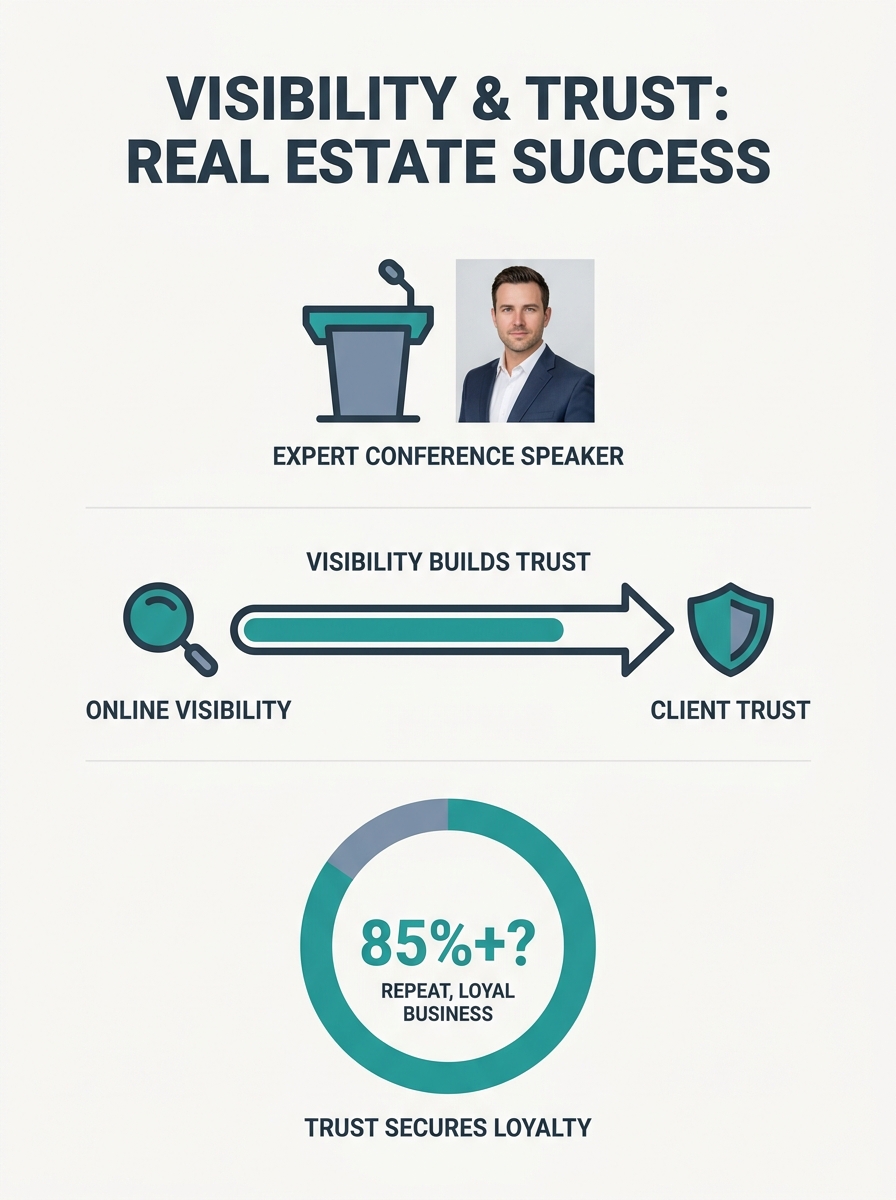
Trust Built Through Visibility
Lessa described trust as “the currency of leadership” and said people making life-changing decisions often look to leaders who are most visible rather than most qualified. This lack of visibility among established professionals creates an information vacuum that consumers fill with whatever sources they find first.
“It can be a social media influencer or a commentator,” Lessa said, according to the report. “It can be anyone that is being loud, and the consumer is then watching and listening to this information that they are then using to make the most important financial decision of their lives.”
The broker argued that established leaders often watch from the sidelines, frustrated by commentary from less-qualified voices but unwilling to step into public conversations themselves.
Adding ‘Decoder’ to Leadership Framework
Lessa built on the “ABCs of leadership” framework taught at Harvard University, which positions leaders as architects who build systems, bridges who connect communities, and catalysts who move people to action. She added a fourth element: “D for decoder.”
Modern real estate leaders must interpret industry complexities for consumers, according to Lessa’s framework. “Real estate is not the first language of the consumer,” she told attendees. Leaders must translate regulations, simplify investor decisions, and make the housing market comprehensible to people navigating it for the first time.
The decoder role becomes critical when consumers cannot distinguish between qualified expert guidance and general commentary. Without visible industry leaders interpreting the market, consumers navigate housing decisions in the dark.
Visibility as Responsibility
Lessa framed visibility not as self-promotion but as professional obligation. “Visibility is not about ego, or about how many followers you have or attention,” she said. “It’s the responsibility and courage to put a face to leadership, to be in the conversations, to be leading the conversations, to shape the narrative, to earn the trust before someone else does.”
The broker noted that even capable leaders struggle to shape narratives when they remain invisible. If qualified professionals do not fill the information gap, less-qualified voices will.
Lessa called real estate “the most powerful force shaping human civilization” and said the industry’s future will be determined by human leaders willing to step into public view. “Every industry has a story, has a narrative and the question is not anymore what the story is, but who is telling it,” she said. “And if it is not you, then who?”
Context and Outlook
The visibility gap Lessa described affects how consumers evaluate agent expertise before hiring. Agents who maintain consistent online presence—through YouTube content, social media commentary, or neighborhood market updates—build the trust foundation that converts leads into clients. The broker’s framework suggests visibility functions as professional infrastructure rather than optional marketing, particularly when unlicensed influencers comment on housing markets without transactional accountability.
For agents competing in markets where consumers research extensively before reaching out, the decoder role offers positioning advantage. Translating mortgage rate movements, interpreting inventory trends, or explaining bidding strategy in plain language establishes authority that generic property listings cannot. The agents who explain the market publicly capture trust before the first inquiry form arrives.
The challenge remains execution. Most agents recognize the value of visibility but struggle to maintain consistent content output while managing client work. Lessa’s framing reframes the trade-off: silence cedes trust to whoever speaks first, regardless of their qualification to advise buyers making six-figure decisions.