

A real estate digital marketing framework published September 15 by TechBullion instructs agents and brokerages to evaluate SEO service providers based on qualified traffic delivery rather than search ranking positions, arguing that high-volume keyword rankings produce inquiries without converting to transactions when buyer intent remains mismatched, according to the property marketing guide.
TL;DR: TechBullion’s September 15 framework shifts real estate digital marketing evaluation metrics from search rankings and inquiry volume to lead quality and buyer intent alignment across SEO, content, and paid channel strategies.
The guide identifies keyword research as the foundation layer for matching content to buyer search behavior, distinguishing location-specific apartment queries from investment research and developer comparison searches. Real estate businesses that create dedicated pages for specific audiences and property locations improve relevance and reduce wasted traffic from generic content strategies, the framework states.
Website Conversion Architecture Replaces Branding Focus
Property pages should function as sales assets rather than portfolio displays, TechBullion instructs, by including project highlights, photographs, floor plans, location details, amenities, nearby facilities, and FAQ sections alongside clear inquiry buttons that encourage visitors to request information or arrange site visits. Mobile optimization receives equal priority given property search behavior concentrated on smartphones, with page load speed and navigation usability on smaller screens affecting conversion rates, the guide notes.
The framework’s SEO approach emphasizes technical optimization, keyword targeting, internal linking, local search visibility, and informative content as contributors to organic search performance. Businesses evaluating real estate SEO services should determine whether provider strategies target qualified traffic or prioritize rankings alone, TechBullion states, since high search positions for irrelevant keywords generate visits without producing business results.
Content Strategy Maps to Purchase Decision Stages
Real estate buyers research neighborhoods, schools, transportation options, investment potential, financing, construction quality, and property documentation before contacting sales representatives, creating opportunities for content marketing to address concerns early in the decision process, according to the guide. Location guides, buying checklists, market explainers, property comparisons, FAQ documents, and educational articles help businesses rank for longer, more specific searches carrying strong commercial intent, TechBullion reports.
Multi-channel lead generation extends beyond SEO to include social media showcasing properties through images, videos, virtual tours, and project updates, the framework states. Paid advertising places specific properties before selected audiences while retargeting campaigns reconnect with website visitors who left without submitting inquiries. Email and messaging campaigns support lead nurturing by providing prospects with relevant updates rather than generic promotional content, the guide instructs.
A coordinated real estate digital marketing agency can unify these channels into a strategy aligned with business objectives, TechBullion notes. The Wyoming brokerage property search conversion case study demonstrates registration threshold implementation on IDX platforms that converts anonymous browsing into identified leads.
Lead Quality Measurement Replaces Volume Metrics
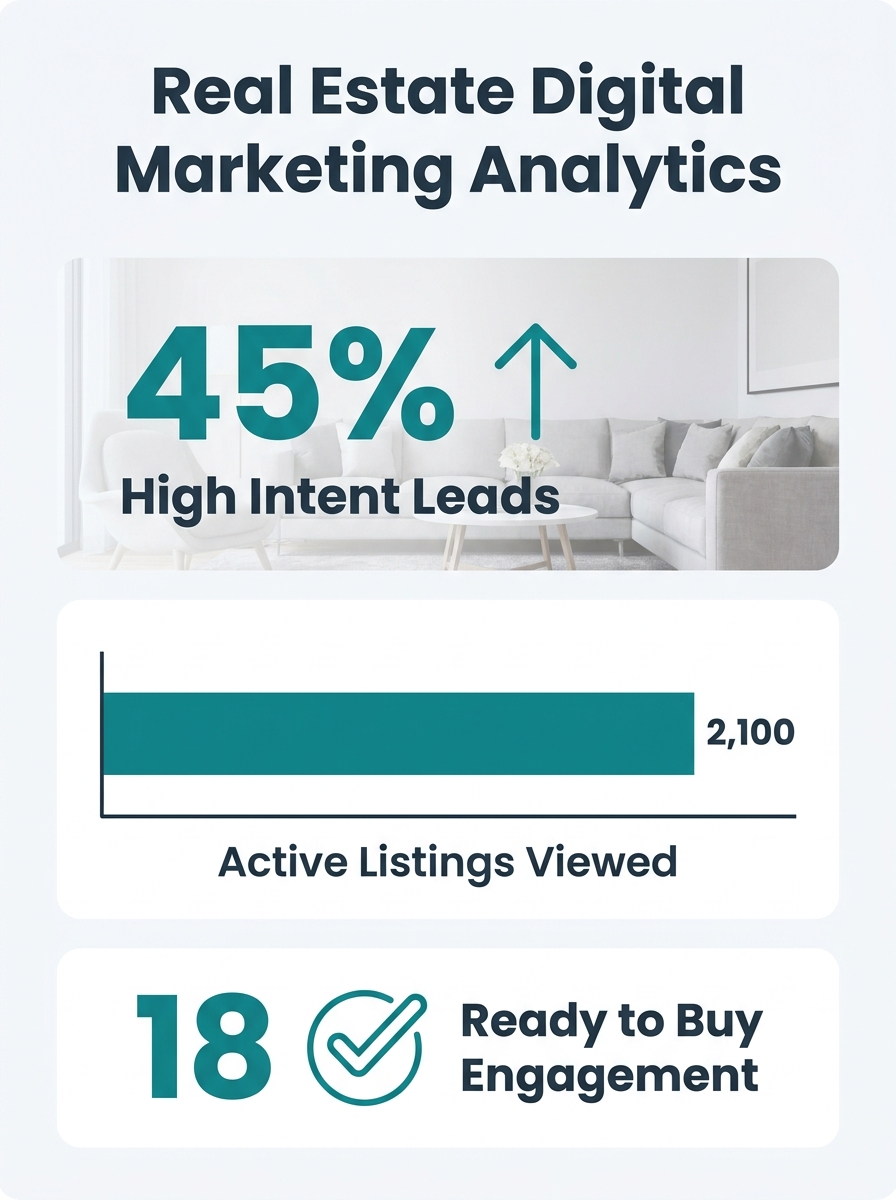
Generating large inquiry volumes does not indicate campaign success when prospects lack genuine purchase intent or budget alignment, the framework argues. Real estate companies should track lead sources, inquiry quality, site visit requests, follow-up engagement, and conversion outcomes to identify channels producing valuable prospects, TechBullion instructs. CRM integration enables sales teams to organize leads and maintain timely communication across the pipeline.
The guide’s performance optimization approach treats digital marketing as an ongoing process responding to changing search behavior, fluctuating advertising costs, competitor project launches, and evolving buyer preferences. Regular campaign reviews identify successful initiatives and improvement opportunities in underperforming areas, while testing landing pages, advertisements, content formats, and calls to action gradually improves conversion rates, according to the framework.
The marketing automation lead response framework published by a separate vendor shows two-hour response delays cost real estate agents transaction opportunities, reinforcing TechBullion’s emphasis on CRM integration and timely follow-up systems.
Context and Outlook
TechBullion’s framework reflects an industry-wide shift away from vanity metrics toward conversion-focused digital marketing measurement as real estate professionals confront rising customer acquisition costs and compressed commission structures. The guide’s emphasis on buyer intent alignment and lead quality tracking addresses agent frustration with SEO and paid advertising campaigns that generate high inquiry volumes but low appointment conversion rates, a pattern that emerged across brokerage marketing budgets during the 2024-2025 market correction.
The multi-channel coordination approach the guide recommends—integrating SEO, content marketing, social media, paid advertising, and email campaigns under unified tracking—mirrors the social media framework prioritizing personal brand over follower counts published by a marketing agency for real estate agents. Both frameworks treat online visibility as a means to qualified lead generation rather than an end goal measured by traffic or engagement metrics alone.
Real estate businesses implementing the TechBullion framework will need CRM systems capable of tracking lead source attribution and conversion outcomes across multiple touchpoints, technical capacity to optimize mobile site performance, and content production workflows that match publishing volume to keyword research findings rather than calendar-based posting schedules. The framework’s rejection of ranking-focused SEO services in favor of qualified-traffic strategies signals a maturation phase in real estate digital marketing as the industry moves beyond portal dependency toward owned-channel lead generation.