
Tim Dimmick, a RE/MAX agent in Bucks County, Pennsylvania, published a suite of custom-built ChatGPT tools on April 21, 2026. Each one covers a single community he farms: Perkasie, Souderton, Doylestown, and several others across Bucks and Montgomery Counties. The tools answer hyper-local questions about school districts, pricing trends, and neighborhood details, running 24/7 as standalone AI guides for prospective buyers and sellers.
Dimmick’s launch landed the same week Restb.ai announced its AI technology had crossed 1 million agents through 26 MLS partnerships. And it arrived against a backdrop where, according to a 2024 New Delta Media Survey, 75% of leading U.S. real estate brokerages have already adopted AI technologies.
So here’s the real tension the Dimmick story raises: if a single RE/MAX agent can build local market AI tools tuned to specific ZIP codes, what happens when well-funded platforms do the same thing at national scale? And where does that leave the independent agent who doesn’t have the technical chops or time to build their own GPTs?
Dimmick’s Bet: One GPT Per ZIP Code
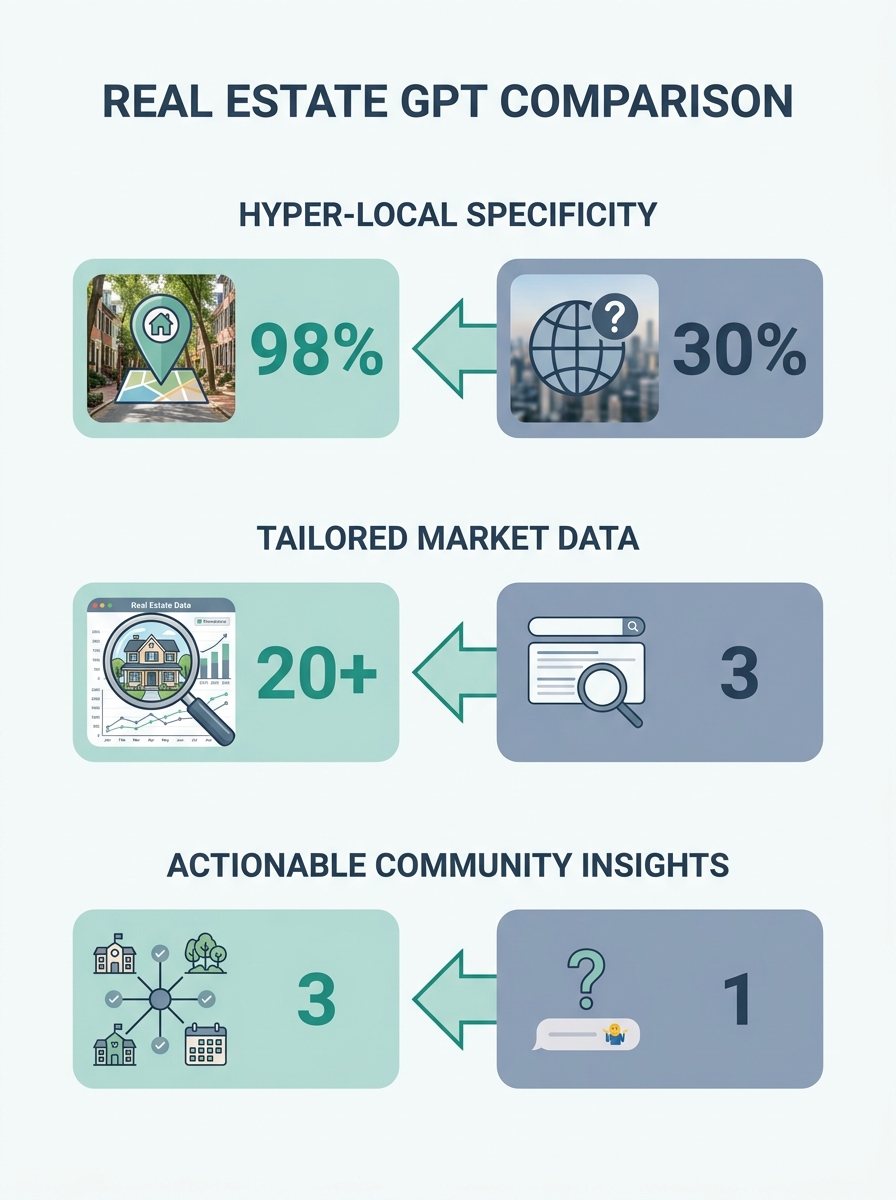
The tools Dimmick created aren’t general-purpose ChatGPT wrappers. Each one is pointed at data specific to a single community. A buyer asking Dimmick’s Doylestown GPT about average days on market gets different answers than someone querying the Perkasie version. School ratings, commute times, local zoning changes, recent comparable sales — all of it is scoped to the geography.
This is a smart play for an agent who already knows those markets cold. The GPT becomes an extension of Dimmick’s local expertise, available at 2 a.m. when a relocating family in Texas starts Googling “Doylestown PA housing market.” It’s a lead capture tool wrapped in a conversational interface.
But building and maintaining these tools requires real effort. You need to curate the training data, update it as market conditions shift, and verify that the outputs don’t hallucinate facts about a school district’s boundaries or a property’s flood zone status. ChatGPT real estate agents who try this approach quickly discover that the build is the easy part. The maintenance is where it gets expensive in hours.
The Adoption Curve Most Agents Are Actually On
That 75% brokerage adoption number sounds like the industry has already embraced AI. The reality on the ground looks different. PwC’s Emerging Trends in Real Estate 2026 report draws a useful line between generative AI (drafting listing descriptions, writing email campaigns) and the newer wave of agentic AI — systems that autonomously search, synthesize, and act on organizational data across CRM, MLS feeds, and transaction management platforms.
Most of that 75% adoption sits firmly in the first category. Agents use ChatGPT to write listing copy, brainstorm social media captions, and draft email sequences. That’s genuinely valuable, and it’s where many agents get their first real competitive advantage from real estate technology. But it’s table stakes at this point.
Agentic AI is where things get interesting and where independent agents risk falling behind. Larger firms are deploying tools like Yardi Virtuoso, which can respond to inbound leads, pull CRM data, schedule follow-ups, and update deal statuses without a human touching the keyboard. PwC expects widespread deployment of these systems within 24 months.
For agents already thinking about how to qualify leads with AI-powered systems, the shift from chatbot to autonomous agent changes the calculus entirely. The question becomes less “Can I use ChatGPT to write a follow-up email?” and more “Can my tech stack identify which contacts are likely to sell and reach out to them before I even know they’re thinking about it?”
The question isn’t whether you can build a custom GPT. It’s whether you need to, given what’s already shipping inside tools you’re probably already paying for.
Three Platforms Already Embedded in Agent Workflows
Here’s where the competitive picture brightens for agents who don’t want to build anything custom.
Lofty’s Homeowner Agent
This agentic AI feature lives inside Lofty’s existing operating system. It monitors your CRM contacts for selling intent by analyzing home values, equity positions, and local market data. When it identifies a likely seller, it delivers personalized outreach automatically and pauses the automation the moment a homeowner responds. You don’t configure prompt chains or curate training data. You just need an active Lofty subscription with populated contacts.
Rechat’s AI Memo
Released in April 2026 and available to all customers at no extra charge, AI Memo records or transcribes your client conversations, generates summaries with key takeaways and next steps, and links everything directly to the relevant contact and deal in your CRM. The AI assistant (named Lucy) handles the note-taking burden that eats into showing time and follow-up hours. If you’ve ever lost a deal because you forgot a detail from a buyer consultation three weeks ago, this addresses that gap.
Shilo’s Signals
Announced April 9, 2026, Signals takes a different approach. It analyzes your recorded calls to build DISC-style behavioral profiles of your contacts, then gives you coaching recommendations on how to communicate with each person. Trained on over 3 million calls from 7,000+ agents, it surfaces patterns in how you talk to different personality types and flags where your approach might be creating friction.
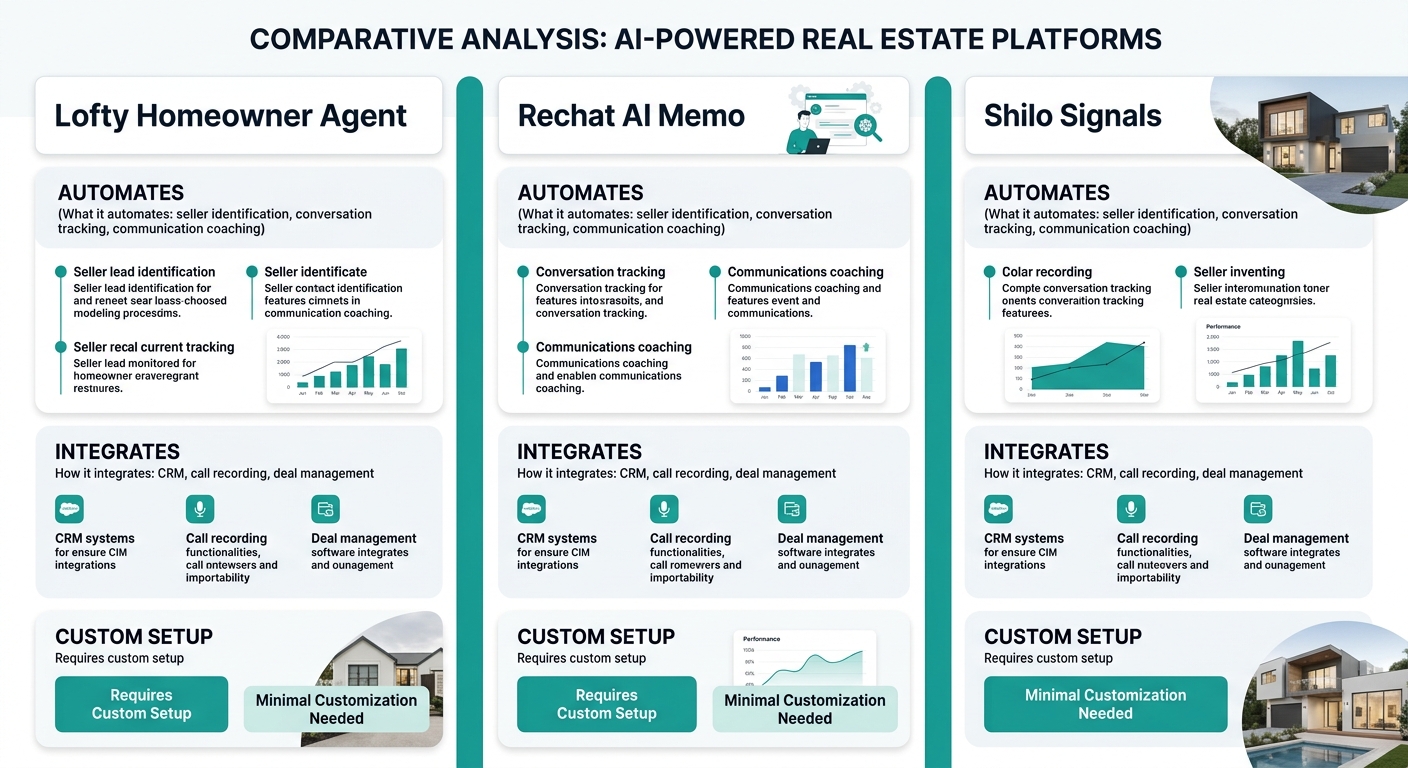
None of these tools require you to understand prompt engineering or GPT architecture. They plug into workflows you already have — your CRM, your phone calls, your client meetings — and add intelligence on top. If you’re evaluating your marketing software stack, these belong on the shortlist.
And they’re joined by broader moves in the MLS ecosystem. Restb.ai’s expansion to 26 MLSs means AI-powered image tagging, property condition analysis, and feature detection are available to agents in markets ranging from major metros to smaller regional boards. The infrastructure for AI chatbots in real estate is being built around you, whether or not you asked for it.
Where Custom GPTs Hit a Ceiling for Solo Agents
Dimmick’s approach has a genuine advantage: specificity. A GPT trained on Doylestown data will outperform a generic AI chatbot on questions about that market. Local market AI tools work best when they can draw on narrowly scoped, accurate data.
But the model has three structural weaknesses that matter for the average independent agent.
Data freshness. Real estate markets move week to week. A custom GPT loaded with February pricing data gives misleading answers in April. Someone needs to update those datasets constantly, and for a solo agent handling 15 to 25 transactions a year, that’s a significant time commitment competing with prospecting, showings, and transaction coordination.
Liability. When your branded GPT tells a buyer that a property is in a particular school zone or that flood insurance isn’t required, and that information turns out to be wrong, you own the outcome. HousingWire reported this week that AI can curate information, but agents still protect the outcome — one Florida example cited potential costs between $75,000 and $225,000 when buyers proceeded without proper agent guidance.
Platform risk. OpenAI updates its models regularly. GPT-5.4, released March 5, 2026, delivers stronger reasoning and configurable thinking levels, but each model update can change how your custom GPT responds to identical prompts. What worked reliably in February might produce different outputs in April with zero changes on your end.
These aren’t arguments against AI. They’re arguments for choosing automation tools that someone else maintains and updates — which is exactly what Lofty, Rechat, Shilo, and the expanding MLS-integrated AI platforms provide.
The Dimmick Playbook, Minus the Custom Build
Dimmick’s instinct is correct: the agents who win in hyper-local markets will be the ones whose technology reflects local knowledge, not generic national data. The question is execution path.
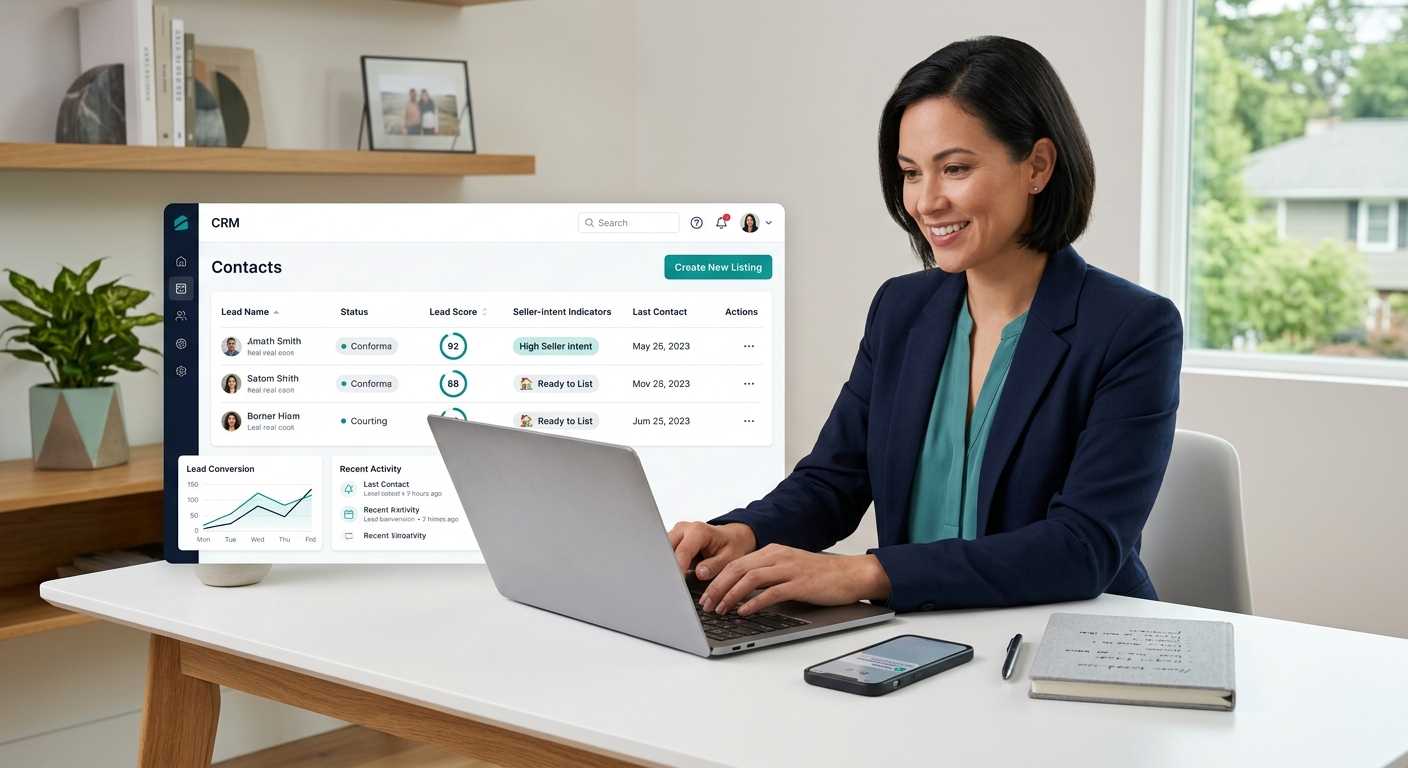
If you’re an independent agent looking at Dimmick’s announcement and wondering whether you need to build something similar, the honest answer is probably no. The tools shipping inside existing platforms already handle the highest-value use cases — lead scoring, seller identification, conversation intelligence, automated follow-up, and content generation. They pull from MLS data feeds that update in near-real-time, and they don’t require you to troubleshoot prompt engineering when the underlying model changes.
What Dimmick built works for Dimmick because he has the technical interest and the willingness to maintain it. For the other 99% of agents, the better path looks more practical: pick one CRM-integrated AI feature that addresses your biggest time drain (lead follow-up, listing content creation, or client communication tracking), activate it this month, and measure whether it actually frees up hours for the prospecting and relationship work that generates leads in the first place.
The competitive advantage in real estate technology right now isn’t about who builds the fanciest AI tool. It’s about who uses the available tools consistently enough that they compound over weeks and months. Dimmick’s GPTs make for a good press release. But the agent who activates Lofty’s Homeowner Agent and follows up on every flagged seller signal within 24 hours will probably close more listings this quarter, without writing a single line of prompt logic.