

Texas brokerage JLA Realty published guidance June 3 on optimizing real estate agent visibility in AI-driven search platforms including ChatGPT, Google AI Overviews, and Perplexity, marking one of the first brokerage-level training initiatives addressing the shift from traditional keyword search to conversational AI queries, according to the training document released by JLA Realty’s Omnia Elevate division.
TL;DR: Texas brokerage JLA Realty issued June 3 guidance on AI search optimization tactics for agents as consumer search behavior shifts from keyword queries to AI assistant questions like “Who is the best REALTOR® in Kingwood, Texas?”
The guidance frames the transition in agent search visibility from Google rankings to AI-generated recommendations as a fundamental change in consumer research behavior. The training document contrasts legacy search patterns—a buyer typing “Kingwood homes for sale”—with emerging conversational queries directed at AI assistants such as “What should I know before moving to Montgomery County, Texas?” or “Who is the top REALTOR® in my area?” The brokerage positioned early adoption of AI optimization tactics as a competitive advantage over agents who delay implementation.
Three Optimization Frameworks Introduced
The JLA Realty guidance defines three distinct optimization approaches: AI Search Optimization (positioning agents as trusted sources AI systems cite when generating answers), Answer Engine Optimization (creating content that directly responds to consumer questions), and Generative Engine Optimization (structuring online presence so AI platforms recognize agent content as authoritative). The document described GEO as “the next evolution of SEO,” according to the training materials.
The shift in Google’s organic result placement below AI Overviews and paid ads has accelerated agent interest in visibility strategies beyond traditional search engine rankings. The JLA guidance identifies AI-generated answers as a pre-website touchpoint where consumers form initial agent preferences before visiting any brokerage site.
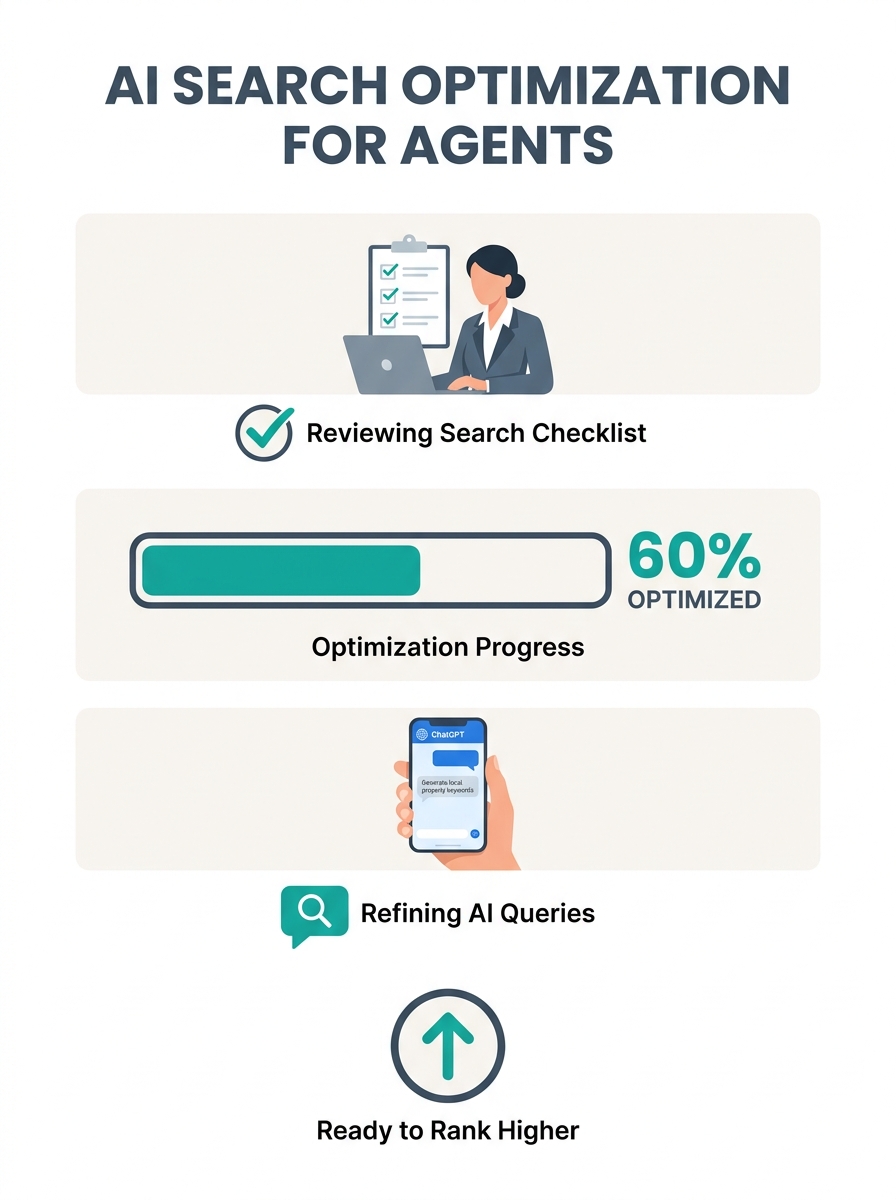
The document outlined six authority signals AI systems evaluate when selecting real estate sources: website content quality, local market expertise depth, online review volume and detail, Google Business Profile completeness, cross-platform business information consistency, and presence in Google AI Overviews. “Reviews have always mattered; now they matter even more,” the guidance stated, recommending agents encourage clients to mention city names, specific services, transaction types, and detailed experiences in testimonials.
Hyper-Local Content Strategy Emphasized
The training materials prioritized neighborhood-level content over broad geographic coverage, contrasting generic articles like “Buying a Home in Texas” with city-specific alternatives such as “Moving to Porter, Texas” or “Why Families Move to The Woodlands.” The brokerage argued AI systems assign higher authority to specific local information because it produces more useful answers to consumer questions. The document provided examples of AI-optimized content headings: “How much does it cost to buy a home in Houston?” and “What are the best neighborhoods in Montgomery County?”
Tactical recommendations included structuring content with question-based headings that mirror conversational queries, FAQ sections, bullet points, and short paragraphs. The guidance emphasized Google Business Profile optimization as “one of the most important tools for AI visibility” because multiple AI systems draw from Google’s local business data. Recommended profile actions included completing every section, adding high-quality photos, posting regular updates, collecting and responding to reviews consistently, listing services explicitly, and answering profile questions.
The document advised agents to maintain active, consistent profiles across Zillow, Realtor.com, Homes.com, LinkedIn, Facebook, YouTube, local Chamber sites, and business directories. “AI looks across the whole internet, not just your site,” the guidance noted, positioning cross-platform consistency as essential for AI system recognition.
Context and Outlook
The JLA Realty guidance reflects growing brokerage attention to AI-driven search as a distinct channel requiring specialized tactics separate from traditional SEO workflows. The training initiative arrives as AI agent lead qualification systems and conversational interfaces reshape real estate marketing infrastructure, creating new visibility requirements agents must address to compete for consumer attention before website visits occur.
The brokerage’s emphasis on detailed, city-specific content and structured question-answer formats aligns with established Answer Engine Optimization principles documented in broader search marketing research. Agents implementing the recommended tactics face a near-term advantage if adoption remains limited among local competitors, though the guidance suggests AI search optimization will become standard practice within the next two to three years as consumer reliance on AI assistants for initial real estate research continues accelerating.
The document’s assertion that “ranking in AI-generated answers may become just as important as ranking on Google’s first page” positions AI visibility as a parallel channel rather than a replacement for traditional search optimization. Brokerages issuing formal training on AI search tactics signal recognition that agent online presence strategies require expansion beyond website design and keyword targeting to include conversational query preparation and cross-platform authority building.