

Solo real estate agents lose leads to timing gaps rather than inadequate follow-up discipline, according to an analysis published September 25 by Tom English, vice president of marketing at 800.com, who cited National Association of Realtors data showing 75 percent of buyers interview only one agent—meaning the first person to answer a call typically wins the business.
TL;DR: Independent agents operating single-office brokerages miss inbound leads during showings and closings, not because they fail to follow up but because prospects hire the first agent who answers the phone.
The finding challenges conventional lead-loss narratives that focus on callback speed rather than initial availability, English wrote in an opinion column for Real Estate News. NAR’s 2025 Profile of Real Estate Firms shows 81 percent of brokerage companies operate from a single office with a median of just two full-time licensees, creating structural availability constraints that discipline alone cannot solve.
Why Speed-to-Lead Research Doesn’t Apply to Solo Practitioners
Buyers expect immediate contact. NAR’s 2025 Home Buyers and Sellers Generational Trends Report found 71 percent of buyers valued agents who personally called to update them on new activity, and an equal share wanted property information sent by text as soon as it became available, English reported. A solo agent conducting a showing, attending a closing, or speaking with an existing client cannot simultaneously answer an inbound call—a reality that compounds across a week of scheduled appointments.
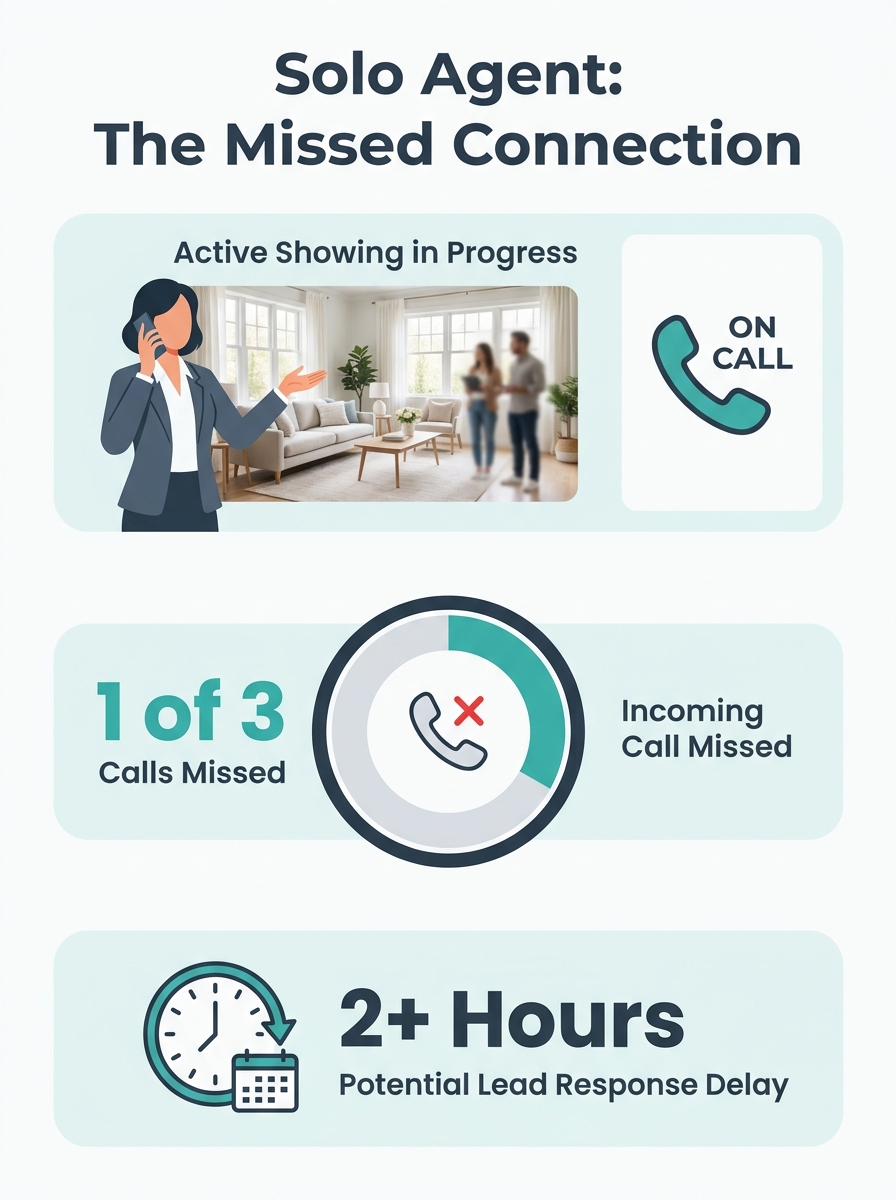
The gap between when a prospect calls and when an agent becomes available often determines who gets hired. “A prospect calling three agents in an afternoon usually goes with whoever answers first,” English wrote, citing the NAR finding that three-quarters of buyers interview just one agent before hiring.
AI Phone Agents and Hybrid Coverage Models Gain Adoption
Independent brokers are deploying AI phone agents that answer calls within seconds, ask qualifying questions, and schedule showings directly on agent calendars without human intervention, according to English. The technology addresses the structural availability problem by maintaining 24-hour responsiveness without requiring agents to hire full-time staff.
Real Estate agents already subscribe to AI tools across multiple categories, but phone and chat automation lag behind adoption in content creation. A 2026 Delta Media survey of brokerage leaders found only 23 percent of agents use AI chatbots on their websites and just 9 percent deploy AI voice agents or answer bots, English reported. Most agents use AI primarily for writing listing descriptions, image editing, and social media management.
Some solo practitioners pair automated phone systems with part-time assistants for calls requiring human judgment, while others build informal call-coverage arrangements with nearby agents, use live answering services, or configure CRM automation to text back immediately when a call is missed, English wrote.
Lead Capture Tools Address First Five Minutes, Not Follow-Up Window
The five-minute response window documented in lead response management research applies after initial contact is made. Solo agents miss leads before that window opens—during the minutes when an inbound call goes unanswered because the agent is occupied with another client-facing task, English argued.
“For an independent brokerage, that reframing is worth more than another reminder to call back sooner,” English wrote. “The follow-up was never the weak link. The five minutes before it was.”
Agents who implement either AI-powered or human-staffed solutions to capture calls during unavailable periods stop losing business they never knew existed, according to English. The technology shift does not replace agent-client communication but ensures initial contact occurs before a prospect moves to the next name on their list.
What Happens Next
Solo agents evaluating lead-capture automation can start with AI phone agents that schedule showings directly or CRM systems that trigger immediate text responses to missed calls. The Delta Media survey showing single-digit adoption of voice bots suggests most independent brokerages have not yet deployed tools specifically addressing availability gaps during showings and closings.
Agents looking to automate lead-generation workflows while maintaining personal client relationships face a narrower technology decision than full-service marketing automation—the question is whether inbound calls reach a live voice, an AI agent, or voicemail. English’s analysis indicates the third option carries the highest opportunity cost for solo practitioners competing against team-based brokerages that can field calls around the clock.
The structural advantage large teams hold in round-the-clock availability becomes less determinative when solo agents deploy technology that answers calls immediately regardless of the agent’s current task, according to English’s framework.