

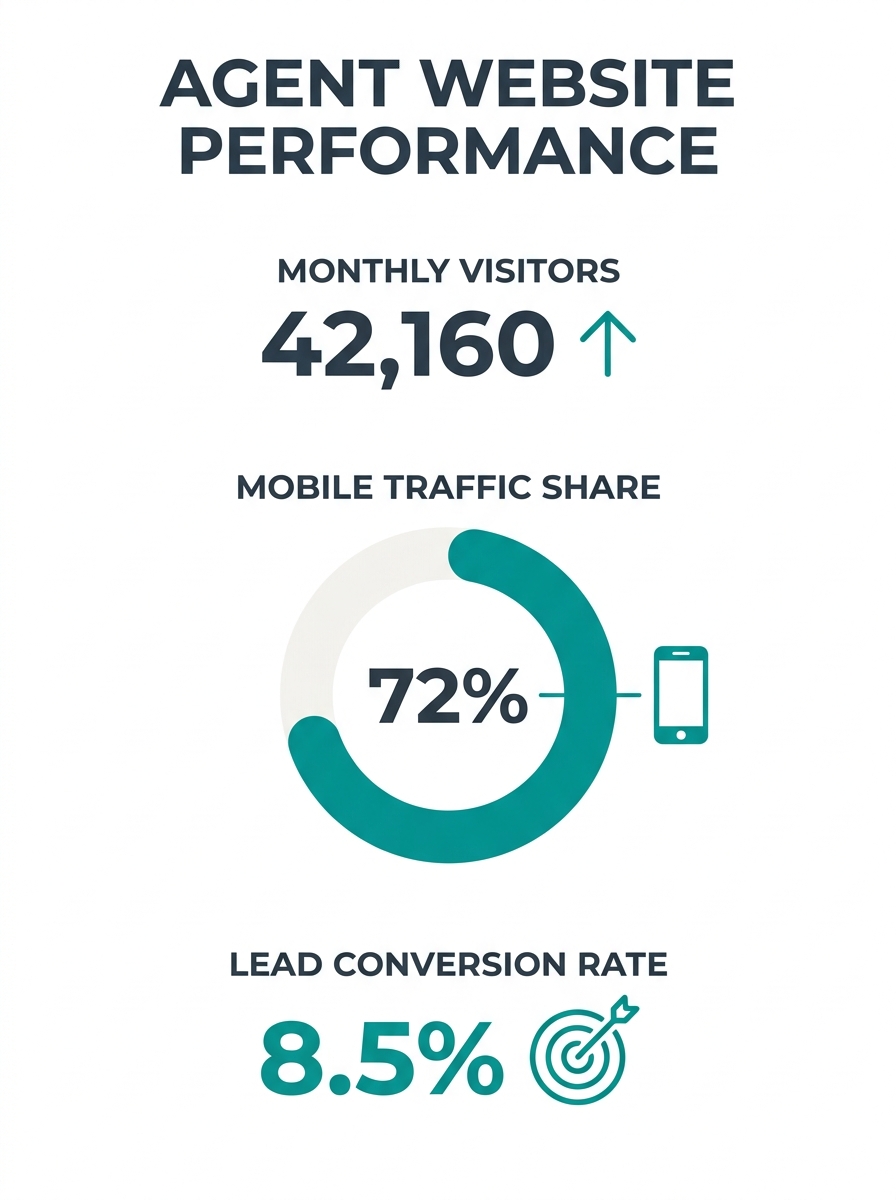
Over seventy percent of real estate website traffic now originates on mobile devices, yet most agent sites fail to convert those visitors because of friction points in search indexing, AI discoverability, and mobile load speed, according to a diagnostic framework published July 27 by myRealPage, a website provider serving agents in the United States and Canada.
TL;DR: A real estate website platform identified six technical and content failures—including poor Google indexing, missing AI optimization, and generic geographic targeting—that prevent agent websites from generating leads, publishing step-by-step fixes for each.
The analysis from myRealPage examined common conversion barriers on agent websites and outlined actionable corrections for each failure point, ranging from Google Search Console submission to Virtual Office Website data integration. The framework arrives as homebuyers increasingly use artificial intelligence tools like ChatGPT, Gemini, and Perplexity to find local agent recommendations rather than traditional search engines.
Google Indexing Gaps Block Search Visibility
The first failure point identified was incomplete or delayed Google indexing, which prevents search engines from discovering agent website pages even after launch. The framework recommends agents submit their website domain directly to Google Search Console and locate their XML sitemap URL—typically auto-generated at the domain followed by “/sitemap.xml”—then paste that link into the Sitemaps section to signal Google’s crawlers to scan the site immediately rather than waiting weeks for organic discovery.
This step addresses a common scenario in which agents announce new websites on social media but receive no traffic because Google hasn’t yet catalogued the pages in its index, according to the report.
AI Search Engines Require Structured Data
The second conversion failure stems from websites lacking optimization for generative AI platforms. In 2026, homebuyers and sellers ask ChatGPT and similar tools questions such as “Who is the best condo agent in downtown Vancouver?” or “Top realtors in Austin, TX for first-time buyers,” the framework noted.
The recommended fix includes adding FAQ sections written in conversational language, ensuring business name, address, and website URL match identically across Google Business Profile, LinkedIn, Yelp, and local real estate boards, and implementing RealEstateAgent schema markup so search bots instantly understand the agent’s identity and service area. MyRealPage stated its platform automatically embeds this structured data into customer websites.
This approach mirrors findings in a July framework published by a marketing executive showing agents must structure content to win ChatGPT citations, though the myRealPage analysis focuses specifically on website architecture rather than social media optimization.
Generic Geographic Targeting Loses to Hyperlocal Strategy
Attempting to rank for broad metro-area keywords such as “Top Real Estate Agent in [Major City]” pits individual agents against portals with multi-million dollar budgets like Realtor.ca and Zillow, the third failure point stated. The framework instead recommends building neighborhood micro-guides focused on specific sub-communities, condo towers, or school districts—for example, “Living in Westboro, Ottawa” or “Waterfront Homes in St. Petersburg”—and creating dedicated landing pages for niche buyer segments such as first-time buyers, downsizers, or pre-construction investors.
The more specific the page, the higher it will convert when local buyers land on it, according to the report. This hyperlocal approach allows agents to dominate search results in tightly defined geographic areas where large portals produce only generic content.
VOW Data Gates High-Value Information
The fourth conversion failure involved failing to use Virtual Office Website market data as a lead magnet. Active listings appear on multiple portals without requiring visitor registration, eliminating incentive for users to provide contact information on an agent’s site, the framework explained.
The recommended solution gates historical sold data and detailed property history behind a simple name-and-email login, offering homeowners access to information about what neighboring properties sold for—data that portals typically hide. By integrating a VOW feed onto the site, agents give registered users access to this high-value information in exchange for lead contact details, according to the report.
This tactic uses the fact that homeowners are “obsessed with knowing what neighboring properties sold for,” the analysis stated, creating a natural incentive to register that doesn’t exist with active listing data alone.
Mobile Load Speed and Content Freshness Gaps
The fifth and sixth failure points addressed mobile user experience friction and inconsistent content publishing. With more than seventy percent of real estate web traffic coming from mobile devices, sites that load slower than three seconds or feature tiny buttons difficult to tap on smartphones lose visitors immediately, the framework warned.
The recommended mobile fixes include testing the site on a phone to verify one-thumb map search functionality and click-to-call phone number accessibility. On the content front, the framework suggested using AI tools like ChatGPT or Gemini to generate local topic ideas and draft neighborhood outlines, then humanizing the output with local knowledge, personal stories, current market statistics, and client photos before publishing.
Websites with fresh, regularly updated content get indexed more frequently by Google and build stronger domain authority over time, according to the report, though the framework emphasized agents should never publish raw AI text without adding personal expertise.
The Takeaway
The myRealPage framework arrives as real estate agents face mounting pressure to differentiate their online presence while competing against well-funded portals and AI-powered recommendation systems. The six failure points—Google indexing gaps, missing AI optimization, generic targeting, lack of VOW data integration, mobile friction, and inconsistent content—translate directly into measurable lead loss, with the seventy-percent mobile traffic figure underscoring the urgency of responsive design fixes. Agents who address these technical and content gaps systematically, starting with Search Console submission and schema markup implementation, gain an advantage in both traditional search and the growing segment of homebuyers using ChatGPT and similar tools to find local representation. The framework’s emphasis on VOW data as a gated lead magnet offers a concrete differentiator from portal listings, though success depends on agents actually requiring registration rather than displaying sold data freely—a strategic choice many agents resist despite its conversion impact.