

Social Czars published a consultant vetting framework October 2 instructing real estate brokers to demand proof that SEO providers track leads through to closed revenue rather than reporting only rankings or traffic, according to founder John DeMarchi who cited months wasted on generic campaigns as the primary hiring mistake among independent brokerages.
TL;DR: Social Czars founder John DeMarchi released a five-point vetting framework October 2 requiring brokers to verify SEO consultants can track organic search leads from initial inquiry through closed transactions, not merely report keyword positions or session counts.
The guide responds to a recurring pattern in which generalist marketing agencies treat high-value real estate clients identically to e-commerce retailers or local service providers, DeMarchi wrote. The framework targets executives and high-profile brokers who cannot afford reputation risk or wasted spend on campaigns that generate out-of-market traffic without producing qualified buyer or seller appointments.
DeMarchi brings 15 years of corporate in-house experience plus more than a decade leading SEO and digital reputation work for executives, brands, and VIP clients, according to the published bio accompanying the guide.
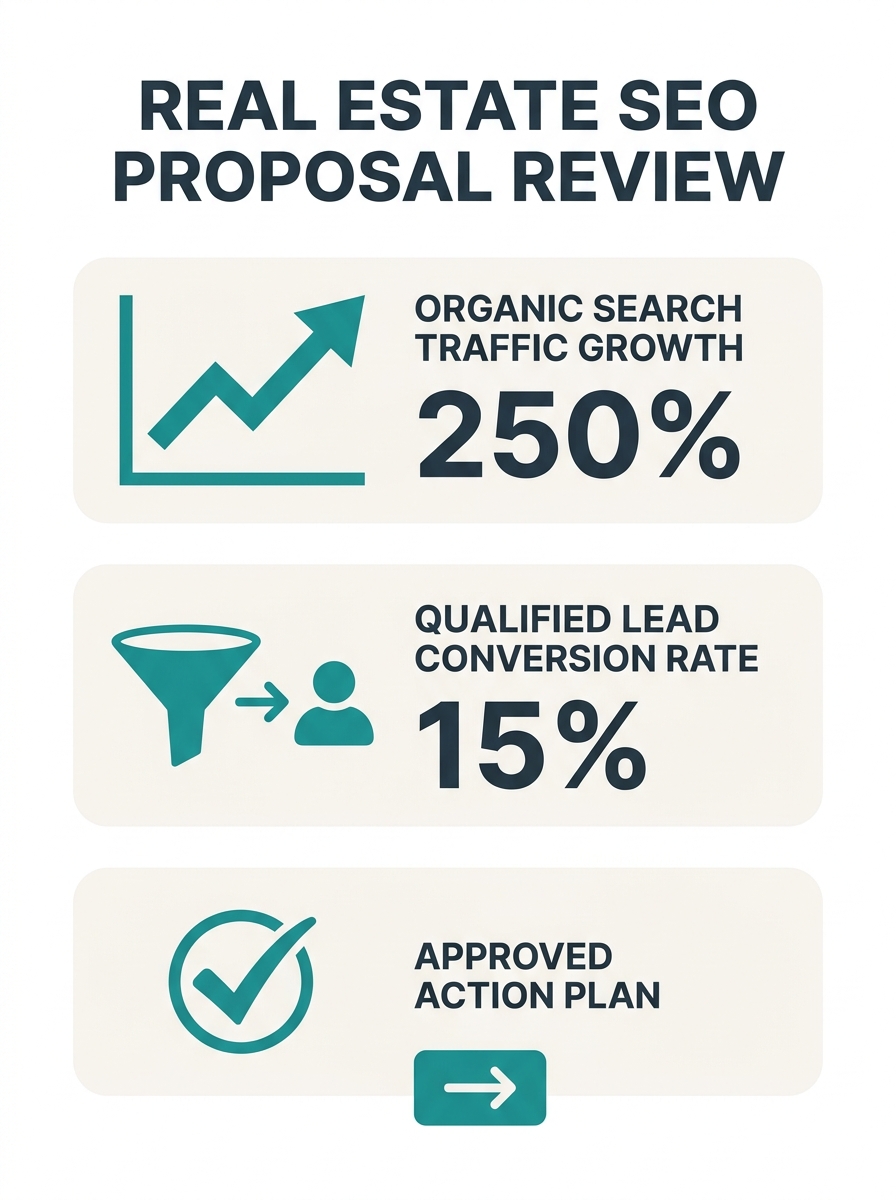
Five Proof Points the Guide Requires Before Hiring
The vetting framework instructs brokers to request documentation of five specific capabilities before signing any SEO contract, DeMarchi wrote. First, consultants must demonstrate they build visibility for neighborhood, relocation, and seller-intent searches rather than broad “homes for sale” terms where national portals dominate. Second, they must show technical proficiency fixing issues that prevent listing, IDX, and service pages from being crawled and indexed by search engines.
Third, providers must produce useful local content demonstrating genuine market knowledge of specific communities, historic districts, or condominium complexes. Fourth, they must track leads through the full funnel to appointments, listings, and closed revenue instead of stopping at rankings or organic traffic volume. Fifth, consultants should understand property schema markup including RealEstateAgent and SingleFamilyResidence structured data that surfaces listing prices and coordinates directly in search result snippets.
The guide emphasizes that 49 percent of marketers report organic search delivers their strongest digital ROI, making provider selection a revenue-determining decision rather than a tactical marketing choice.
Technical Capabilities Generalist Agencies Miss
Standard marketing agencies frequently fail in the property sector because they do not understand MLS and IDX integration constraints, DeMarchi wrote. Generalist providers often overlook that standard IDX plugins render listing data in client-side JavaScript or unindexable iframes, creating massive duplicate content problems without making inventory accessible to search bots.
The guide specifies that real estate SEO requires hyperlocal taxonomy structured around micro-neighborhood boundary lines, private enclaves, and HOA jurisdictions—precision that generic agencies rarely deliver. DeMarchi argued that luxury buyer and seller intent differs fundamentally from consumer product searches, with high-net-worth clients querying specific building amenities, privacy protections, or relocation tax benefits rather than typing generic property terms into Google.
Google commands 88.83 percent of U.S. search market share, and organic search drives 300 percent more traffic than social media channels, the guide noted, citing these figures as justification for demanding real estate-specific technical expertise from any hired consultant.
Revenue Tracking Separates Qualified Providers From Report Generators
The published framework draws a sharp distinction between consultants who track closed revenue and those who report only activity metrics. DeMarcher wrote that wrong providers waste months producing thin neighborhood pages, chasing vanity keywords, or reporting activity without showing business impact.
For brokerages, seller leads represent the highest-margin opportunity because motivated sellers research local sales trends, agent reputations, and recent transaction records months before interviewing listing agents, the guide stated. Ranking for high-intent seller terms directly drives contract volume and compounds a firm’s enterprise value, making revenue attribution the only meaningful performance measure.
The guide instructs brokers to verify that any hired consultant understands how affluent buyers and motivated sellers navigate search engines and can turn informational queries into high-value consultations. DeMarchi emphasized that relying solely on third-party aggregators means renting an audience instead of owning digital real estate, while organic visibility lowers customer acquisition costs and fortifies brand authority across prime markets.
Independent agents and brokerages compete most effectively where they hold genuine advantages over national portals: local expertise, community knowledge, personal brand trust, and the ability to answer high-intent seller questions, the guide concluded.
Why This Matters Now
Brokers evaluating SEO tools and providers face pressure to differentiate their digital presence as national portals continue consolidating buyer traffic. The October 2 framework provides a concrete checklist for separating providers who understand real estate lead generation mechanics from generalist agencies repurposing retail or local-service playbooks. With marketing strategy driving agent selection for 58 percent of home sellers according to recent research, organic search visibility directly influences listing acquisition rates.
The emphasis on revenue tracking aligns with broader industry shifts toward accountable marketing spend. Brokerages that track organic leads through CRM systems to closed transactions gain visibility into true customer acquisition costs—data that informs both provider evaluation and internal resource allocation decisions. For teams already using AI tools or lead nurturing frameworks, the vetting criteria in the October 2 guide offer a parallel filter for ensuring SEO investments deliver measurable pipeline contribution rather than activity reports.