
Brokerage leader Rainy Hake Austin published recommendations April 21 urging agents to protect revenue-generating time from administrative work as lengthening deal cycles expose inefficiencies in how agents allocate hours, according to HousingWire. The column argues that reactive work—responding to emails, managing inboxes, handling follow-ups—creates visible busyness without producing the client conversations and relationship-building that close transactions.
Austin, a leader at The Agency, wrote that top-performing agents distinguish themselves not through longer hours but through deliberate allocation of time to proactive tasks before reactive ones fill their calendars. The shift matters now because clients expect more guidance during extended transaction timelines, leaving less margin for wasted effort.
The Case for Protecting Prospecting Hours
The column identifies a pattern: agents who start their workday in email spend most hours responding to existing demands rather than initiating new conversations. Austin wrote that agents should be able to identify which conversations they initiated, which relationships they strengthened, and which actions moved deals forward at week’s end. If all completed work was reactive, the week lacked productive allocation.
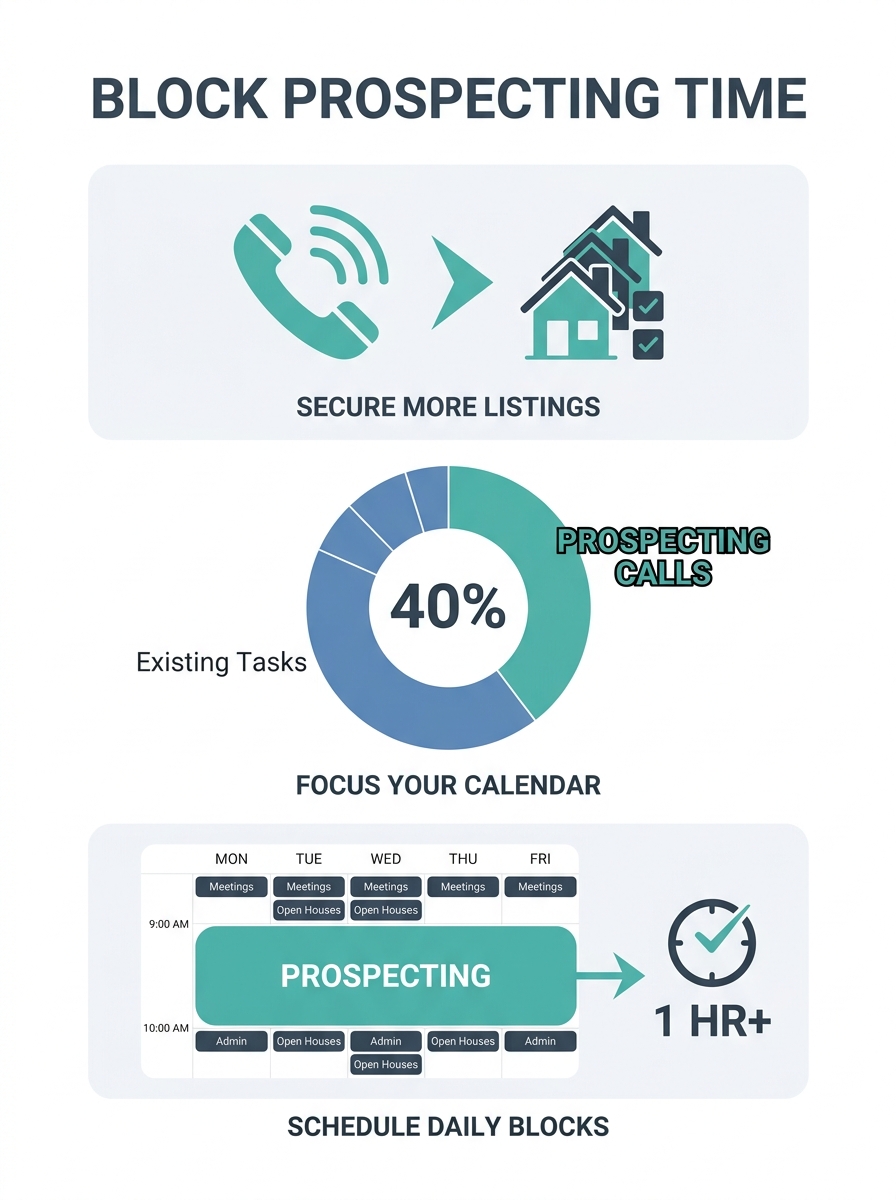
Top agents decide in advance where time goes, the column states. They schedule client outreach, relationship maintenance, and deal preparation before opening an inbox or calendar. The recommendation is to block daily time for revenue-generating activity as the first calendar entry, not the last available slot.
Austin’s argument is that proactive work compounds over time because it builds trust and generates referrals, while reactive work simply maintains existing processes. Clients no longer need agents primarily for property access, the column states—they need guidance through complex decisions, which requires protected thinking and planning time.
Where AI Fits the Workflow
The column describes AI tools as practical solutions for administrative tasks that repeat weekly. Austin cited a personal example of using AI to prioritize inbox messages during a busy period, allowing faster identification of high-value communications.
The recommendation frames AI as a time-protection tool rather than a client relationship substitute. Judgment, conversations, and client guidance cannot be automated, Austin wrote, but message prioritization, routine response drafting, and follow-up organization can be. These administrative tasks are starting points for agents testing AI in their workflows.
The column states that small systemization changes create meaningful time recovery. Agents who identify one frequently repeated task and simplify it through automation or templates can redirect those minutes to prospecting or client consultation.
Implementation Steps
Austin provided three specific starting actions. First, block time daily for revenue-generating activity before other calendar items. Second, set aside weekly evaluation time to assess which activities produced results. Third, identify one repeating task and find a method to simplify or systematize it.
The column argues these steps do not require workflow overhauls. Instead, they redirect existing hours toward higher-value activities. In markets where deals close quickly, the column states, inefficient time allocation can hide behind overall transaction volume. In slower markets with longer timelines, inefficiency becomes visible through reduced closings despite maintained effort.
What Happens Next
Agents testing these recommendations will likely start with calendar blocking, protecting one or two prospecting hours each morning before email or administrative work. The measurable outcome appears in weekly reviews: whether time spent correlates with initiated conversations, strengthened relationships, or deal progress rather than completed inbox tasks.
The AI implementation path centers on administrative repetition—agents can test message sorting, response templates, or follow-up scheduling tools to recover 30 to 60 minutes daily. That recovered time reallocates to client calls, sphere outreach, or listing preparation, which directly affects lead generation velocity.
Markets with extended transaction timelines will test whether intentional allocation outperforms activity volume. Agents who maintain high call counts and showing schedules without corresponding conversion rates may find the productivity gap widening against peers who protect fewer but higher-value hours for relationship-building and proactive outreach that feeds the pipeline six to twelve months ahead.