
GISUser published a comprehensive photo editing guide April 23 targeting real estate professionals seeking to improve property presentation across social media platforms, according to the online tutorial. The eight-technique framework covers fundamental adjustments through advanced manipulation methods agents can apply to listing photographs before posting to Instagram, Facebook, and other visual channels.
The guide addresses a visibility challenge facing agents competing for attention in crowded social feeds. Photo quality directly influences engagement rates and lead generation from social platforms, where potential buyers form judgments within seconds of viewing listing images, the publication noted.
Core Editing Techniques Detailed
The guide opens with three foundational adjustments: cropping to eliminate distracting background elements, straightening to align horizontal and vertical lines, and exposure correction to balance brightness across shadowed and highlighted areas. GISUser illustrated each technique with before-and-after comparisons showing properties with road signage cropped out, tilted rooms corrected, and overexposed interiors brought to proper luminosity.
Color correction and white balance occupy the second segment. The publication explained that color casts from mixed lighting sources can distort room appearance, potentially misleading buyers. Adjusting white balance ensures whites appear neutral rather than yellow-tinted from indoor bulbs or blue-shifted from natural light, the guide stated.
Clarity and sharpness enhancements follow, with the guide describing how increased clarity highlights textures and adds three-dimensional depth to flat photographs. The technique particularly benefits images of countertops, flooring, and architectural details that showcase property quality.
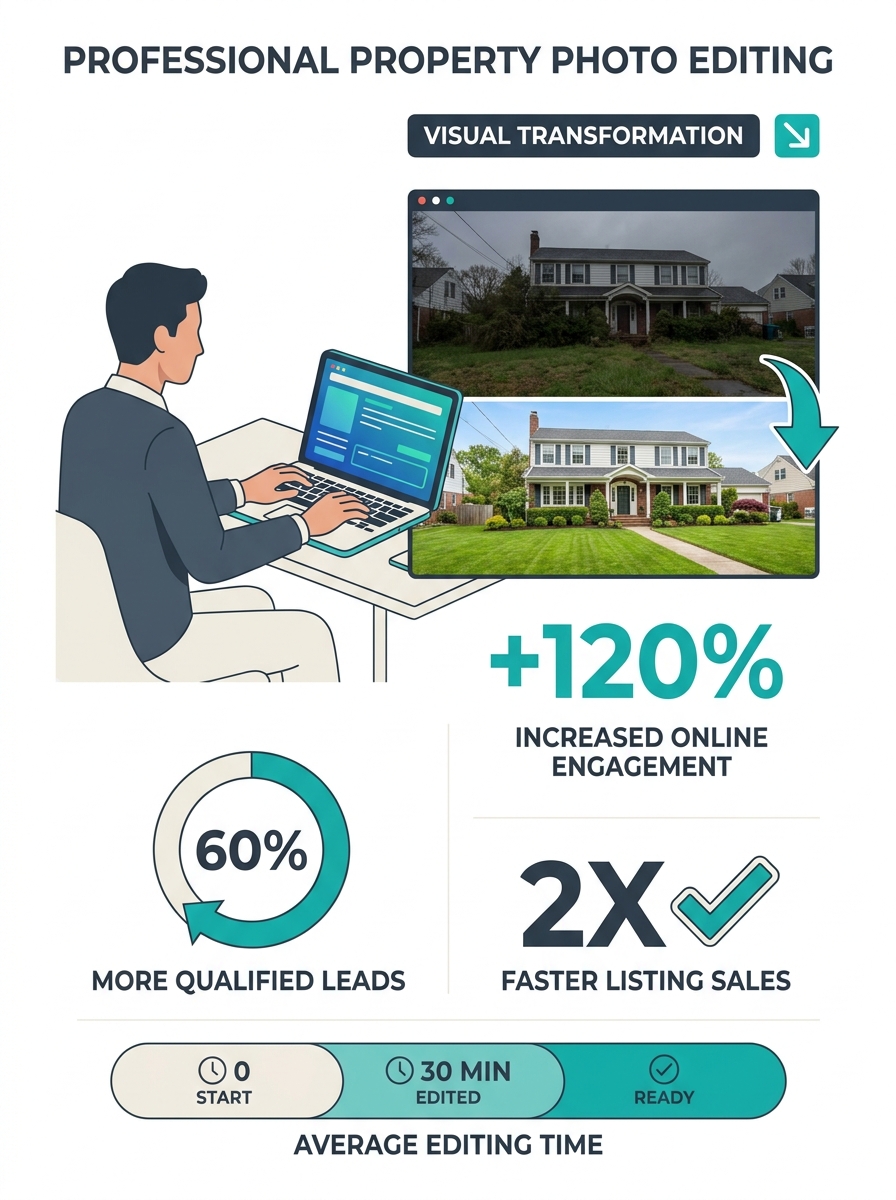
Advanced Methods for Competitive Markets
HDR (high dynamic range) imaging received dedicated coverage. The technique merges multiple exposures of the same scene to capture detail in both bright windows and dark room corners simultaneously, producing balanced interiors that standard single-exposure photography cannot achieve, according to the guide.
Sky replacement emerged as a more controversial inclusion. The method swaps overcast or blown-out skies with blue-sky alternatives, though GISUser acknowledged ethical considerations around accurately representing property conditions at time of photography.
Virtual staging through photo editing allows agents to digitally furnish vacant properties, the guide noted. The technique costs substantially less than physical staging while offering flexibility to target different buyer demographics by swapping furniture styles across versions of the same listing image.
The framework concludes with watermarking for brand protection and batch editing workflows for agents managing high listing volumes. Batch processing applies identical adjustments across multiple property photos simultaneously, reducing per-image editing time from minutes to seconds, the publication stated.
Technical Implementation Details
GISUser provided specific software references throughout the guide, though did not endorse particular platforms. The publication noted that mobile editing applications now offer cropping, exposure, and color tools sufficient for basic social media preparation, while desktop software handles HDR merging and advanced retouching.
The guide emphasized dimension requirements for major platforms: Instagram’s square 1:1 ratio for feed posts versus vertical 9:16 for Stories and Reels, and Facebook’s recommended 1200×630 pixels for shared links. Cropping images to platform specifications before upload prevents automatic cropping that may eliminate key property features, the publication warned.
Overexposure risks received particular attention. The guide demonstrated how excessive brightness adjustments can make rooms appear larger or brighter than reality, setting unrealistic buyer expectations that damage agent credibility during in-person showings.
Brokers Implications
Real estate teams allocating marketing budgets between professional photography services and internal editing workflows now have a documented framework for evaluating which techniques justify staff training investment versus outsourcing. The guide’s before-and-after examples provide visual benchmarks brokers can use when establishing minimum quality standards for agent-generated social content.
Offices with newer agents lacking photography backgrounds may find particular value in the foundational cropping, straightening, and exposure sections. Those three adjustments require minimal software learning curve yet address the most common image problems that reduce social engagement: tilted horizons, distracting backgrounds, and muddy shadows.
The sky replacement and virtual staging segments raise compliance questions brokers should address in office policy. MLS rules and state regulations vary on disclosure requirements when listing photos contain digitally altered elements beyond basic color and brightness correction. Teams should consult legal counsel before implementing those advanced techniques across marketed properties.