

Marketing automation vendor monday.com published a lead capture framework showing real estate agents lose deals when manual data entry delays follow-up beyond two hours, according to a ten-point automation guide released August 9 that maps response time gaps between form submission and sales contact. The platform’s analysis found prospects book competitor appointments when lead routing, data enrichment, and rep assignment require manual intervention rather than automated handoff.
TL;DR: monday.com published an automation framework showing real estate lead response delays beyond two hours cost deals as prospects move to faster-responding competitors during manual data-entry windows.
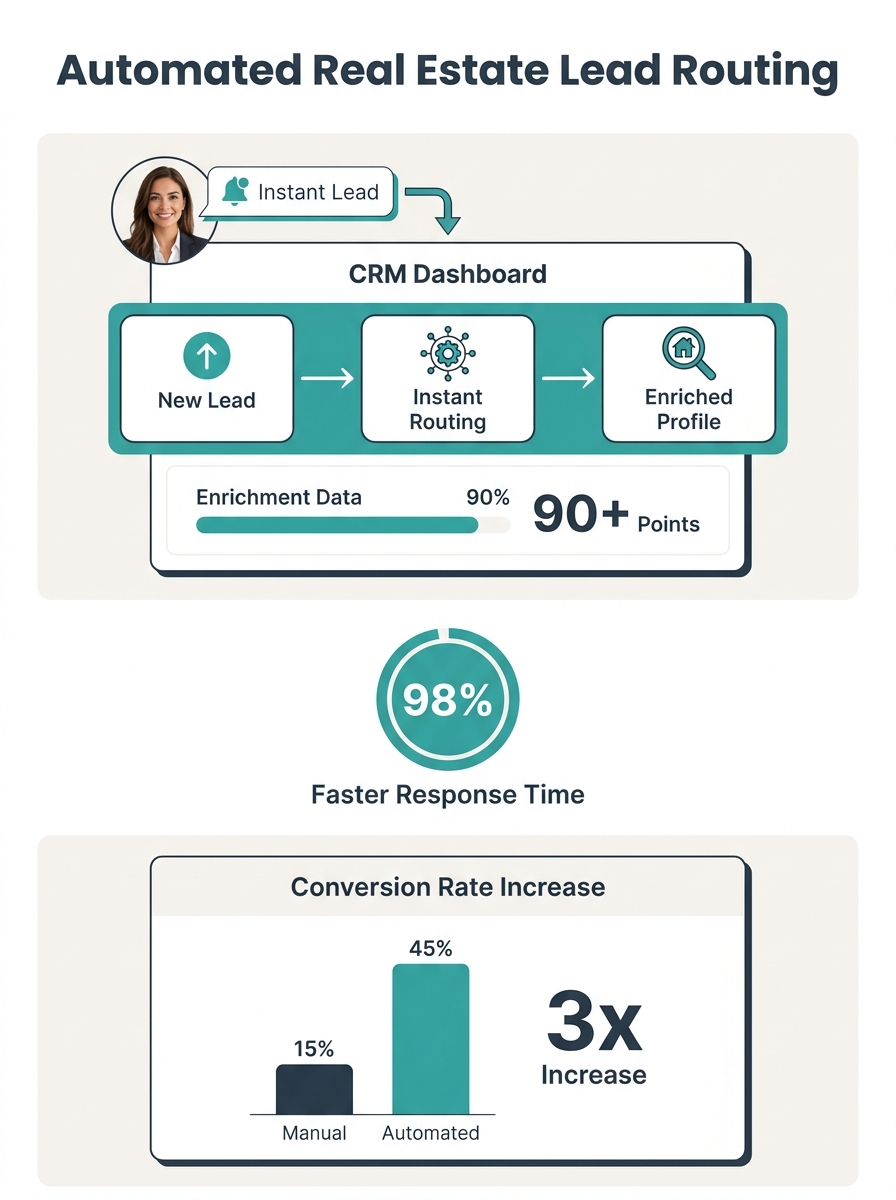
The framework addresses a workflow bottleneck familiar to real estate teams: a prospect submits a showing request at 2:00 p.m., manual logging and assignment push first contact to 4:00 p.m., and the buyer has already scheduled with another agent. The guide positions automated CRM workflows as the remedy, claiming five-minute response windows outperform five-hour delays in conversion rates.
Automated Capture Replaces Manual Lead Entry
The monday.com framework defines automated lead capture as routing prospect information directly into CRM systems without human data entry. Web forms, email inquiries, chat conversations, and paid ad submissions trigger instant record creation, according to the guide, which positions automation as both a speed and accuracy improvement over spreadsheet-based lead tracking.
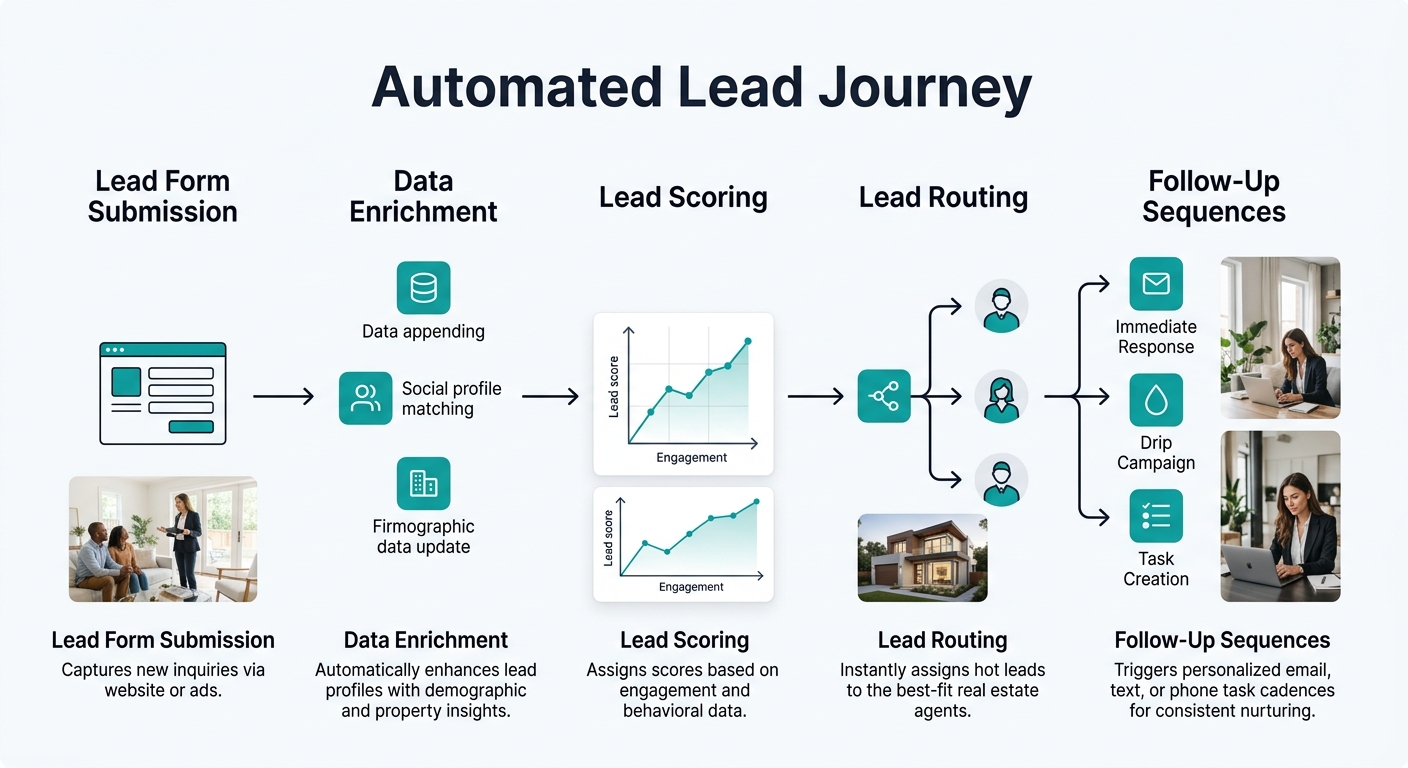
The system architecture described in the framework connects lead sources—website forms, social media ads, third-party platforms—directly to CRM databases. Contact records populate with enriched data including company size, job title, and behavioral signals without sales rep intervention. Real estate teams implementing automated capture eliminate the gap between inquiry and follow-up by removing manual logging steps, the guide states.
AI Scoring and Routing Prioritize High-Intent Leads
Monday.com’s framework incorporates AI-powered lead scoring that assigns prospects to sales reps based on fit and intent signals. The system analyzes behavioral data—pricing page visits, content downloads, email engagement—to calculate sales-readiness scores before human contact, according to the guide.
Routing automation matches leads to agents using criteria including geographic territory, price point expertise, and current workload. Lower-priority prospects enter automated nurture sequences while high-scoring leads trigger immediate rep notifications, the framework describes. The approach mirrors strategies real estate brokerages use to optimize lead distribution across agent teams without manual assignment delays.
Marketing Automation Platforms Track Long-Cycle Behavior
The guide distinguishes between CRM lead capture—which handles sales-ready inquiries—and marketing automation platforms that track prospect behavior over extended timeframes. Marketing systems monitor content consumption patterns, email open rates, and website revisit frequency to determine sales-readiness thresholds before CRM handoff.
A typical sequence described in the framework: a visitor downloads a neighborhood guide, enters a nurture email series, receives educational content over several weeks, and scores as sales-ready after multiple pricing page visits. Marketing automation captures both contact information and intent signals to time the transition from marketing nurture to sales follow-up, according to the guide. This behavioral tracking approach aligns with email nurturing frameworks showing most conversions occur after initial contact attempts.
Real-Time Dashboards Reveal Conversion Bottlenecks
The framework includes dashboard tracking that shows which lead sources produce the highest conversion rates and where prospects stall in the pipeline. Real-time visibility into form abandonment rates, response time metrics, and source-level ROI allows teams to optimize capture workflows, the guide states.
Dashboard metrics the framework recommends tracking include: leads captured per source, average response time by rep, conversion rate from capture to meeting booked, and lead score distribution across the pipeline. Teams can identify underperforming lead sources and adjust budget allocation accordingly, monday.com’s analysis suggests.
Enrichment Data Eliminates Manual Research
Automated enrichment appends missing contact details—company revenue, employee count, technology stack, social profiles—to lead records without manual lookup. The system validates phone numbers, standardizes addresses, and fills data gaps using third-party databases, according to the framework.
Sales reps receive complete lead records with context before first contact, eliminating the research phase that delays follow-up in manual workflows. Enrichment accuracy reduces bounce rates and wrong-number calls that waste rep time, the guide claims. This data-quality focus echoes broader CRM adoption trends prioritizing automated workflows across real estate operations.
Integration Connects Lead Sources to CRM Systems
The framework describes integration architecture connecting website forms, paid advertising platforms, email marketing tools, and third-party lead providers to centralized CRM databases. API connections sync lead information in real time rather than through daily CSV exports, according to the guide.
Real estate teams using monday CRM can connect Facebook Lead Ads, Google Ads, Zillow Premier Agent inquiries, and website contact forms to a single lead database with unified routing rules, the framework states. Cross-platform integration prevents leads from remaining in siloed systems where follow-up depends on manual checking.
What Happens Next
Real estate agents evaluating automated lead capture should audit current response time gaps between inquiry and first contact. Teams tracking average delays beyond 90 minutes face competitive disadvantage when buyers contact multiple agents simultaneously, the monday.com framework suggests. Implementing automated routing and enrichment removes manual logging steps that extend response windows.
The framework’s emphasis on speed-to-lead aligns with evolving buyer expectations as AI tools reshape how prospects research agents before making contact. Agents whose websites and lead forms connect directly to mobile CRM apps gain notification advantages over competitors checking email periodically. Teams interested in monday.com’s automation capabilities can review pricing for CRM platforms offering integrated lead capture, routing, and follow-up sequences.
Brokerages implementing the framework should prioritize mobile-optimized form submission flows, as abandoned mobile forms represent the highest-value capture opportunity. Testing two-field versus five-field form lengths will reveal whether shorter capture sacrifices enrichment data or improves completion rates enough to offset missing details.