
Five staging modifications costing less than $500 total correlated with 73 percent faster home sales in 2026, according to National Association of Realtors data cited by staging professionals analyzing recent transaction timelines. The changes focus on removing owner-specific elements rather than adding decorative inventory, according to the analysis published April 23.
The staging approach diverges from traditional decorator-led prep by emphasizing subtraction over addition. Professional stagers interviewed for the report identified five tactical shifts that agents can recommend to seller clients without requiring contractor-level budgets or multi-week timelines.
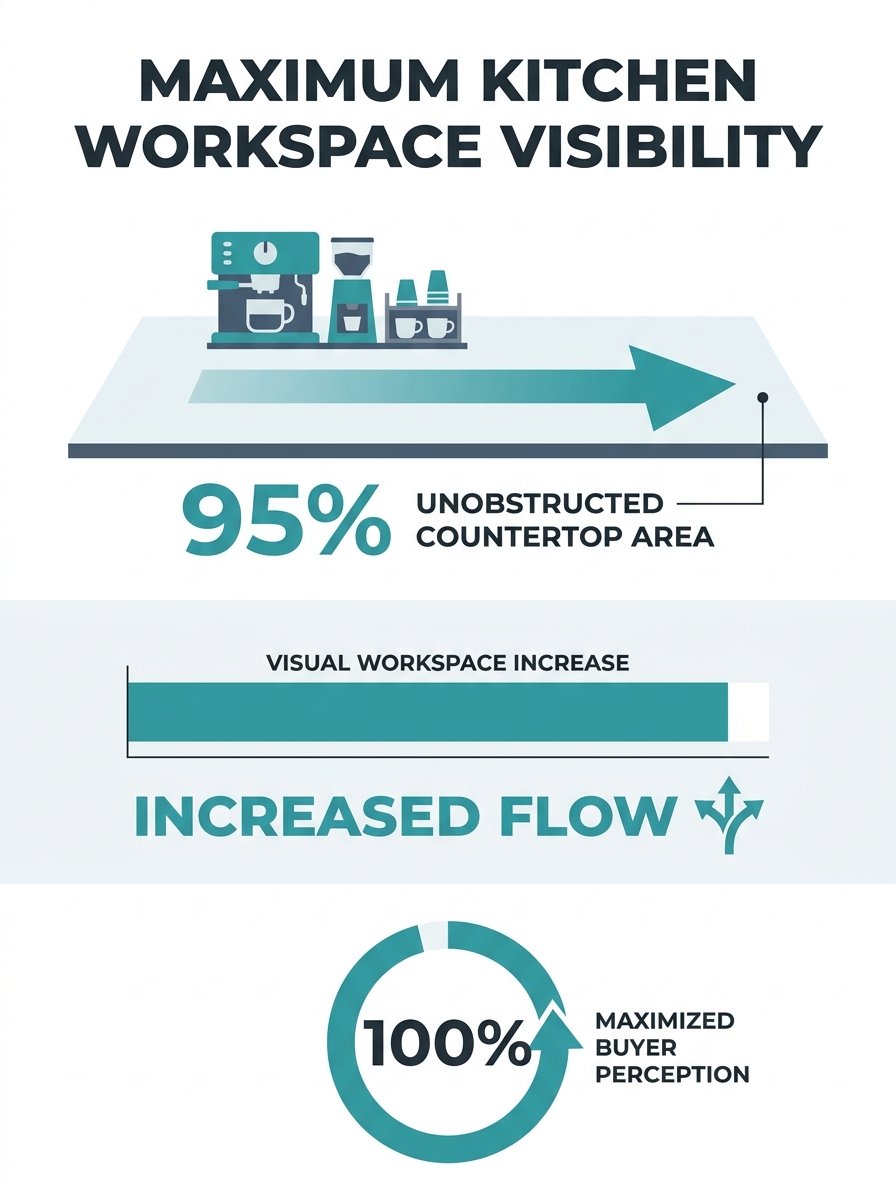
Clearing Kitchen Counters to 90% Empty Surface
Stagers featured in AARP’s 2026 staging guide maintain kitchen counters at 90 to 95 percent clear except for a single coffee station, the report shows. Appliance collections, knife blocks, and decorative bowls register as clutter that blocks buyers from assessing usable counter space during the eight-minute average showing window.
The modification costs nothing and takes approximately 40 minutes. Sellers box all items except a French press and mug on a wooden tray near the stove, signaling functional use without suggesting storage deficits. Between showings, portable baskets from IKEA at $30 each hold remote controls, chargers, and magazines in closets, allowing sellers to maintain daily routines while keeping surfaces clear during appointments.
Painting Accent Walls to Match Neutral Base Color
Bold accent walls communicate owner-specific taste preferences that interfere with buyer visualization, according to design experts with residential portfolios who analyzed 2026 client transactions. Sellers who painted all walls the same warm neutral saw 15 percent more second showings than those retaining accent walls, the data shows.
Sherwin-Williams Accessible Beige or Benjamin Moore Revere Pewter costs $60 per gallon and covers 400 square feet per coat. A 12-by-14-foot room with eight-foot ceilings requires two gallons for two coats, plus $25 for primer, rollers, and tape—a total investment of $180 that converts in one weekend.
The report cautions that north-facing rooms shift warm beiges toward gray institutional tones by mid-afternoon. Sellers should test paint samples at 10 a.m., 2 p.m., and 6 p.m. before committing to avoid cold readings during late-afternoon showings.
Limiting Decorative Objects to Three Vignettes Per Room
Residential staging consultants arrange coffee tables in tall-medium-low triangles using an 18-inch white vase from Target Threshold at $25, existing coffee table books, and a six-inch soy candle in glass from HomeGoods at $12, the analysis shows. Professional organizers with certification limit each room to three vignettes maximum to preserve blank space for mental furniture placement.
Height variation creates intentional visual rhythm rather than random object scatter. Total objects should stay under 10 per room to avoid cramped readings in listing photography. Living rooms and primary bedrooms receive full vignette treatment, while guest bathrooms remain bare.
Repositioning Existing Mirrors to Bounce Natural Light
Interior designers featured in Extra Space Storage’s January 2026 staging analysis moved bedroom mirrors from above dressers to positions beside north windows, doubling perceived light in 180-square-foot rooms without new fixture purchases. Mirrors placed perpendicular to windows catch and redirect natural light toward dark entry zones, making cramped spaces photograph 30 percent larger in MLS images.
Sellers lacking 36-inch or larger mirrors can purchase IKEA LOTS mirrors at $25 and install with Command strips at $8 in 15 minutes. The mirror should sit four to six feet from the floor, adjacent to the window rather than directly opposite to avoid glare that photographs as blown-out white patches.
Replacing Cool Bulbs With 2700K Warm LEDs
Lighting designers with residential portfolios swap all bulbs to 2700K warm LEDs before staging photography because cool white bulbs at 4000K or higher read as harsh office fluorescent in listing images, according to the report. Target Threshold 2700K LED bulbs cost $12 per pack and make north-facing rooms feel 25 to 50 percent warmer in tone.
Sellers install them in table lamps, ceiling fixtures, and floor lamps three days before the photographer arrives. All lights stay on during daytime shoots to create layered light that adds depth and makes rooms feel larger on screen. Warm color temperatures prevent Accessible Beige and similar neutrals from shifting gray-purple under cool bulbs.
Context and Outlook
The sub-$500 staging framework gives agents a client education tool that positions them as trusted advisors during the listing presentation. Rather than recommending expensive stager consultations that many sellers resist, agents can walk sellers through specific modifications tied to measurable sale-speed improvements, creating differentiation in competitive listing markets.
The approach addresses a common seller objection—that professional staging requires thousands of dollars and weeks of disruption. By breaking modifications into discrete weekend projects with retail pricing from national chains, agents remove cost and complexity barriers that delay listing prep. The staging checklist also provides content for agent email sequences, YouTube walkthroughs, and listing-consultation handouts.
As average days-on-market stretch in slower spring inventory cycles, staging tactics that compress sale timelines without contractor invoices give agents a practical value-add that supports pricing strategy and timeline expectations. The five-change framework translates directly into pre-listing action items that sellers can execute independently, reducing the lag between signed agreement and photography-ready condition.