

Sixty-eight percent of U.S. Google searches ended without a click to any website in early 2026, up from roughly 60% in 2024, according to a SparkToro analysis of Similarweb data reported by HousingWire. When Google AI Overviews appear in results, 83% of searches generate zero clicks; in Google’s dedicated AI Mode, that figure reaches 93%. The shift eliminates the website click that traditional search engine optimization was designed to capture, forcing real estate brands to optimize for AI citation instead of ranking position.
TL;DR: AI-generated answers now keep seven in ten Google searchers from clicking any website, with Google Business Profile data becoming the primary source AI systems cite when recommending real estate agents and brokerages.
Google reported at its 2026 I/O conference that AI Mode surpassed one billion monthly users, with query volume more than doubling quarter over quarter. For real estate marketers, the trend means a rising share of consumers receive agent recommendations and brokerage referrals without ever visiting a website. The playbook built on keyword rankings and organic traffic is losing effectiveness as search behavior migrates to zero-click AI answers.
Answer Engine Optimization Replaces Click-Capture Strategy
The emerging discipline is called Answer Engine Optimization (AEO) or Generative Engine Optimization (GEO). Traditional SEO optimizes a web page to rank on a results page and earn a click. AEO optimizes a business’s structured data so AI systems cite and recommend it inside generated answers, according to the analysis.
Google still processes the majority of conventional queries—its share of traditional search remained near 90% in 2026. Websites and content still matter for those queries. But the marginal value of ranking on a results page that produces no clicks is declining, while the value of being the name an AI surfaces in an answer is climbing.
The strategic implication for brokerages and agents: budget and attention allocated to traditional SEO may need redistribution toward the data feeds AI systems actually query. Most real estate brands have not yet made that shift, according to the HousingWire analysis.
Google Business Profile Becomes Primary AI Data Source
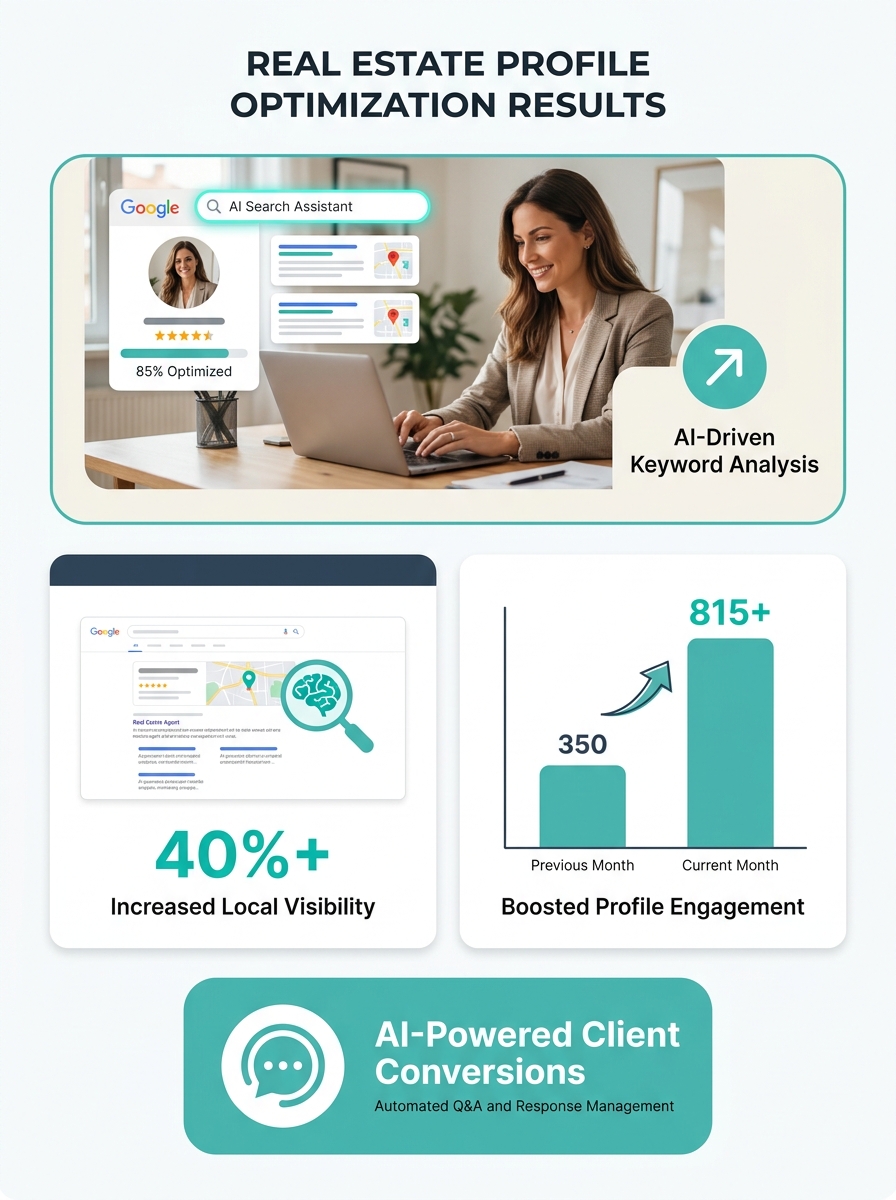
The most consequential element of AEO for local real estate businesses is where major AI platforms source their data when answering location-based queries. Across leading systems, that source converges on the Google Business Profile, according to 2026 analyses from SOCi and Local Falcon cited in the report.
Google Gemini is grounded directly in Google Maps and Google Business Profile data. Google’s “Grounding with Google Maps” capability, which connects its models to more than 250 million verified places, reached general availability in 2026. When Gemini answers a local query, it treats the Business Profile as authoritative. Google AI Overviews use Business Profile data as the structural foundation of local recommendations.
ChatGPT, which OpenAI powers through Bing’s index and partners including Foursquare, draws on Bing Places, verified directories and business websites—the same structured-data ecosystem that a well-maintained Google Profile anchors. Businesses cited in AI-generated answers are almost without exception those with complete and actively managed Google Business Profiles, the analysis found. In practical terms, the Business Profile has become a tier-one data feed to the AI ecosystem—arguably more consequential to discovery than the brand’s own website.
Data accuracy, not creative copy, is the dominant ranking factor in this environment. AI systems cross-reference business information across Google, Bing, Yelp, Foursquare and brand sites. When they encounter inconsistencies—mismatched hours, divergent addresses, outdated phone numbers—confidence in the listing drops and recommendation frequency falls, according to the report.
Luxury Puerto Rico Brand Demonstrates AEO-First Build
The analysis highlighted Dorado Beach Insider, a luxury real estate brand focused on Act 60 relocation in Dorado Beach, Puerto Rico, as a case study in AEO-first optimization. The target client—often a high-net-worth relocator—increasingly opens an AI assistant and asks layered questions such as “What is it like to live in Dorado Beach, and who can help me buy there under Act 60?”
The optimization choices reflect how AI systems parse and trust data. A commercial-intent primary category (real estate agency) maps buyer and seller queries to the brand. Service-area configuration naming multiple municipalities—Dorado, Vega Alta, the San Juan metro, and communities including Dorado Beach East, West Beach and Plantation Village—increases the number of geographic entities an AI can associate with the brand.
A description front-loaded with entity and location reflects that AI systems weight opening text most heavily when interpreting a business. Seeded questions and answers built around lifestyle and relocation topics produce the clean question-answer pairs that AI systems readily lift into responses. Cross-platform NAP consistency—name, contact and service area held identical across Google, Bing, Yelp, Apple and social platforms—preserves the data confidence that drives citation.
None of these steps requires a large content operation. They require treating the Business Profile and its supporting directory ecosystem as managed infrastructure rather than a one-time marketing task, the analysis noted.
Measurement Shift Required for Zero-Click Environment
Traditional KPIs—keyword rankings and website sessions—capture a shrinking portion of the discovery funnel. Marketing leaders will need new measurement frameworks that account for AI citations, brand mentions in generated answers, and phone calls or form fills that originate from AI systems rather than organic clicks.
The strategic shift mirrors broader changes in how real estate consumers use AI for research while still preferring human agents for transactions. One in three Gen Z homebuyers used AI tools for homebuying research in the past 12 months, but more than half still prefer human agents for property tours and legal advice, according to recent data. The discovery layer is moving to AI; the conversion layer remains human.
For agents whose website architecture was designed to capture clicks from search results, the zero-click environment demands a different structure. If consumers never reach the website because AI answers their question inline, the Business Profile becomes the primary conversion point—the digital asset that must contain the call-to-action, the credibility signals, and the contact path.
The Takeaway
The sixty-eight percent zero-click figure represents a structural change in how real estate consumers find agents, not a temporary trend. When seven in ten Google searches end without a click, the website is no longer the top of the funnel—the AI-generated answer is. Real estate brands that treat their Google Business Profile as managed infrastructure, maintain cross-platform data consistency, and optimize for AI citation rather than click-through will capture the leads that traditional SEO can no longer deliver.
The measurement shift is equally critical. Agents tracking only website sessions and keyword rankings will miss the growing share of leads that originate in AI answers. Phone calls from AI Mode searches, form fills that list “AI search” as the referrer, and brand mentions in ChatGPT or Gemini responses are the new discovery metrics. The brands that adapt their budgets, workflows and KPIs to match zero-click search behavior will win the leads that competitors are still optimizing for a click that never comes.