
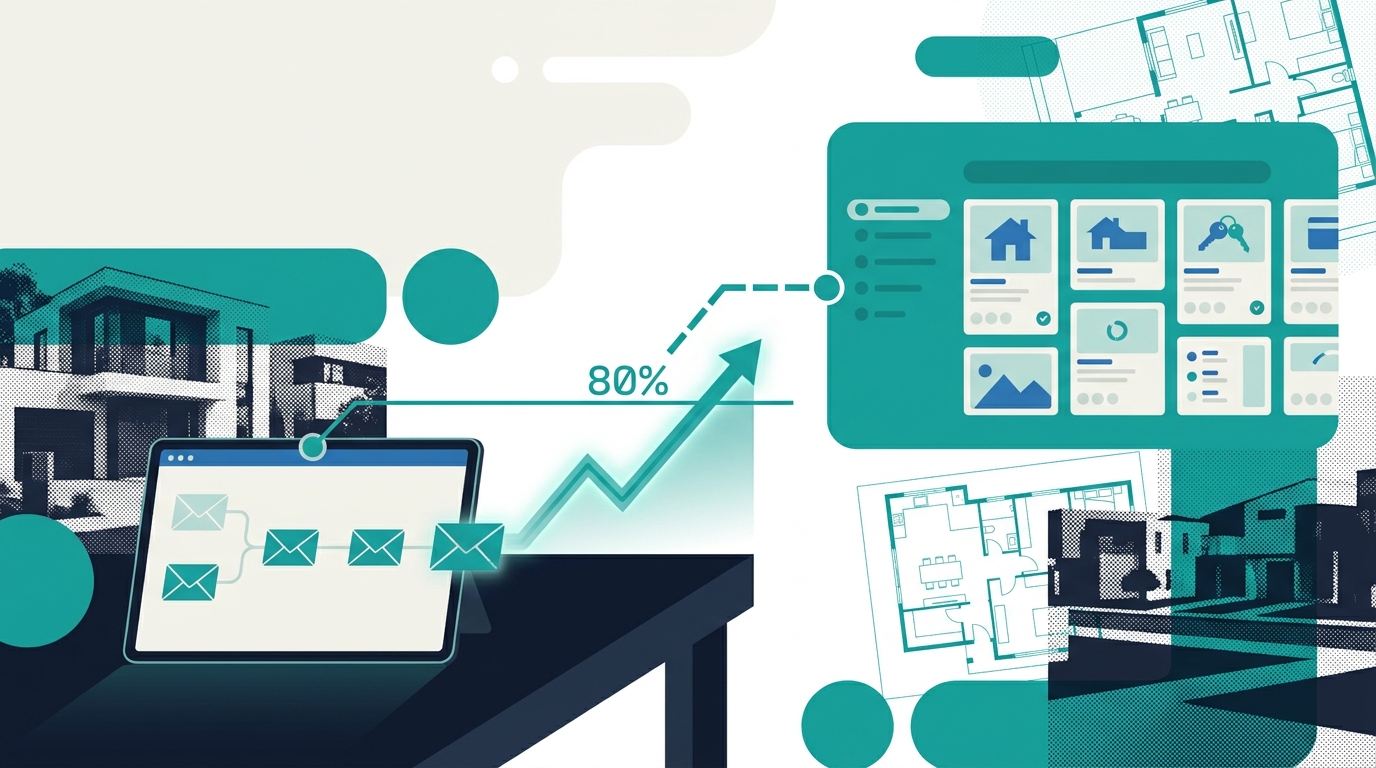
Eighty percent of real estate sales occur between the fifth and twelfth client touchpoint, yet most agents abandon lead follow-up after one or two attempts, according to a lead nurturing framework published July 13 by myRealPage, a Canadian real estate marketing platform. The gap between when agents stop contacting prospects and when deals actually close represents a consistent loss of commission revenue to competitors who maintain longer follow-up sequences, the company’s analysis found.
TL;DR: myRealPage published a behavioral email framework July 13 showing that most real estate transactions happen after five or more touchpoints, while the majority of agents stop follow-up after just two attempts.
The framework, released on the myRealPage blog, outlines segmentation tactics and automated drip campaign structures designed to keep agents in contact with leads through the full buying cycle without manual daily outreach. The company’s Auto-Newsletter tool pulls directly from MLS data to send property alerts and market updates automatically, according to the published guide.
Five-Minute Response Window Determines Lead Qualification Rate
Agents who respond to inbound leads within five minutes qualify prospects 21 times more often than agents who wait longer, the framework states. That response-speed advantage compounds with nurturing persistence: leads who receive structured follow-up sequences show 119 percent higher email click rates and convert 50 percent more often than non-nurtured leads, myRealPage reported, citing Mailchimp research data.
The framework breaks response timing into three velocity tiers. Active leads—those requesting specific property information or scheduling showings—receive daily or weekly contact. Warm leads exploring general market conditions receive bi-weekly updates. Long-term prospects researching neighborhoods or considering future moves receive monthly market reports and seasonal check-ins, the guide recommends.
Previous analysis has shown that agents lose an estimated $192,000 annually from delayed or missed lead responses, with response lag often determining which agent converts the inquiry into a signed agreement.
Segmentation by Timeline and Property Type Increases Relevance
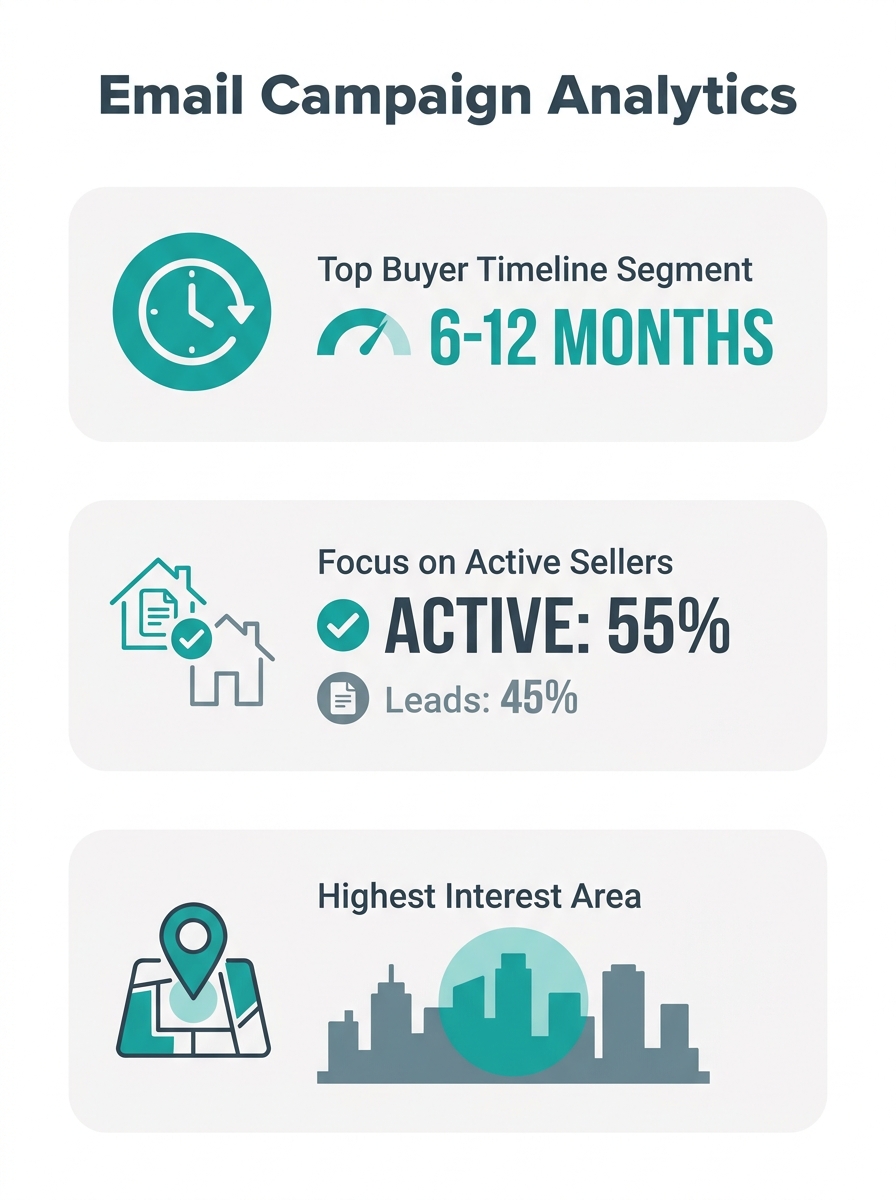
The myRealPage framework separates email list segmentation into three core categories: buyer versus seller status, transaction timeline readiness, and geographic search area. Each segment receives content matched to decision stage rather than generic market broadcasts, the guide states.
Buyer-focused segments receive new listing alerts, neighborhood data, and financing guidance. Seller-focused segments receive pricing strategies, staging recommendations, and local market condition reports. Within buyer segments, first-time purchasers looking at condos receive different property feeds than investors searching for multi-family buildings, according to the framework.
Geographic segmentation ties directly to MLS search behavior. When leads query properties in specific neighborhoods through agent websites, the platform captures that location interest and triggers automated listing alerts for matching areas, myRealPage’s system documentation shows. Agents who send hyper-local content demonstrate neighborhood expertise more effectively than agents broadcasting citywide updates to all contacts, the framework notes.
Drip Campaign Structure and Welcome Sequence Design
The published framework recommends building automated drip campaigns triggered by specific lead actions—newsletter signups, open house registrations, or property inquiry form submissions. The first email in any sequence should arrive immediately after the triggering event, thank the contact for their interest, and establish expectations about email frequency, the guide states.
Welcome sequences should deliver value in the first three messages rather than requesting appointments. Recommended initial content includes local market reports, step-by-step buying or selling process guides, and neighborhood amenity lists. “This establishes you as a helpful resource rather than just another agent trying to make a sale,” the framework states.
Automated drip campaigns generate four to ten times more responses than single follow-up emails when properly structured with value-first content, according to the myRealPage analysis. The company’s Auto-Newsletter feature automates this process by pulling current MLS listings and sending branded emails without requiring agents to manually compile property data each week, the platform’s product documentation shows.
Conversion Tracking Reveals Which Messages Drive Appointments
The framework instructs agents to monitor three specific metrics: email open rates, click-through rates on property links, and appointment booking conversions traced back to email campaigns. Open rates above 20 percent indicate subject lines and sender reputation are functioning properly, the guide states. Click rates show which property types and content formats generate engagement. Appointment conversions reveal which email sequences actually produce face-to-face meetings and signed buyer or listing agreements.
Tracking these metrics across segmented lists exposes which prospect groups respond to which message types. Active buyers may convert after three emails featuring urgent new listings, while long-term prospects may require six months of market education before scheduling consultations, the framework notes. Agents who adjust campaign length and content based on segment-level performance data outperform agents sending uniform sequences to all contacts, according to the analysis.
What This Means for Estate Agents
The published framework quantifies a persistent gap in standard real estate follow-up practices: agents who maintain contact through the fifth to twelfth touchpoint capture deals that shorter follow-up sequences miss entirely. Agents currently abandoning leads after one or two attempts are transferring potential commission revenue to competitors who simply stay in contact longer with structured email automation.
Implementing segmented drip campaigns addresses this gap without requiring hours of daily manual outreach. Agents who separate their database by buyer versus seller intent, transaction timeline, and geographic interest can send relevant automated messages that maintain top-of-mind positioning through buying cycles that often stretch across months. The five-minute response advantage combined with multi-month nurturing sequences creates a compounding effect on lead qualification and conversion rates.
The framework’s emphasis on value-first content—market reports, neighborhood guides, process education—before appointment requests aligns with how testimonials and social proof build trust in longer sales cycles. Agents who automate this educational content delivery while tracking which messages drive actual appointments can identify their highest-converting segments and adjust campaign resources accordingly.