

Properties listed with dynamic pricing strategies sell 18% faster than static-priced listings, but implementing real estate dynamic pricing on an agent website requires a “right-time” cadence of weekly reviews tied to MLS data, not the minute-by-minute repricing that works in e-commerce. The technology exists today. The question is whether your site architecture and seller communication protocols can support it without destroying buyer trust.
Maxify, a dynamic pricing platform for real estate development, published a case study describing the exact failure mode that pushes teams toward automated property price updates. Their clients’ sales departments were burning through the most desirable units at stale prices because manual reviews happened only every two to three months. By the time anyone noticed a high-demand cluster, those units had already sold below what the market would have paid. The residential brokerage equivalent plays out on every agent website where listing prices sit unchanged for 30 or 60 days while comparable inventory shifts around them. Agents who treat their website as a static brochure rather than a living pricing surface are leaving the same money on the table that Maxify’s developer clients were.
The broader AI property valuation landscape has matured rapidly. Yangbong Co., Ltd.’s 2025 Korean hybrid system now predicts real estate prices at 3-month, 1-year, and 3-year horizons simultaneously, drawing on over 50 structural and policy variables. That level of granularity was reserved for institutional investors three years ago. It’s now filtering into tools that individual agents and small brokerages can bolt onto their websites. The gap between what the technology can do and what most agent sites actually do with pricing data remains enormous.
Why “Right-Time” Beats Real-Time for Residential Listings
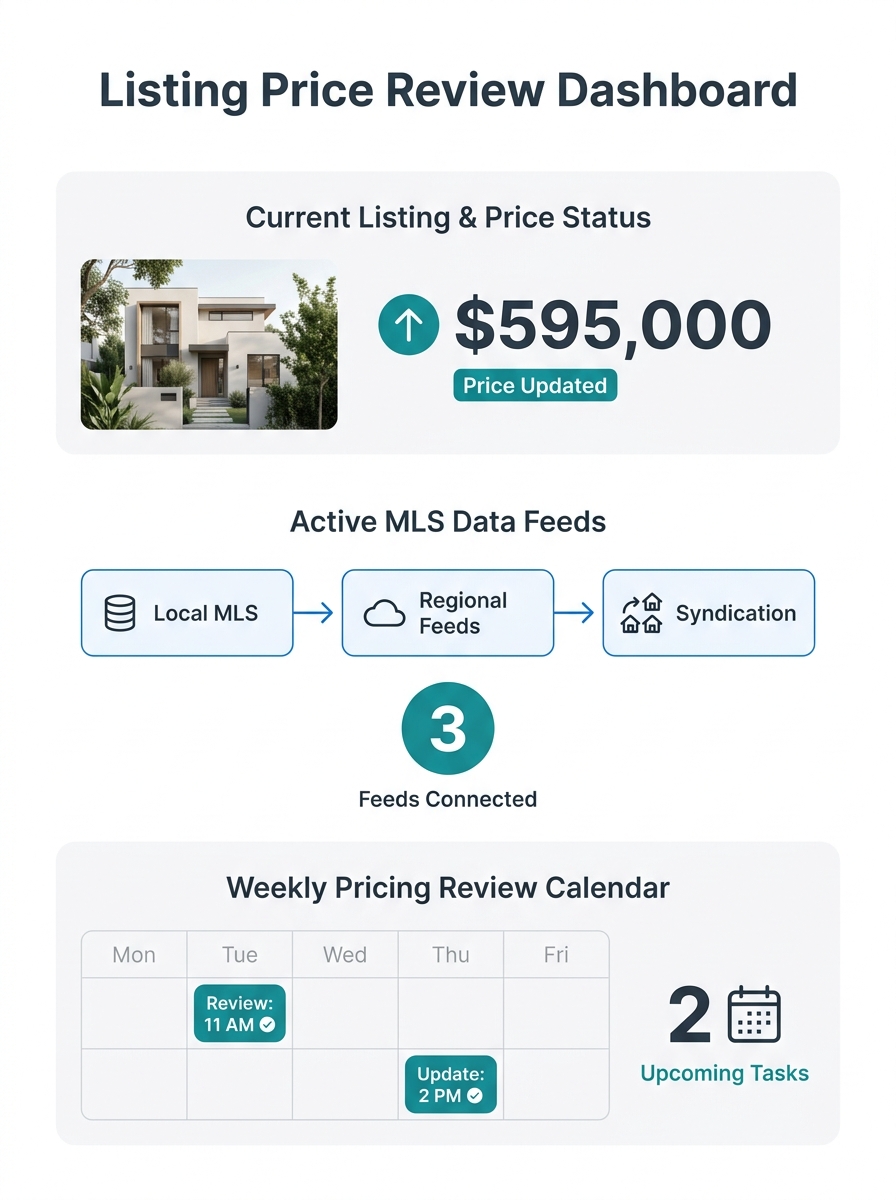
E-commerce dynamic pricing works because a shopper buying headphones at 2 a.m. accepts that the price changed since yesterday. A buyer considering a $475,000 home does not think that way. Residential real estate pricing carries psychological weight that makes constant fluctuation counterproductive. Buyers interpret frequent price drops as desperation, and frequent price increases as manipulation. The optimal cadence for website pricing integration on residential listings, based on current industry consensus, is a weekly review cycle where agents evaluate showing activity, competitive inventory changes, and days-on-market benchmarks before pushing any update to their site.
This distinction between “right-time” and “real-time” pricing matters because the technology itself creates pressure to over-automate. AI algorithms that use historical data and market trends to forecast property prices can update valuations continuously as new data flows in. But having the capability to reprice every hour doesn’t mean your website should display those changes to buyers. The smarter implementation uses continuous data ingestion behind the scenes while surfacing price adjustments only at cadences that match how buyers actually make decisions. For most residential markets, that means weekly for active listings, with event-triggered updates reserved for specific catalysts like a competing listing selling above ask price or a significant interest rate move.
The data feeding these adjustments has to come from multiple synchronized sources. Current inventory levels, buyer demand indicators from showing requests and saved-search alerts, seasonal trends, comparable sales within a defined radius, and pending transactions all feed the pricing model. When your IDX feed and CRM aren’t properly synced, the pricing data your site displays diverges from what the market actually reflects. That disconnect erodes the credibility of every listing page on your site, not just the mispriced ones.
The Data Architecture Behind Automated Price Updates
Building a functional website pricing integration requires three layers working in sequence: a data ingestion layer that pulls from MLS feeds, public records, and your CRM’s showing and engagement data; a valuation layer that runs those inputs through a pricing model with defined guardrails; and a display layer that publishes updates to your listing pages at the cadence you’ve configured. Each layer introduces its own failure points, and most agents who attempt this kind of real estate website automation underestimate the middle layer’s complexity.
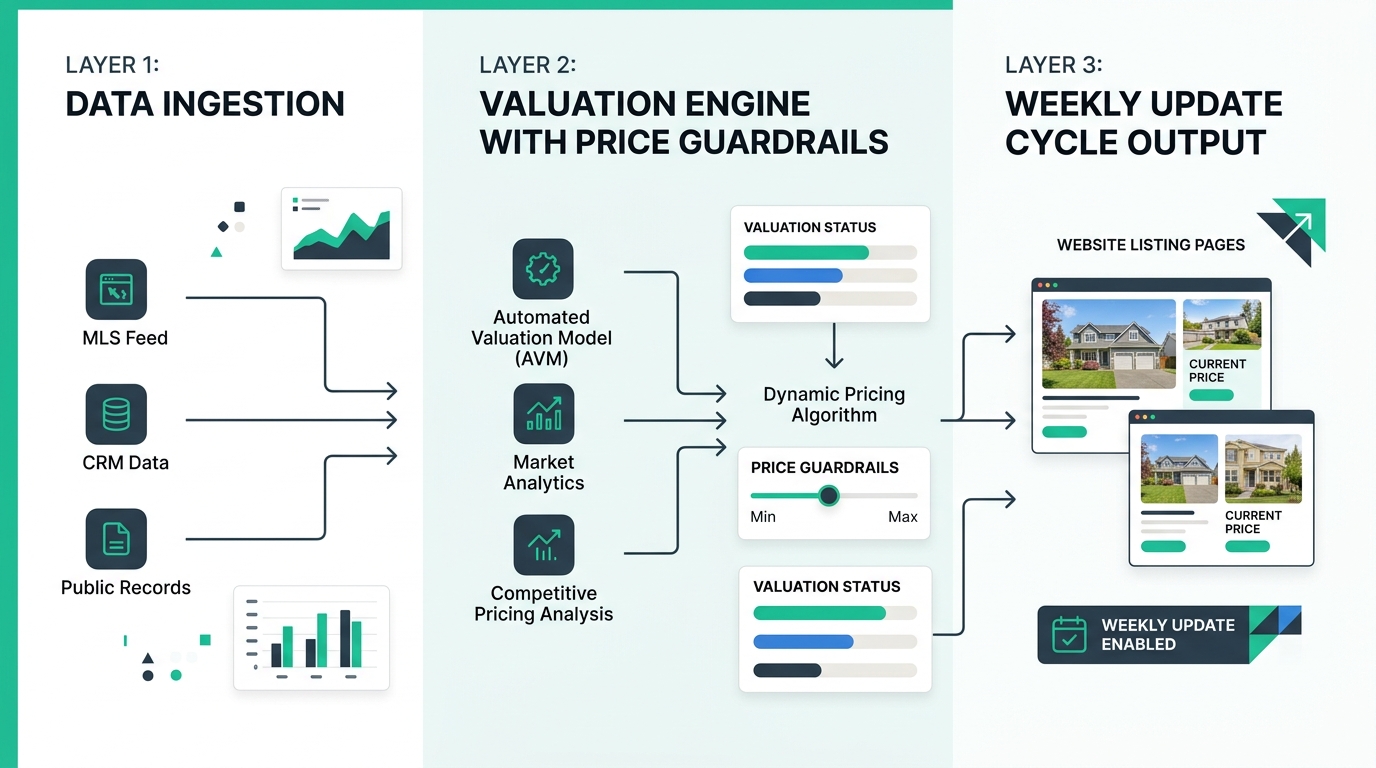
The valuation layer is where guardrails become essential. Effective implementations define minimum and maximum price thresholds that prevent the system from publishing adjustments that would alarm sellers or confuse buyers. A listing priced at $520,000 shouldn’t automatically drop to $485,000 because three comparable properties closed below expectations in the same week. The guardrails typically cap adjustments at 2-3% per update cycle, with larger moves requiring manual agent approval before they reach the website. Without these boundaries, you create a system that optimizes for data accuracy at the expense of client relationships.
MLS integration forms the backbone of the data ingestion layer, and the quality of that integration varies wildly across platforms. Multiple listing services frequently integrate with CRM and marketing software to provide lead and listing information to brokers, but the depth of the data pipe differs. Some MLS feeds deliver only basic listing fields, while others include days-on-market history, price change logs, and showing feedback aggregates. If your MLS feed provides only a current snapshot without historical context, your pricing model is working with one eye closed. Before investing in any automated pricing tooling, audit what your MLS actually delivers at the API level and whether your website’s technical foundation can handle the additional data calls without degrading page load times.
“Successful agents understand that prompt, personalized communication can make the difference between closing a deal and losing a lead,” according to Luxury Presence’s analysis of follow-up best practices. That principle applies directly to pricing communication. When your site publishes a price update, the seller should receive an automated notification before the change goes live, with context about why the adjustment was triggered. Surprising a seller with a price change they discover on their own listing page is one of the fastest ways to lose a client.
Where Pricing Integrations Break on Agent Sites
The technical failures are predictable. The human failures are what actually kill these implementations. Most agents who attempt website pricing integration focus their energy on getting the data pipeline working, then neglect the communication layer that keeps sellers informed and buyers confident. A technically perfect system that publishes accurate, well-timed price adjustments will still fail if the agent hasn’t established a communication protocol explaining what the adjustments mean and why they’re happening.
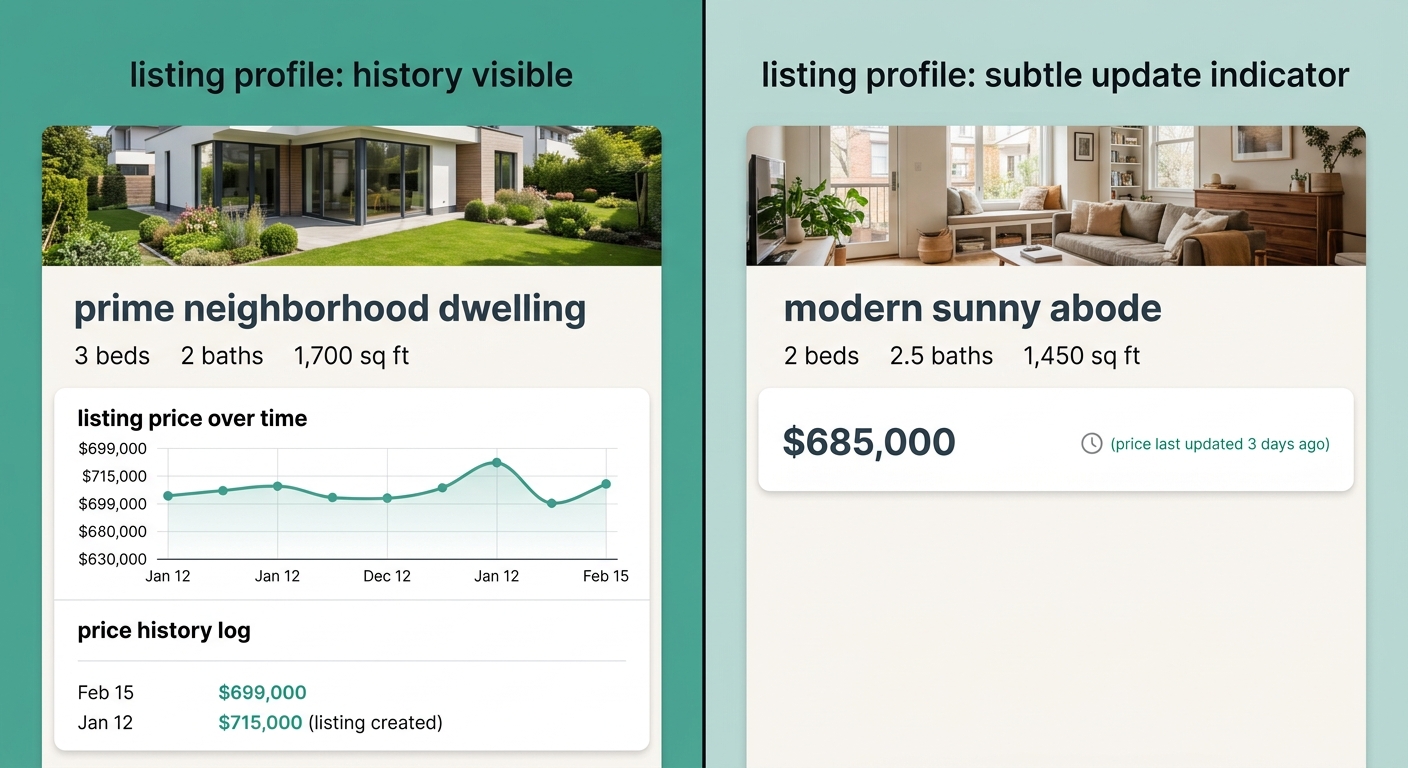
The second common breakdown happens at the display layer, where pricing updates collide with the buyer experience. A listing page that shows a price history graph with weekly adjustments tells a story that might not serve the seller’s interest. Some implementations solve this by displaying only the current price on the public-facing page while keeping the adjustment history visible only to the agent and seller through a dashboard login. Others show a “price updated” badge with the date but suppress the magnitude of prior changes. The right approach depends on market norms in your area, but the worst approach is the default one: showing everything because you never made a deliberate choice about what to hide.
There’s also the question of what automated pricing does to your lead qualification workflow. When prices change weekly, buyers who saved a listing at one price and return to find a different number behave differently than buyers seeing a static price. Some become more engaged because a price drop signals opportunity. Others become skeptical because they worry the property has problems. Your CRM’s lead scoring model needs to account for these behavioral shifts, or you’ll misclassify leads generated during a price adjustment window. The agents who do this well build separate follow-up sequences for leads that arrive within 48 hours of a price change versus leads arriving during stable-price periods, with messaging tailored to acknowledge the adjustment directly.
A U.S. patent filing (US20150193797A1) describes a dynamic property pricing system where the target price reflects not only market data but also demographic information about users showing interest in a property. This approach, where pricing responds to who is looking rather than just what the market says, represents the far edge of where real estate dynamic pricing could go. Whether agents should go there is a different question entirely, and one that intersects with fair housing obligations that NAR has already flagged in the context of AI-generated content.
The gap between what pricing technology can do and what most agent websites actually do with pricing data remains enormous.
The Uncomfortable Intersection of Optimization and Trust
The argument for real estate dynamic pricing on agent websites is grounded in efficiency and speed-to-sale data that’s hard to dismiss. Properties move 18% faster. Agents capture more value from high-demand listings instead of leaving money on the table. Sellers get evidence-based pricing adjustments instead of gut-feel recommendations. Every data point supports adoption.
But the argument against it, or at least the argument for extreme caution, comes from the same place that makes residential real estate fundamentally different from every other market where dynamic pricing thrives. A home is the largest financial transaction most people will ever make, and the emotional weight of that transaction resists the kind of optimization logic that works for airline seats and hotel rooms. When a buyer sees a price change and wonders whether the number will be different tomorrow, you’ve introduced uncertainty into what should be a confidence-building process. When a seller watches their home’s list price tick down in 2% increments and feels the algorithm deciding their home’s worth, the efficiency gains evaporate into a difficult client conversation.
The agents who will succeed with website pricing integration over the next few years won’t be the ones with the best data pipelines or the most sophisticated valuation models. They’ll be the ones who build communication systems around the pricing system. Automated seller notifications before every adjustment, contextualized with showing data and market comparables. Buyer-facing messaging that frames price updates as responsiveness to market conditions rather than uncertainty about value. And guardrails strict enough that the system enhances the agent’s judgment rather than replacing it. The technology is ready. Whether the industry’s relationship culture can absorb it gracefully remains an open question, and the agents experimenting with it now are the ones who will eventually answer it.