

Compass’s market capitalization exceeded Zillow’s for the first time as Zillow’s stock declined more than 50% in 2026, according to a column published August 20 by Hans and Steve Wydler, the No. 1 Compass team in Washington, DC, Maryland and Virginia per RealTrends Verified. The shift reflects growing broker control over listing distribution as private networks, brokerage ecosystems, and direct marketing channels reduce dependence on aggregator platforms, the authors write.
TL;DR: Compass market cap passed Zillow’s for the first time after Zillow stock fell 50%-plus in 2026, as brokerages build direct listing distribution channels that bypass traditional aggregator platforms.
AOL Comparison Frames Zillow’s Strategic Challenge
Steve Wydler, who served as Assistant General Counsel at AOL from 1998 to 2002, drew parallels between Zillow’s current position and AOL’s loss of distribution control in the early 2000s. AOL aggregated content created by others and monetized consumer traffic until broadband internet enabled content creators to reach audiences directly, according to the column. Zillow similarly aggregates listing content created by approximately 1.25 million Realtors across 100,000 brokerages and 900 regional MLSs, the authors noted.
The brokerage industry accepted Zillow’s aggregator role because the platform built the consumer audience, but that arrangement depended on Zillow maintaining its position as the required distribution channel between listing creators and buyers, the Wydlers wrote.
Multiple Distribution Channels Erode Single-Platform Dependence
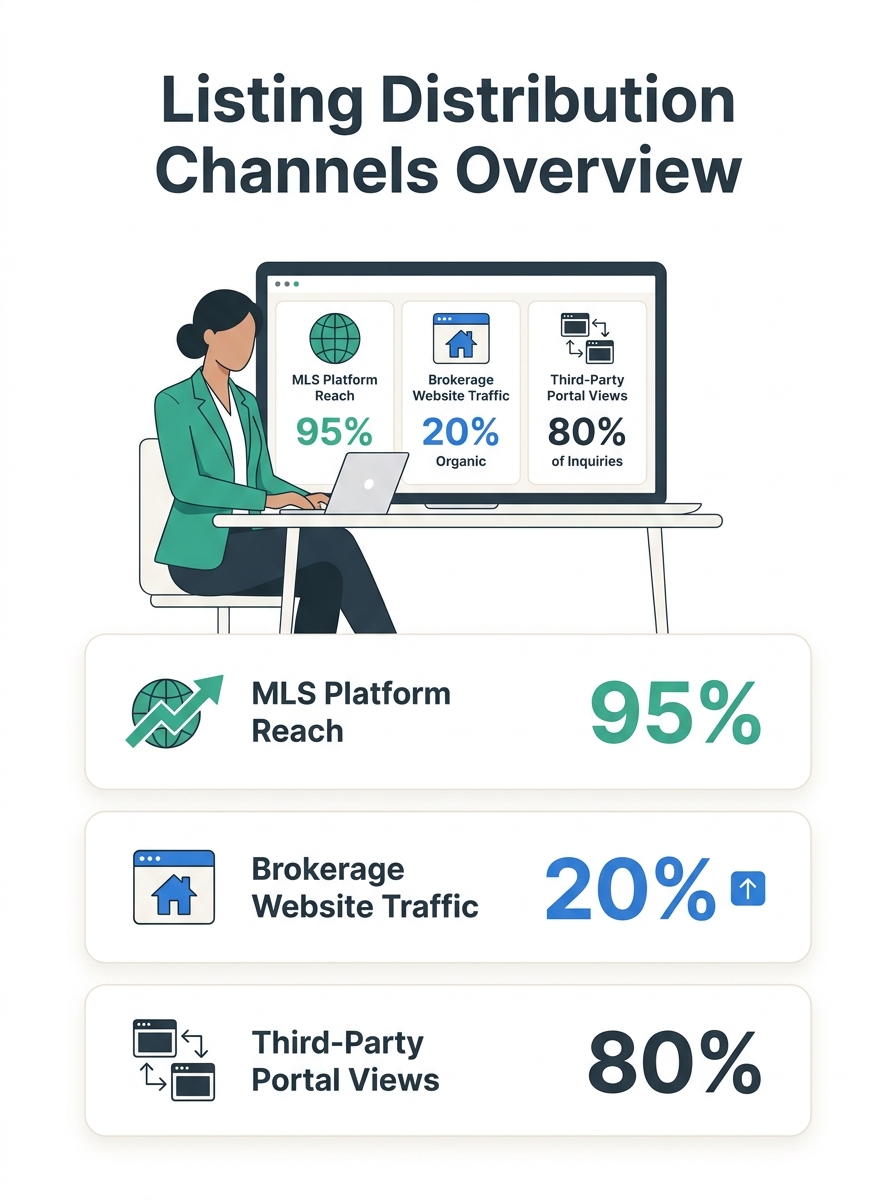
Compass’s three-phase marketing strategy—Private Exclusives, Coming Soon, then MLS—demonstrates that listings no longer need to reach Zillow on day one or at all, according to the column. Regional MLSs are constructing private listing networks beyond their home markets, while Google entered home search with its own listing advertisement platform. Large brokerages are allocating marketing budgets to direct-to-consumer campaigns and broker-to-broker distribution systems.
No single alternative replaces Zillow’s reach, but the combined effect diminishes its role as the mandatory intermediary between listing creators and buyers, the authors argued. Agents and brokers now control more distribution paths that align with seller clients’ timing and exposure preferences.
Federal antitrust scrutiny of MLS data distribution practices has intensified pressure on Zillow-Compass listing control dynamics, with a Chicago hearing examining whether current arrangements restrict broker choice in how listings reach consumers.
Stock Performance Signals Market Recognition of Structural Shift
Zillow’s traffic and revenue remained strong even as investor valuation shifted toward brokerages controlling listing creation and distribution, the Wydlers observed. AOL posted robust usage numbers well after broadband undermined its structural advantage, they noted—revenue held temporarily, but the market recognized that AOL no longer served as the necessary connection between content creators and consumers.
The authors positioned the market cap crossover as evidence that investors are repricing the value of aggregator platforms relative to entities that create listing content and control initial distribution. If buyers increasingly discover properties through private networks, brokerage systems, search engines, regional exchanges and direct agent relationships before accessing Zillow, the platform’s value proposition will continue to contract, they wrote.
What This Means for Estate Agents
Agents who treat Zillow as one distribution channel among many rather than the mandatory first destination for every listing gain strategic flexibility in serving seller clients. The Compass three-phase approach—holding listings in private networks before broader MLS syndication—shows sellers are willing to delay maximum exposure when agents present compelling reasons around buyer quality, pricing strategy, or competitive positioning.
Agents investing in owned digital assets benefit as distribution fragments. Neighborhood page playbooks that drive direct organic traffic and personal branding frameworks that build follower-based audiences create distribution channels agents control. These owned channels don’t replace portal exposure but reduce dependence on any single platform’s traffic or lead-pricing model.
The market cap shift suggests that listing control—who creates content, who decides when and where it appears, who captures buyer relationships—will determine brokerage valuations more than aggregator traffic volume. Agents aligned with brokerages building proprietary distribution (private listing networks, direct marketing systems, inter-brokerage exchanges) position themselves in the value chain investors are rewarding.