

Baldwin Realtors completed the migration of approximately 3,500 agents from legacy MLS provider Paragon to Perchwell’s next-generation platform following a three-month parallel-run period and 135 training sessions, according to HousingWire. The Baldwin County, Alabama–based MLS represents the first organization in more than 25 years to transition an entire membership off a legacy system to a modern MLS architecture.
TL;DR: Baldwin Realtors migrated 3,500 agents from Paragon to Perchwell MLS in what industry observers describe as the first complete legacy-to-modern MLS platform transition in over two decades.
The implementation included 60 in-person training sessions, many conducted at individual brokerage offices across Baldwin County, Perchwell CEO Brendan Fairbanks told HousingWire in an interview published September 23. Fairbanks, named a 2023 HousingWire Rising Star, characterized the conversion as evidence of shifting expectations around MLS innovation cycles.
Training Infrastructure Supports Large-Scale Platform Adoption
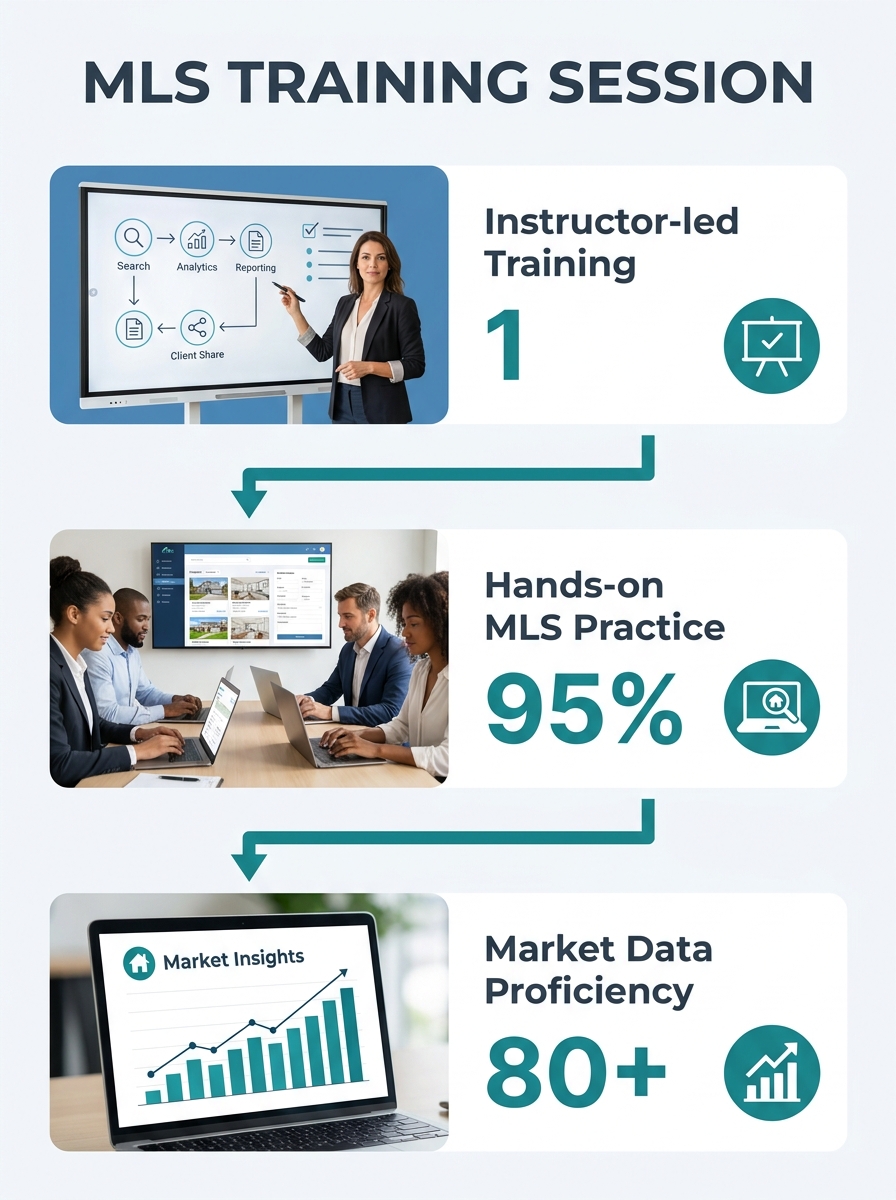
Baldwin Realtors deployed 135 total training sessions to support the transition, combining in-office instruction with remote learning formats. The three-month parallel period allowed agents to operate in both Paragon and Perchwell simultaneously before the final cutover.
Fairbanks described the training approach as part of a continuous feedback loop. “We consistently sit with members in training sessions and office visits, sharing prototypes and continuously evolving the platform based on their needs,” he said in the HousingWire interview.
The company’s product development philosophy centers on rapid iteration rather than static releases. Fairbanks characterized Perchwell’s approach by saying the version demonstrated today represents “the worst version you will ever see, because everyone is coming to work tomorrow to make it better.”
Architecture Shift Enables Market-Specific Configuration Without Custom Builds
Baldwin’s migration reflects a structural change in how MLS platforms handle local market requirements, according to Fairbanks. Traditional MLS systems required separate software instances for each market, with improvements rebuilt individually across markets. Perchwell’s architecture uses configurable building blocks that adapt to local data needs and business rules without creating distinct code bases.
“Modern technology building blocks make it possible for a relative newcomer like us to build one core platform that can simply be configured to each MLS’s needs,” Fairbanks told HousingWire. The approach removes the operational burden of maintaining separate instances while expanding localization capabilities.
The configuration model allows feature updates to roll out across all markets simultaneously rather than through market-by-market deployment cycles. For agents, this translates to consistent platform improvements that compound over time rather than periodic major overhauls separated by years.
Mobile-First Design Addresses Field-Based Agent Workflows
Perchwell built search, market analysis, listing entry, and client collaboration tools to function across desktop and mobile applications from initial development. Legacy MLS platforms predate widespread smartphone adoption, creating workflow friction for agents working outside office environments.
The platform recently launched a Workspaces feature suite that consolidates buyer search activity into a dedicated interface. Agents and clients can engage directly on listings within the workspace rather than coordinating across listing portals, email threads, text messages, and forwarded links. Conversation history remains attached to specific listings, eliminating the need to reconstruct prior discussions from scattered communication channels.
Agents managing multiple simultaneous client relationships—active buyers, listing sellers, new prospects—can organize each engagement within discrete workspaces. The structure keeps client-specific activity separated while maintaining full access to MLS data and tools across all workspaces.
Why This Matters Now
MLS platform architecture determines how quickly agents can access new features that support lead generation workflows and client service delivery. The 25-year gap between complete platform migrations highlights the technical debt accumulated in legacy systems, where each improvement requires custom development across individual market instances.
For agents evaluating their own MLS technology, Baldwin’s transition demonstrates that comprehensive platform changes remain operationally feasible with structured training support. The three-month parallel period and 135-session training cadence provide a reference model for brokerages anticipating similar conversions. As AI tool adoption accelerates across the industry, the underlying MLS infrastructure increasingly determines which automated workflows agents can deploy.
Platform decisions made at the MLS level directly affect agents’ ability to compete on client experience and response speed. Systems designed around mobile-first workflows and real-time client collaboration position agents to deliver service quality that matches consumer expectations shaped by consumer technology outside real estate. For agents building their online presence and property marketing assets, the MLS platform either enables or constrains how quickly they can bring new listings to market and engage prospective buyers.