
The Agency’s Northeast Managing Partner published client meeting guidance April 24 urging real estate agents to prepare for appointments by planning how to listen rather than what to say, according to her column in HousingWire. Juliet A. Clapp argues the first 15 minutes of a client interaction determine whether trust forms or quietly erodes, making listening strategy more critical than presentation polish.
“Top agents know better,” Clapp wrote, describing a shift away from treating meeting openings as small-talk preambles. The column targets agents who spend initial meetings establishing credentials before asking substantive questions about client needs, a pattern Clapp identifies as undermining relationship-building.
Five Tactics for Early Client Interactions
Clapp outlined five approaches agents should apply during the opening quarter-hour of client meetings, all centered on demonstrating preparation and genuine curiosity rather than showcasing professional achievements.
First, agents should treat the opening minutes as the primary trust-building window, not a warm-up period. Clapp recommended arriving with knowledge of what brought the client to the meeting and any prior communication details, according to the column.
Second, the guidance calls for leading with questions instead of credentials. “Ask what they are most excited about. Ask what they are most nervous about. Ask what has brought them to this point,” Clapp wrote. She claims agents learn more from five minutes of listening than 30 minutes of presenting.
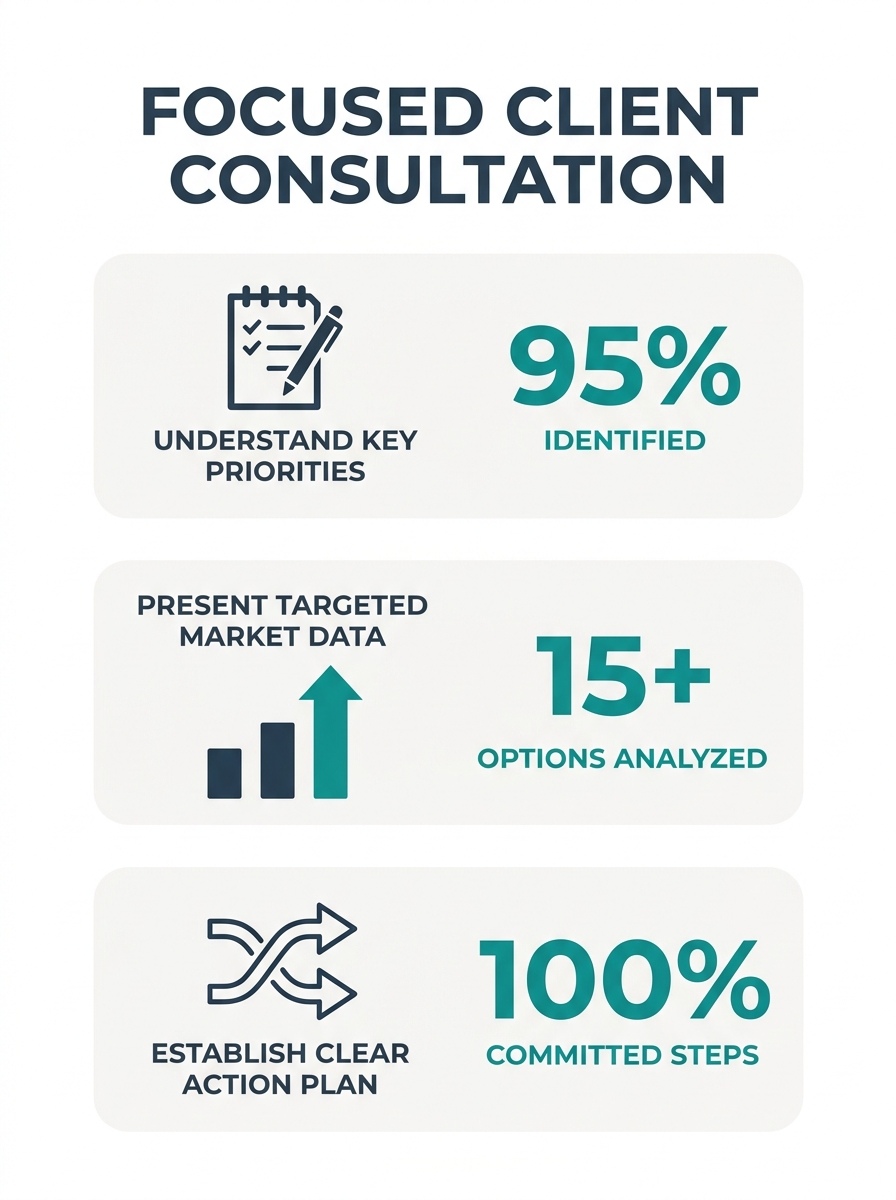
Third, Clapp advised setting process expectations before clients ask. The column suggests explaining communication cadence, first-week plans, and role divisions proactively. “Clients who feel informed feel confident. Clients who feel confident trust you faster,” according to the piece.
Fourth, agents should match their energy to client cues. Some clients want warmth and reassurance while others prefer data and directness, Clapp noted, describing this adaptation as emotional intelligence applied to business rather than people-pleasing.
Fifth, the column emphasized consistency in showing up prepared, present, and curious across all client meetings. Clapp framed this reliability as “its own form of excellence” that echoes through the entire client relationship.
The Pitch-Versus-Listening Framework
The column challenges conventional real estate training that emphasizes conversion scripts and listing presentations. “The agents who consistently build loyal, long-term client relationships are not the ones with the most polished pitch,” Clapp wrote. “They are the ones who make a client feel genuinely seen from the very first interaction.”
Clapp described this approach not as a soft skill but as a business strategy, according to the HousingWire piece. She positioned early-meeting listening as the answer to the question every client asks themselves: whether they can trust this agent with a significant financial and emotional decision.
The Agency executive’s column appeared as part of HousingWire’s contributed content, carrying a disclaimer that the opinions do not necessarily reflect the publication’s editorial stance.
What This Means for Estate Agents
This listening-first framework offers immediate application for agents struggling with lead conversion or client retention. The tactics require no technology purchases or script memorization—just a reordering of meeting priorities from self-presentation to client discovery. Agents currently opening consultations with market stats, recent sales, or brokerage credentials could test Clapp’s question-led approach in next week’s appointments and measure whether clients engage more deeply or volunteer more actionable information.
The emphasis on the first 15 minutes also creates a concrete diagnostic window. Agents losing listings to competitors after initial meetings should audit whether they spent those opening minutes demonstrating curiosity about the client’s situation or establishing their own qualifications. Recording (with permission) or debriefing those early segments may reveal patterns where credential-stacking crowds out the client-focused questions that build trust.
For team leaders training new agents, Clapp’s framework provides a coaching alternative to traditional pitch rehearsal. Instead of drilling presentation delivery, training sessions could focus on question sequencing, active listening signals, and client energy calibration—skills that translate across buyer consultations, listing appointments, and open house conversations.