
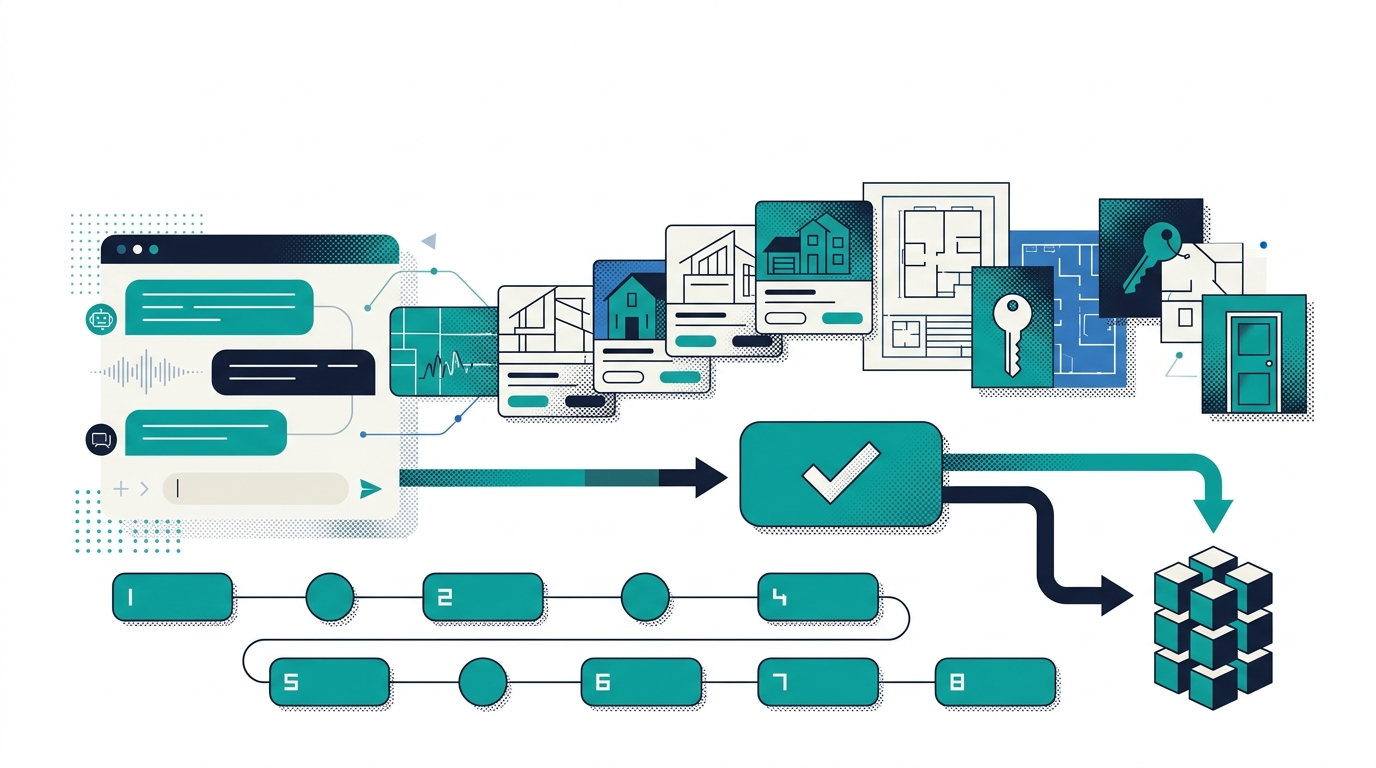
ZoneTechAi published an eight-step chatbot implementation framework September 27 instructing real estate agents to verify CRM writes and appointment confirmations before counting any lead as successfully captured, according to the workflow guide. The workflow addresses a documented gap: while 48 percent of Realtors now use artificial intelligence weekly or more often, the National Association of Realtors describes chatbots for lead capture as among the less-used real estate technology applications.
TL;DR: ZoneTechAi’s September 27 chatbot guide introduces an eight-step verification workflow and “Minimum Useful Lead Record” framework, directly responding to NAR data showing chatbots remain underutilized despite widespread AI adoption.
The guide introduces a “Minimum Useful Lead Record” concept that replaces traditional qualification forms with five required data points: context (inquiry source), intent (what the visitor wants), contact information, communication preference, and assigned next step with ownership. The framework instructs agents to answer visitor questions before requesting qualification data, a reversal of the standard lead-form sequence.
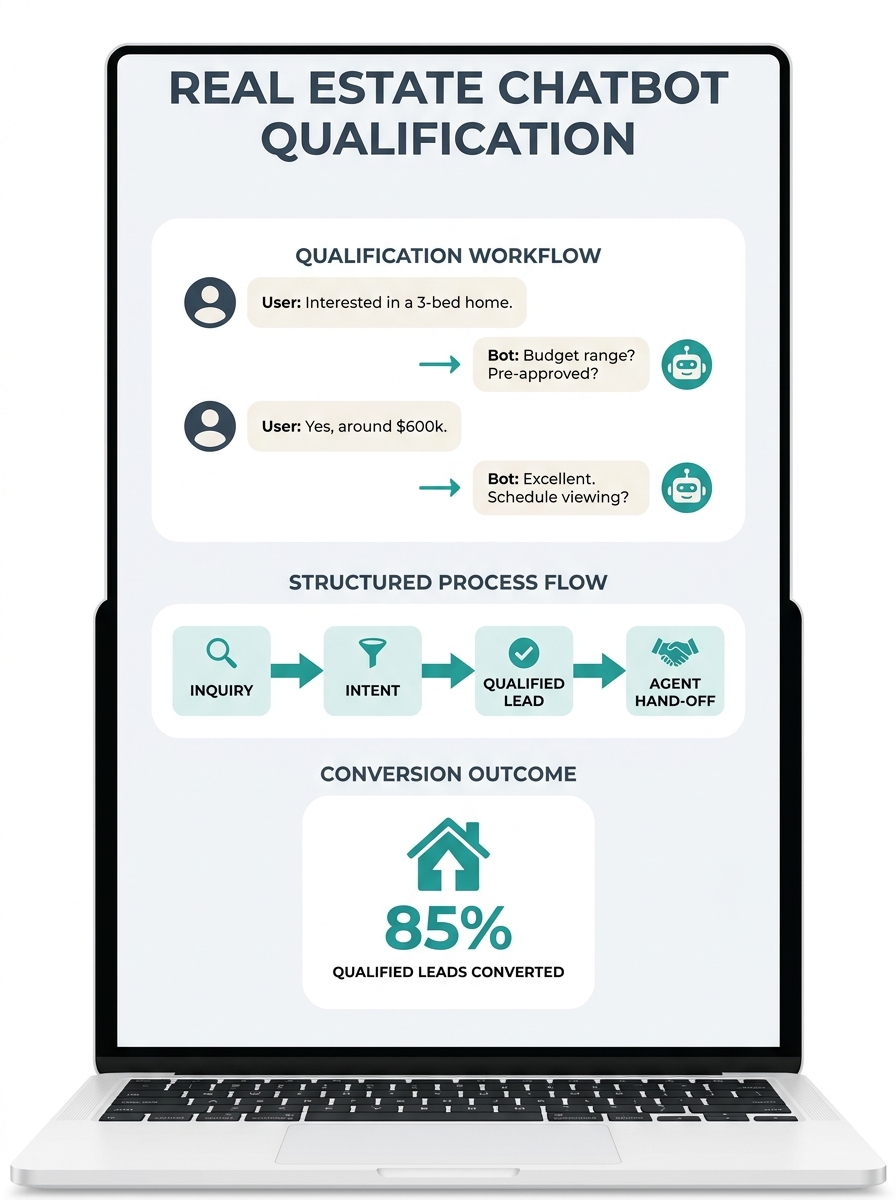
Workflow Separates Showing Requests From Confirmed Appointments
The published workflow distinguishes between showing requests and verified appointments in step six, instructing agents that a visitor’s preferred time does not constitute a booked showing until the scheduling system confirms availability. ZoneTechAi warns that treating attempted CRM updates as successful without system verification creates silent lead loss.
The guide’s operating rule states chatbots should answer known facts, acknowledge unknown information, and escalate verification requests rather than guessing property details or availability. The framework positions chatbots as intent-preservation tools rather than demand-generation mechanisms, noting that visitors typically reach real estate websites through existing channels—Google search, property portals, paid advertising, social media, or referrals—before encountering a chat interface.
Step five of the workflow requires structured context transfer to the CRM with verified update confirmation, then mandates owner assignment, next-action definition, and fallback-plan documentation. The guide instructs agents to use page context before asking questions, noting that a chatbot on a property listing page should not ask which property interests the visitor.
NAR Technology Report Shows Time-Savings Priority
The 2026 NAR Technology Report cited in the guide shows 81 percent of surveyed agents prioritize technology that saves time, while 71 percent value technology improving client experience. NAR lists AI-powered lead generation and follow-up among emerging technologies agents are monitoring, yet simultaneously categorizes chatbots for lead capture or client communication as less-used applications.
The framework’s final step requires measurement of useful lead capture rates, confirmed handoffs, unresolved inquiries, and silent system failures. ZoneTechAi defines three verification rules: unknown information does not equal an unqualified lead; a requested showing time is not a confirmed appointment; and attempted CRM writes, notifications, or bookings do not count as success until the system confirms completion.
The workflow sequence presented runs: entry and intent identification, answer supported questions first, build the Minimum Useful Lead Record, qualify progressively based on questions affecting next actions, complete CRM integration with ownership assignment, separate showing requests from confirmed appointments, verify all outcomes, then measure and improve based on tracked completion rates. The guide emphasizes that qualification should collect only information that changes routing, appointment scheduling, or next actions rather than data for its own sake.
What This Means for Estate Agents
Agents implementing chatbot lead capture should audit whether their current systems distinguish between attempted and verified handoffs, a technical detail that directly affects whether inquiries reach the CRM and get assigned to a human owner. The MULR framework offers a practical alternative to long qualification forms that create abandonment—collecting five data points (source context, intent, contact method, communication preference, and assigned next step) provides enough structure for follow-up without forcing visitors through unnecessary fields before receiving answers.
The workflow’s emphasis on page-context awareness suggests agents using chatbots on individual property listing websites should configure different opening questions for listing pages versus homepage or seller valuation pages, reducing friction by acknowledging what the system already knows about visitor intent. Brokers evaluating chatbot platforms should verify that the technology can confirm CRM writes and appointment bookings rather than assuming API calls succeeded, addressing the silent-failure problem the guide identifies as a common lead-loss mechanism.
The gap between widespread AI adoption and low chatbot utilization that NAR documented suggests agents may benefit more from workflow improvements than from adding new tools, a pattern consistent with earlier findings showing agents subscribe to AI platforms they don’t know how to use. Agents already using AI for other tasks can apply the verification and context-preservation principles in this workflow to existing lead-generation automation without necessarily adopting chatbot technology.