

Marketing strategy influenced agent selection for 58 percent of recent home sellers surveyed by Diakrit and Stone Real Estate, while one in four buyers cited poor property marketing as their primary frustration, according to research published September 6 by Elite Agent. The findings counter persistent assumptions that vendors choose agents primarily on commission rates or sales volume.
TL;DR: Diakrit’s consumer research with Stone Real Estate found marketing strategy shaped listing decisions for 58 percent of vendors, and one in four buyers named inadequate property marketing as their biggest pain point during the search process.
Alexandra Warren, who leads property marketing firm Diakrit and presented the research findings, told Elite Agent that most Australian agents still pitch only photos and floor plans while vendors are willing to pay for campaigns that demonstrate measurable return on investment. The survey targeted buyers and sellers who had completed transactions within six months, capturing decisions made rather than reconstructed memories.
Warren, who spent two decades in property marketing including a role at News Corp, said the research set out to test three industry assumptions: that vendors resist marketing budgets, that virtual tours were pandemic tools with declining relevance, and that withholding listing details drives engagement. The data contradicted all three.
Vendors Pay for Marketing That Explains Return
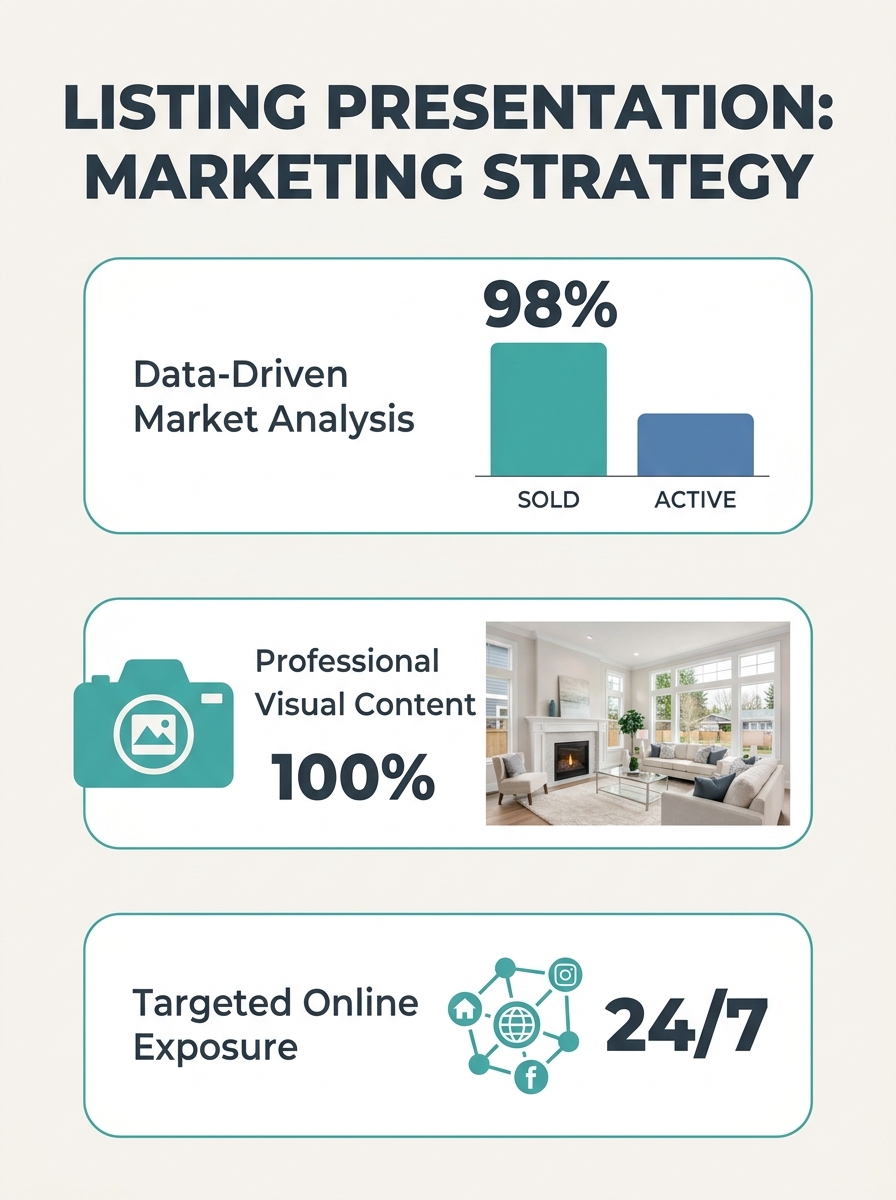
Vendors will fund expanded campaigns if agents explain how each component moves buyers through a decision funnel, Warren said in the Elite Agent interview. The research found marketing strategy ranked ahead of transaction volume or experience as factors in agent selection.
“Vendors are absolutely willing to pay more if they can see a direct correlation between a return on investment,” Warren said. She described the typical agent pitch as unchanged since portals replaced print advertising—photos, a floor plan, and price guidance at the bottom.
Her recommended pitch breaks marketing into stages: Photos create awareness, virtual tours or video move buyers to inspection, and detailed content supports offer decisions because prospects have walked through the property multiple times before arrival. Warren noted that competing agents presenting at the same listing appointment rarely discuss marketing strategy at all.
When vendors raise price objections, Warren said agents have failed to differentiate their service. “Price only becomes the conversation when the agent has failed to explain the difference and the return,” she said, describing it as turning an apples-to-apples comparison into apples and oranges.
One in Four Buyers Cite Poor Marketing as Top Frustration
Twenty-five percent of surveyed buyers identified inadequate property marketing as their primary pain point, the research shows. Warren defined poor marketing as missing price guidance, thin or inaccurate property details, over-embellished copy, misleading photography that misrepresents room size, and insufficient content to make inspection decisions without giving up weekend time.
Buyers also report frustration when agents withhold information, contradicting the industry belief that scarcity drives engagement. “Buyers expect the information, and if anything, they’re frustrated by the lack of it,” Warren said.
She reminded agents that open-house attendees represent future listing opportunities. “Buyers are your pipeline of vendors,” Warren said, noting the marketing experience an agent delivers during the search process determines who buyers call when they become sellers.
Warren added that an agent’s most recent listing serves as an audition for the next one. If the prior campaign consisted of six photos and a floor plan, that becomes the quality benchmark the next vendor evaluates.
AI Search Tools Require Structured, Detailed Listing Content
Buyers increasingly ask ChatGPT, Claude, and Gemini for property shortlists using plain-language queries, Warren said, and listings that lack machine-readable detail fail to surface in results. Traditional bed-bath-car-price search filters no longer capture how buyers find homes.
“AI will interpret, read and recommend based on what it’s got,” Warren said. Her AI-ready listing checklist includes more than 15 photos, a 2D floor plan alongside a 3D version for human viewers, a virtual tour, video walkthrough, and structured factual copy rather than embellished descriptions.
Warren estimated only one in ten Australian listings currently include video, despite buyers rating video as novel and valuable. She compared property descriptions to automotive spec sheets—comprehensive inventories that list every feature.
Diakrit’s research with Stone Real Estate also found virtual tours were not pandemic relics; portal data suggests campaigns with tours perform differently, though adoption rates remain too low to produce definitive benchmarks, Warren said.
On AI-generated imagery, Warren advised brokerage principals to establish guardrails immediately. Europe already regulates synthetic property images, Australia will follow, and generative tools still produce visual hallucinations, she said. Any AI-generated content requires human review before portal publication.
Pre-Launch Content Distribution Generates Inbound Buyer Calls
A Sydney agent Warren described sends partial virtual tours to qualified buyers on Tuesday before Thursday public launches. Recipients receive early access to content not yet posted online, prompting inbound calls asking for inspection times.
“How you use that piece of content to move buyers through the pipeline is your ammo. It’s your marketing strategy. It’s no one else’s,” Warren said.
She described the tactic as lead capture that positions the agent as a source of inventory access rather than a gatekeeper withholding details. Pre-launch content distribution also allows agents to gauge buyer interest before committing to open-house schedules.
The approach mirrors frameworks real estate coaches have published around neighbor prospecting, where early relationship building generates listing referrals. Warren’s version applies the same principle to buyer pipelines that convert to seller relationships.
Reading Between the Lines
Warren’s central recommendation—reframe marketing as investment rather than expense—cuts directly at the presentation gap that costs agents listings. The 58-percent figure shows vendors already value marketing strategy; agents simply aren’t discussing it in listing presentations while competitors pitch on price.
The AI-search angle adds urgency. Buyers querying conversational search tools expect comprehensive property data, and listings without structured detail won’t surface in results. That shifts AI-ready content from future-proofing to present-day lead generation, particularly as younger buyers adopt LLM search as default behavior.
For agents facing commission pressure, Warren’s apples-to-oranges framing offers a concrete response. If the competing agent quotes a lower rate but pitches six photos and a floor plan, the differentiation writes itself—provided the higher-priced agent can explain the funnel and quantify the return. That conversation happens in the lounge room, before the listing agreement is signed.