
Real estate agents who prospect neighbors within days of a competitor listing a home convert the effort into approximately ten additional listings per year, according to a prospecting framework published August 19 by DarrylSpeaks.com for farm-based lead generation.
TL;DR: The framework layers pre-canvassing voicemail and text outreach ahead of door-knocking with market reports, replacing cold prospecting with multi-touch sequences that warm neighborhoods before agents arrive.
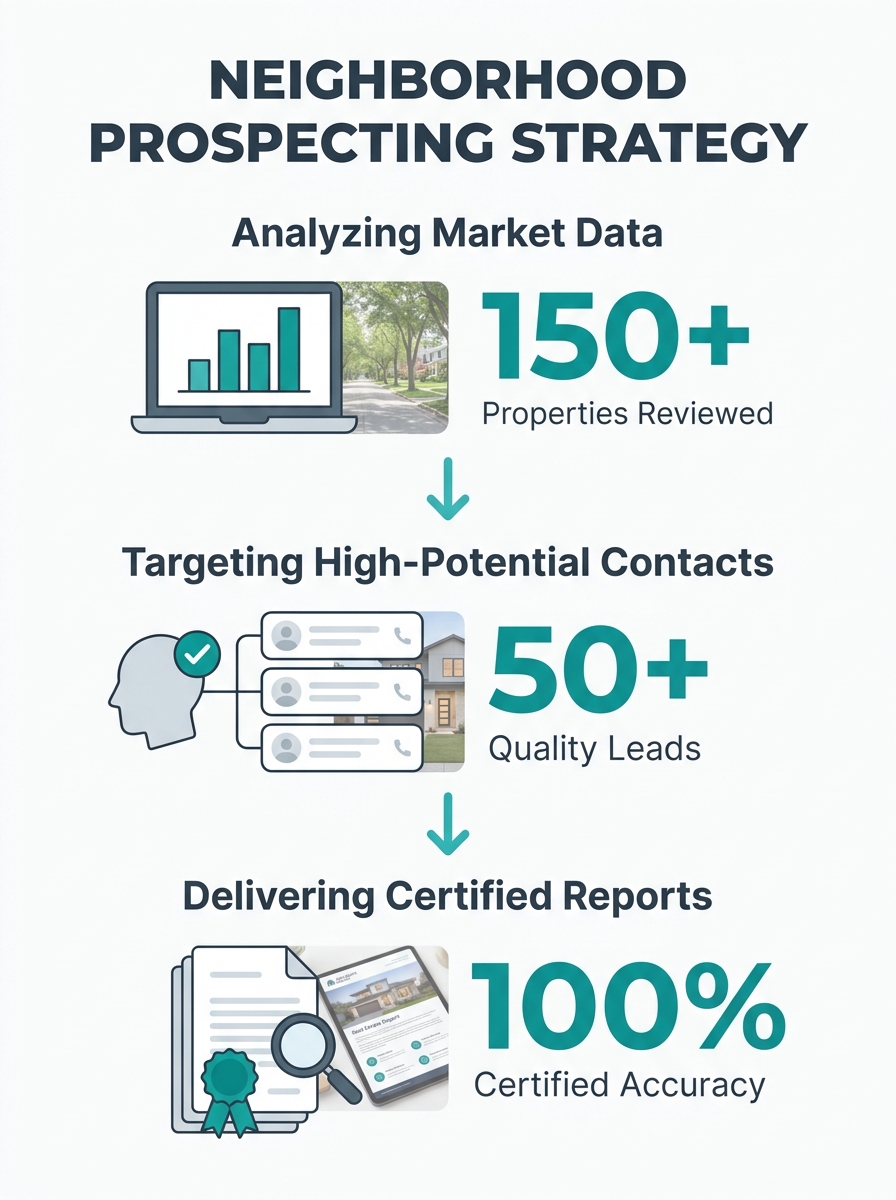
The framework instructs agents to build homeowner contact lists using property data services, deliver ringless voicemail messages one to two days before canvassing, follow with text messages offering free Neighborhood Market Reports, then complete face-to-face visits carrying printed certificates. The strategy targets a psychological pattern: homeowners who see a neighbor’s listing typically prefer working with a different agent rather than the one who “already knows the inside scoop” on the block, the framework states.
Multi-Tool Sequence Replaces Cold Door Knocking
The published framework identifies three tools agents should deploy before physical canvassing begins. Thanks.io provides names, mailing addresses, phone numbers, and email contacts for homeowners in targeted farm areas, replacing what the framework describes as the outdated practice of driving neighborhoods to knock on doors without knowing residents’ identities.
Slybroadcast delivers pre-recorded voicemails directly to homeowners’ voicemail boxes without ringing their phones, allowing recipients to listen on their own schedule. The framework provides agents with 150 free voicemails and ready-to-use scripts through the POWER AGENTS platform. A sample script instructs agents to reference the specific competitor listing address, mention recent neighborhood sales velocity, and announce an upcoming visit to deliver a free market report.
Slytext handles follow-up text messages sent to the same contact list one day after voicemail delivery, offering homeowners the option to receive reports digitally or by door delivery. The framework notes that many homeowners prefer text replies over phone callbacks, making the text layer critical for response conversion.
Printed Market Report Certificate Functions as Door-Knock Credential
The framework positions a Neighborhood Market Report Certificate as the physical deliverable that differentiates warm door-knocking from cold canvassing. The certificate, available as a print-ready PowerPoint template in the framework’s Farming Tab section, entitles the homeowner to one free market report and requires two minutes to personalize with agent contact information and recipient names before printing.
The recommended door-knock dialogue script opens by referencing the earlier voicemail and text messages, names the specific competitor listing address, explains buyer activity patterns triggered by new listings, and requests permission to deliver a completed report by a specified date. “That’s the same conversation that’s been landing ten extra listings a year all along, except now the homeowner already knows your name, your voice, and that you texted them, before you ever ring the doorbell,” the framework states.
The framework outlines a five-day implementation cycle: Monday contact list acquisition for 100 to 200 farm area homeowners, Tuesday ringless voicemail distribution, Wednesday text follow-up for non-responders, Saturday in-person canvassing prioritizing engaged contacts, and the following week’s report delivery before repeating the cycle on adjacent streets.
Psychology-Driven Timing Capitalizes on Competitor Activity
The framework anchors its effectiveness claim in a behavioral pattern: when a home lists in a neighborhood, the next property to list “almost always goes to a different agent,” according to the publication. The strategy instructs agents to monitor Multiple Listing Service postings for new competitor listings in farm areas and launch contact sequences immediately, treating each new sign as a trigger event rather than waiting for seller inquiries.
The framework notes that traditional cold canvassing required agents to “walk into a neighborhood cold, guess at names, or hope someone answers the door.” The three-tool pre-warming sequence repositions agents from strangers to recognized service providers before physical contact occurs, increasing door-answer rates and conversation quality.
The POWER AGENTS platform referenced throughout the framework provides members with vendor access to discounted or trial versions of the three prospecting tools, plus template scripts and the market report certificate design files. The framework does not disclose pricing for ongoing tool subscriptions beyond initial trial credits.
What Happens Next
Real estate agents seeking alternative lead generation methods beyond portal rentals now have a documented competitor-triggered prospecting sequence with claimed conversion metrics. The framework’s reliance on ringless voicemail and unsolicited text messaging may require agents to verify compliance with Telephone Consumer Protection Act regulations and state-level telemarketing restrictions before deployment, particularly for contacts who have not opted into communications.
The ten-listings-per-year effectiveness claim draws from a single VIP coaching member case study rather than aggregate performance data across multiple agents or markets, leaving conversion rates and time investment undefined. Agents implementing the strategy will need to track cost per contact, voicemail-to-callback ratios, and door-knock-to-listing conversion percentages to determine whether the multi-tool overhead delivers positive return on investment compared to direct neighborhood page SEO strategies or email nurturing campaigns targeting the same farm areas.