

A seven-step ChatGPT workflow published by ZoneTechAi on August 16 instructs real estate agents to verify property facts before AI drafting, review claims after generation, and treat the model as a presentation tool rather than a source of property information, according to the published guide. The framework addresses a documented risk: OpenAI acknowledges ChatGPT can produce incorrect or misleading information while sounding confident, the guide notes.
TL;DR: ZoneTechAi published a seven-step workflow on August 16 guiding agents to collect verified property facts, define strongest features, generate ChatGPT drafts, then review claims before publication—treating AI as a presentation layer, not a fact source.
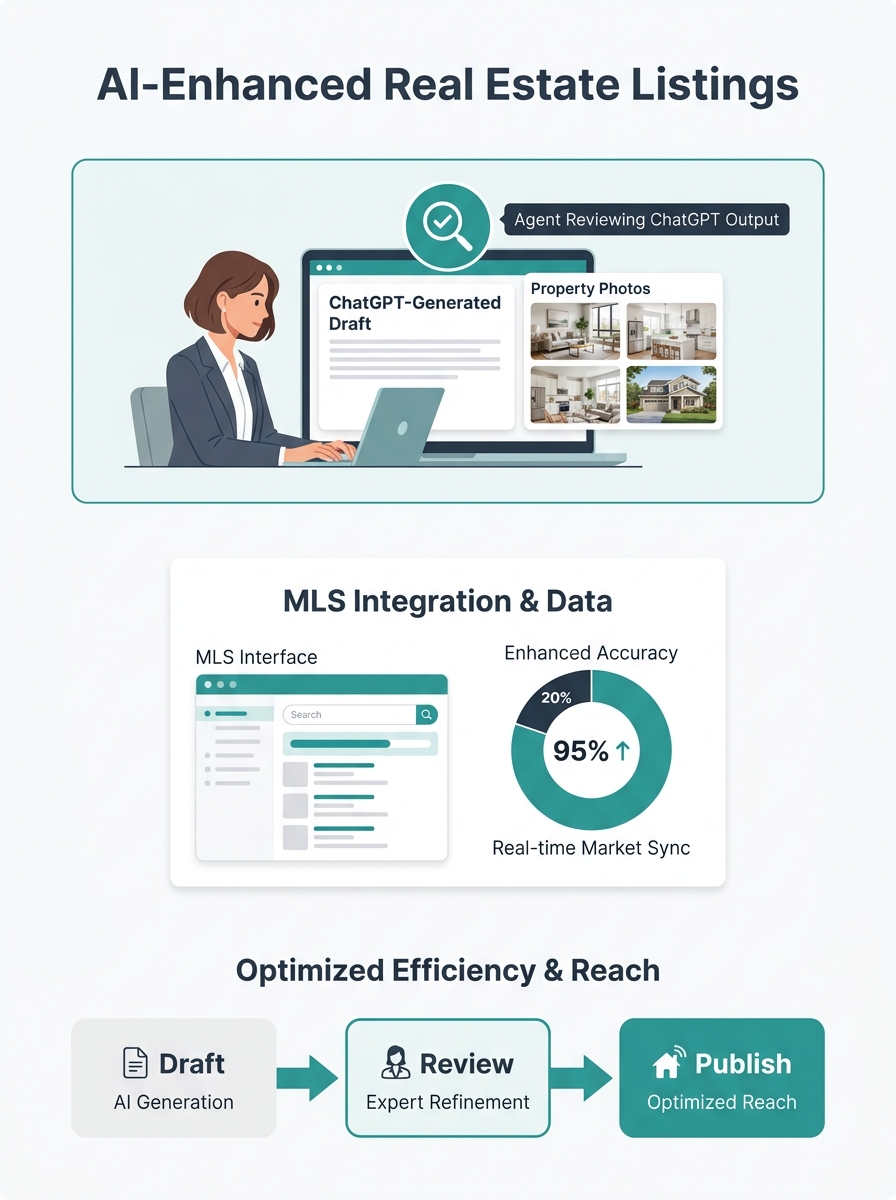
The workflow divides responsibility between reliable sources that establish facts and ChatGPT that drafts copy, with final review required before publication. ZoneTechAi designed the process to prevent a common error: prompting ChatGPT to “write a beautiful listing for this house” without first providing verified property information, clear priorities, a defined format, and instructions for handling missing data.
The Seven-Step Process Begins With Source Verification
The published workflow requires agents to collect verified property facts first, choose the three or four strongest features, specify where the description will appear, set required length and tone, then instruct ChatGPT to omit missing facts rather than guess, according to the guide. After generating the first draft, agents verify important factual claims, remove generic or unsupported language, and approve one master description before repurposing it elsewhere.
ZoneTechAi distinguishes between source information—bedrooms, bathrooms, living area, lot size, renovations with dates, appliances, materials, major systems—and presentation decisions such as which feature should lead, what deserves emphasis, paragraph order, and tone. The guide positions ChatGPT as useful in the presentation layer: organizing raw notes, improving sentence flow, creating alternative openings, shortening long copy, adjusting tone, meeting word or character limits, and creating variations from approved information.
The guide contrasts weak and strong inputs. A weak prompt reads: “Three-bedroom home with nice kitchen, big yard, and great location. Make it attractive.” A stronger version provides: “Three bedrooms, two bathrooms, 1,842 sq ft, 0.21-acre lot, kitchen renovated in 2024, quartz countertops, Bosch gas range, oak flooring through the main living areas, covered rear patio, attached two-car garage, HVAC replaced in 2023.” The second input creates real editorial choices—whether the kitchen should lead, whether the patio receives its own sentence, whether recent HVAC replacement warrants highlighting—while the first gives the model almost no meaningful evidence, ZoneTechAi reports.
MLS Character Limits and Field Requirements Shape Prompt Structure
For MLS descriptions, ZoneTechAi recommends specifying character limits and field requirements rather than using generic “write an MLS listing” prompts. The guide cites 900 characters as a common MLS property remarks limit and instructs agents to verify specific requirements with their MLS and brokerage. MLS systems differ in fields, policies, terminology, and publishing requirements, the guide notes, referencing the National Association of REALTORS Handbook on Multiple Listing Policy.
A recommended MLS prompt reads: “Write concise MLS-style property remarks using no more than 900 characters. Use only the verified property information below. If a fact is missing, omit it rather than guessing.” The format aligns with OpenAI’s prompt engineering best practices, which emphasize clear and specific instructions, sufficient context, and iterative refinement after reviewing initial output, according to ZoneTechAi.
The guide positions verified property information as traceable to defensible sources—asking agents to collect only facts they could defend if someone asked where a claim originated. That list may include property type, bedrooms and bathrooms, verified living area, lot size, year built, parking, layout, documented materials and finishes, renovations with dates, system replacements, outdoor features, appliance brands, building or community amenities, rental terms, documented accessibility features, and verified location distances.
The workflow builds on broader industry adoption of AI tools that many agents subscribe to but don’t yet use effectively, as previous reporting has documented. The structured approach addresses a specific pain point: agents want AI efficiency but need guardrails to ensure listing accuracy and compliance.
The Takeaway
ZoneTechAi’s August 16 framework gives agents a practical implementation path for ChatGPT listing descriptions that separates fact verification from copy drafting. The seven-step process codifies what effective AI use looks like in property marketing: start with traceable source material, define clear parameters, generate a draft, then review claims before publication. That division of responsibility—reliable sources for facts, ChatGPT for presentation, human review before posting—offers a repeatable workflow that addresses OpenAI’s own acknowledgment of the model’s limitations while capturing time savings on copy polish and formatting.
The guide’s emphasis on verified inputs rather than open-ended prompts mirrors emerging agent practices around defining marketing voice before automating content. Agents who collect 1,842-square-foot measurements, 2024 renovation dates, and Bosch appliance brands before prompting ChatGPT create defensible listings; those who prompt “make it attractive” without source material generate risk alongside copy. The 900-character MLS limit and field-specific formatting requirements provide concrete constraints that make AI drafting more useful than generic beautification requests.
For agents building listing workflows in 2026, the takeaway is operational: treat ChatGPT as a sentence organizer, not a fact finder. The model arranges verified property notes into readable paragraphs, suggests which features deserve opening placement, and adapts tone to platform requirements. It does not replace the agent’s responsibility to know—and document—what a kitchen renovation actually included or when the HVAC system was actually replaced.