

Inbound Real Estate Marketing Chief Marketing Officer Benjamin Wagner published a 15-point optimization framework July 9 designed to help agents win client recommendations from ChatGPT, Google AI Overviews, and other large language models as homebuyers increasingly rely on AI for realtor selection, according to HousingWire.
TL;DR: The framework divides tactics into 10 DIY steps agents can implement independently and 5 expert-level strategies requiring technical expertise, targeting visibility in both Google’s AI snippets and conversational models like ChatGPT and Gemini.
The guidance arrives as consumers treat AI recommendations with “implicit trust because the suggestions are the result of personalized, deep-diving research,” Wagner wrote, warning that agents risk losing nurtured leads to competitors identified by artificial intelligence systems. The framework addresses Answer Engine Optimization (AEO) for Google’s AI features and Generative Engine Optimization (GEO) for large language models, both built on similar verification principles to traditional local SEO.
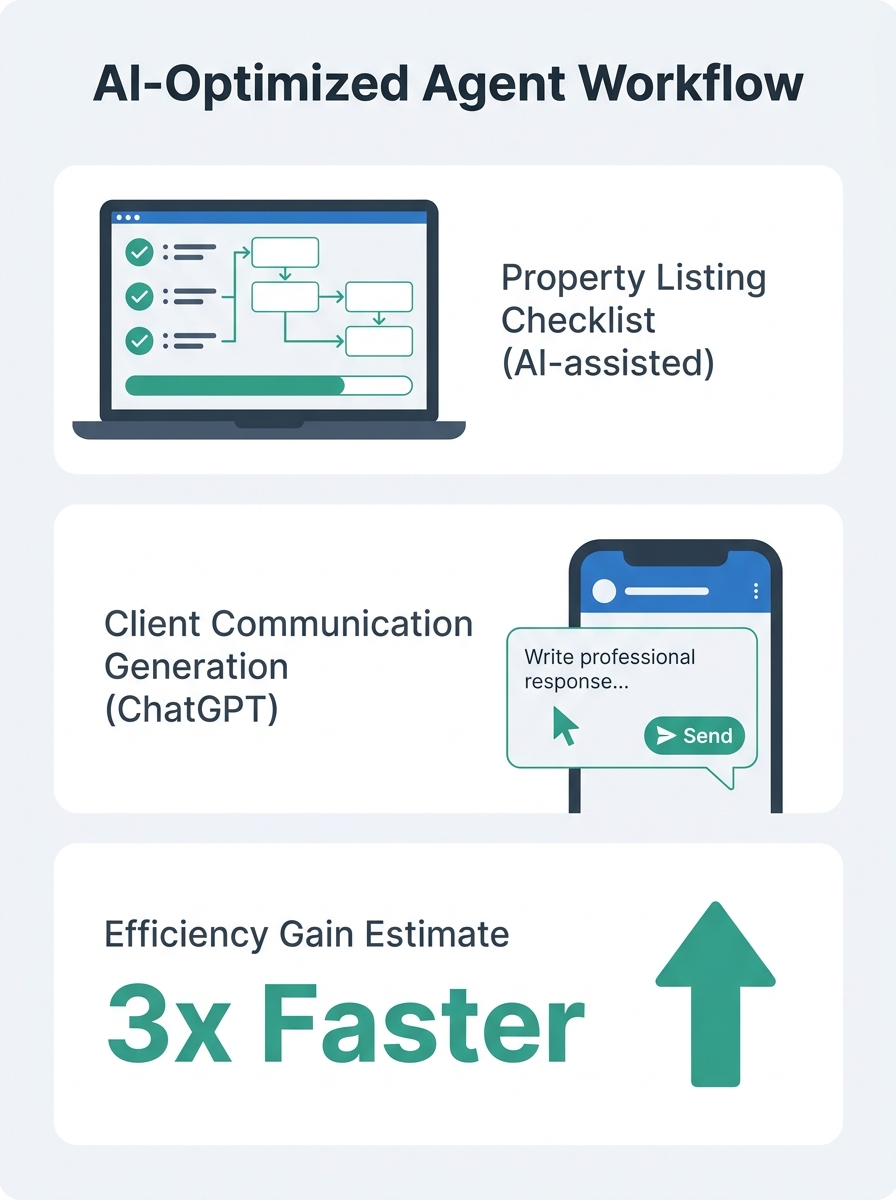
Prior research has documented the shift: 68% of Google searches now end without clicks as AI answers replace traditional website traffic, while AI tools have reached 85% adoption among homebuyers despite sustained demand for human agents during transactions.
What the Framework Targets
Wagner’s framework focuses on structuring “verifiable digital signals” so AI systems can confidently identify who an agent is, where they operate, what they specialize in, and whether they merit trust. Both AEO and GEO operate under similar processes, he explained, requiring consistent entity information across platforms that AI models scrape when compiling recommendations.
The distinction between the two approaches centers on platform: AEO targets recommendations from Google’s AI snippet features in search results, while GEO aims for mentions in conversational outputs from ChatGPT, Gemini, and similar large language models. Both share foundation tactics with traditional local real estate SEO but prioritize machine-readable structure over human-facing content design.
Ten Self-Service Tactics for Independent Agents
Wagner’s DIY recommendations begin with obtaining an AI visibility audit from a specialized real estate AEO/GEO firm to establish baseline performance. From there, agents should standardize one version of their name, brokerage name, address, and phone number across all platforms—Google Business Profile, Zillow, Realtor.com, personal websites, and social channels.
Geography specificity matters more than coverage breadth, Wagner advised. Agents should identify their genuine core service areas and repeat those consistently rather than claiming statewide reach. A single “solid bio paragraph” pasted uniformly across all profiles helps AI models establish entity consistency.
Google Business Profile completion ranks among the highest-impact steps: categories, services, service areas, hours, and description fields all feed AI verification. Wagner recommends posting market updates, neighborhood notes, or open-house recaps every two to three months using actual place names naturally in the text.
Review management includes two tactics: when requesting reviews, Wagner suggests nudging for specifics—”If you mention the neighborhood/city and your generation, that helps future buyers/sellers”—without scripting exact language. Agents should reply professionally to every review, especially negative ones, as AI models weigh response patterns when assessing trustworthiness.
The final DIY recommendation calls for adding an “About Page” that clearly answers four questions: who you are, where you work, what you specialize in, and verifiable credibility signals such as links to awards, local involvement, or media mentions.
Five Expert-Level Strategies Requiring Technical Knowledge
Wagner’s advanced tactics include creating a dedicated AI Info Page on agent websites specifically for large language models to parse—a structured data resource separate from human-facing content. Schema markup coding promotes both entity verification and social proof verification, translating review stars and award badges into machine-readable formats.
A “deep-diving citation audit and cleanup across the wider web” corrects inconsistent name-address-phone listings that confuse AI entity resolution. Writing “LLM-friendly PR releases for the most authoritative sources” positions agents in publications that AI models weight heavily during recommendation generation.
The final expert tactic involves securing guest appearances on local podcasts or placements in high-authority news features. Wagner noted these spots place an agent’s name “alongside established local brands, proving your authority to AI through association”—a credibility signal models recognize when compiling recommendations.
Context and Outlook
The framework reflects an acceleration in AI-mediated consumer behavior that threatens traditional lead generation channels. Agents who have spent years cultivating referral networks and online visibility now face competition from algorithmic recommendations that bypass their existing digital presence entirely if that presence isn’t structured for machine parsing.
The sliding scale Wagner describes—DIY basics sufficient for rural or niche specialists, expert intervention necessary for competitive urban markets—suggests optimization costs will stratify agent marketing budgets. Self-service tactics require consistent manual execution across multiple platforms, while expert-level schema markup and citation audits demand either technical skill development or outsourcing to specialized firms.
The convergence Wagner identifies between AEO, GEO, and traditional local SEO creates an advantage for agents who have maintained structured, consistent digital footprints. Those with fragmented online information—multiple business names, inconsistent service areas, sparse Google profiles—face steeper remediation costs as AI recommendation engines penalize entity ambiguity more severely than human search behavior historically has.