

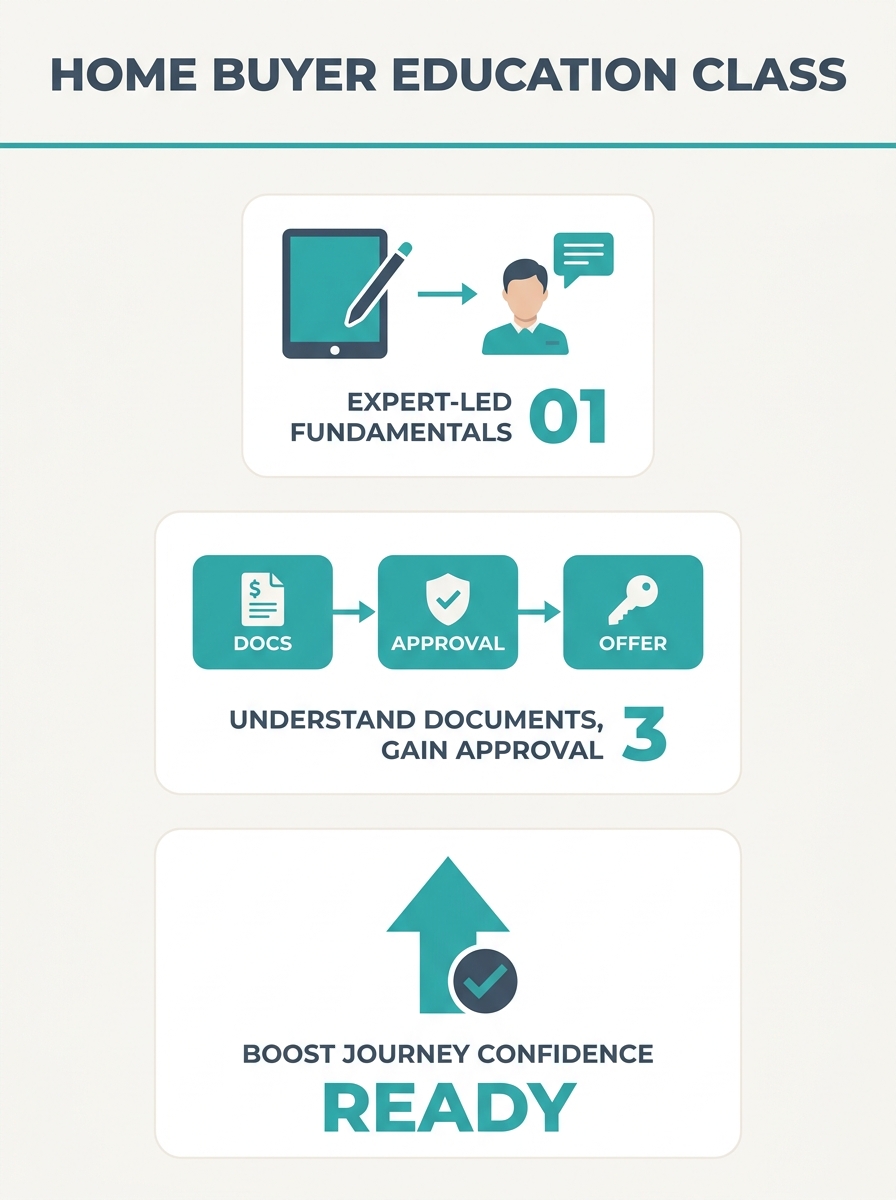
A client education program built by a former school administrator helped a Dallas real estate agent double her transaction volume to more than 100 deals last year, according to an interview published May 4 by HousingWire. Deba Douglas, who left a 16-year career as a high school and middle school principal in 2018, now runs Deba Douglas Realty Group and teaches a course called Roadmap to Real Estate Investing that has operated for roughly three and a half years.
The program targets first-time homebuyers and prospective investors, addressing what Douglas described as a financial literacy gap among adults. Douglas told HousingWire that the course focuses on how buyers can structure deals, present themselves to lenders, and build long-term wealth through real estate. The curriculum has drawn repeat clients and multi-generational referrals, with children of program graduates now enrolling alongside extended family members.
Douglas owns 30 rental properties and manages fix-and-flip projects, wholesaling, and new construction. Her teaching approach stems from the same knowledge gap she observed during her education career, now applied to real estate transactions instead of classroom instruction.
Education as Volume Driver
The course has become a direct pipeline for Douglas’s brokerage. By positioning herself as a financial educator rather than strictly a sales agent, Douglas said she attracts clients who view her as a trusted advisor. The educational model creates differentiation in a market where many agents, according to Douglas, avoid discussing economic volatility with buyers.
“We need to be honest that we’re in a very volatile area, in a volatile time in our economy, where job losses are happening every other week and people are depending on their income,” Douglas told HousingWire. She criticized agents who ignore inflation, rising costs, and employment uncertainty when advising buyers.
Douglas also warned against steering clients toward their maximum preapproval amounts. In Texas, where she operates, property taxes and insurance rates are climbing, and buyers who stretch to their lending ceiling often face financial strain within months of closing. She recommends agents position themselves as financial consultants who help buyers leave cushion in their budgets rather than maximize commission on each deal.
The approach mirrors principles outlined in broader conversations about agents acting as advisors rather than transaction facilitators, prioritizing client outcomes over immediate revenue.
Building Expertise Around a Niche
For agents considering a similar education-driven model, Douglas recommends identifying a specific passion within real estate and building a course around it, even if offered for free initially. The strategy turns agents into recognized experts in a narrow vertical, which she said attracts clients organically.
“You become an expert in whatever that niche is, and people are going to automatically gravitate to you,” Douglas said. “And the bonus of what you’re teaching is you’re already passionate about it, and the reward that will come is you’re going to get more transactions.”
Douglas refined her program over three and a half years based on contractor performance, partner quality, and resource effectiveness. The iterative approach allowed her to build a repeatable system that generates referrals across family networks. She cited examples of students whose relatives later enrolled after witnessing wealth-building outcomes.
The education model also addresses a trust gap Douglas identified among buyers navigating volatile market conditions. She said many agents still operate as if market dynamics remain unchanged from 2023, presenting overly optimistic scenarios that erode credibility when buyers encounter real-world friction.
Transparency Over Commission Maximization
Douglas’s philosophy centers on disclosure rather than closing speed. She told HousingWire that agents who prioritize transaction volume without preparing clients for post-purchase costs—insurance spikes, tax reassessments, maintenance reserves—damage their reputations and lose repeat business.
“Don’t try to chase a sale where you neglect giving [clients] the proper information,” Douglas said. “They can be getting bills a year later with their property taxes or insurance going up. Really be knowledgeable, be an expert in your field and really give them the value that they wouldn’t find from just any random agent.”
The transparency-first approach extends to Douglas’s teaching methodology. Her course content focuses on paper positioning—how buyers should structure income documentation, credit profiles, and asset statements to meet lender requirements. She also covers contractor selection, deal analysis, and long-term financial planning beyond the initial purchase.
Douglas and her husband began investing in real estate and documenting their journey on social media shortly after she left education in 2018. The social content served as proof-of-concept for the course she later launched, demonstrating wealth-building tactics to an audience that eventually became her client base.
Reading Between the Lines
Agents looking for volume growth in a competitive market often default to lead-generation tactics—paid portals, Google Ads, CRM automation—without addressing the conversion bottleneck. Douglas’s results suggest a different path: build expertise in a narrow slice of the market, package that expertise into educational content, and let the content pre-qualify and pre-convert leads before they ever request a showing.
The model shifts the agent’s role from sales closer to consultant. Buyers who complete an investing course taught by their agent arrive at the transaction with established trust, financial literacy, and realistic expectations. That combination likely explains Douglas’s ability to scale to 100-plus transactions without the burnout that typically accompanies high-volume production. She’s not chasing cold leads; she’s harvesting warm referrals from a self-reinforcing educational ecosystem.
The approach also insulates agents from commoditization. When buyers view real estate agents as interchangeable, they shop on commission. When buyers view an agent as the educator who taught them wealth-building principles, price sensitivity drops and loyalty rises. Douglas’s multi-generational referral pattern—students bringing their children, aunts, and uncles into the program—demonstrates the compounding effect of education-driven differentiation. Agents waiting for market conditions to improve might find faster traction by addressing the knowledge gap Douglas identified: buyers don’t lack motivation, they lack structured information about what’s possible and how to execute it.