

WP Pluginsify published a comprehensive guide May 3 detailing how real estate professionals can use virtual tour platforms like Kuula to create interactive property walkthroughs, according to the blog post. The guide outlines features including 360-degree panorama hosting, customizable hotspots, floor plan integration, and VR compatibility designed to replace static image galleries with navigable digital experiences.
The publication targets agents, developers, and real estate photographers seeking to meet buyer expectations for remote property exploration. WP Pluginsify’s breakdown covers workflow mechanics, feature comparisons, and use cases across residential and commercial segments.
Platform Capabilities and Workflow
The guide describes a five-step workflow for creating virtual walkthroughs. Users capture 360-degree images with dedicated cameras or DSLR panorama setups, upload files to platforms like Kuula, connect scenes using directional hotspots, add information points for appliance specifications or renovation details, and publish tours via direct links or embedded website players.
Platforms typically support custom branding elements including logos, company color schemes, intro screens, and call-to-action buttons for scheduling showings. Analytics tools track user engagement metrics such as viewing duration and frequently explored property areas.
Floor plan integration allows buyers to click rooms within two-dimensional layouts and jump directly to corresponding panoramic views. The guide notes this feature addresses spatial awareness gaps left by traditional photo galleries, where individual room images fail to convey flow and layout connections.
Buyer Behavior and Market Impact
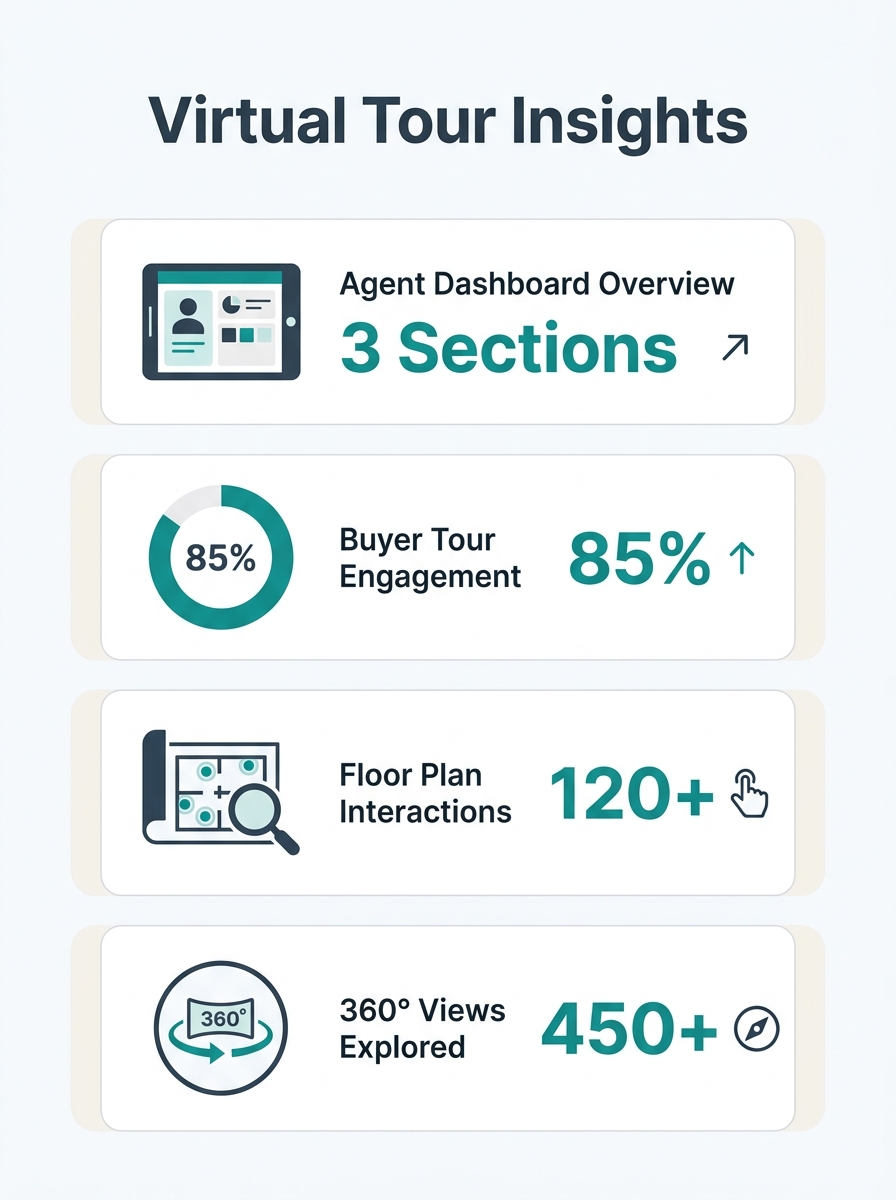
According to the guide, interactive walkthroughs produce measurably different engagement patterns than static photography. Users spend longer periods interacting with virtual tours and exercise control over exploration paths rather than passively viewing curated image sequences.
The publication cites four specific advantages: spatial awareness through connected room navigation, viewer control over exploration priorities, extended engagement time compared to photo browsing, and accessibility for out-of-state buyers evaluating properties without immediate travel.
WP Pluginsify notes the tools reduce unnecessary physical showings by providing comprehensive property previews. The guide positions virtual tours as particularly valuable in competitive markets, luxury segments, and commercial real estate where buyer qualification before in-person visits affects sales cycle length.
Technical Requirements and Distribution
Most platforms require minimal technical expertise beyond 360-degree image capture. The guide indicates standard residential listing tours can be completed within one day, while new construction or commercial properties may incorporate dozens of connected scenes for layered experiences.
Published tours integrate into Multiple Listing Service entries, agent websites, and standalone landing pages. VR headset compatibility extends immersive capabilities for buyers seeking full virtual presence experiences. Embedding options allow tours to function as website architectural elements alongside traditional property information.
The publication describes customization tools including background audio, clickable media embeds for videos or brochures, and information hotspots overlaying property features. These elements transform tours from navigation tools into complete marketing assets carrying brand identity and storytelling components.
Why This Matters Now
Virtual tour expectations have shifted from luxury listing differentiator to baseline buyer requirement across market segments. Agents without interactive walkthrough capabilities face qualified lead loss to competitors offering remote exploration options. The tools address a fundamental gap between online browsing behavior and in-person visit commitment—buyers want spatial confidence before scheduling showings.
The publication arrives as mobile device conversion rates trail desktop performance by 65 percent according to recent data. Virtual tours accessible across devices address this gap by providing engaging mobile experiences that static galleries fail to deliver. Platforms embedding tours directly into property pages eliminate navigation friction between listing discovery and immersive exploration.
For agents competing against well-funded teams, virtual tour platforms level marketing sophistication without requiring custom software development budgets. The workflow simplicity outlined in the guide—capture, upload, connect, publish—removes technical barriers that previously limited immersive content to high-end brokerages. Buyers now expect these experiences regardless of price point, making platform adoption a competitive necessity rather than premium feature.